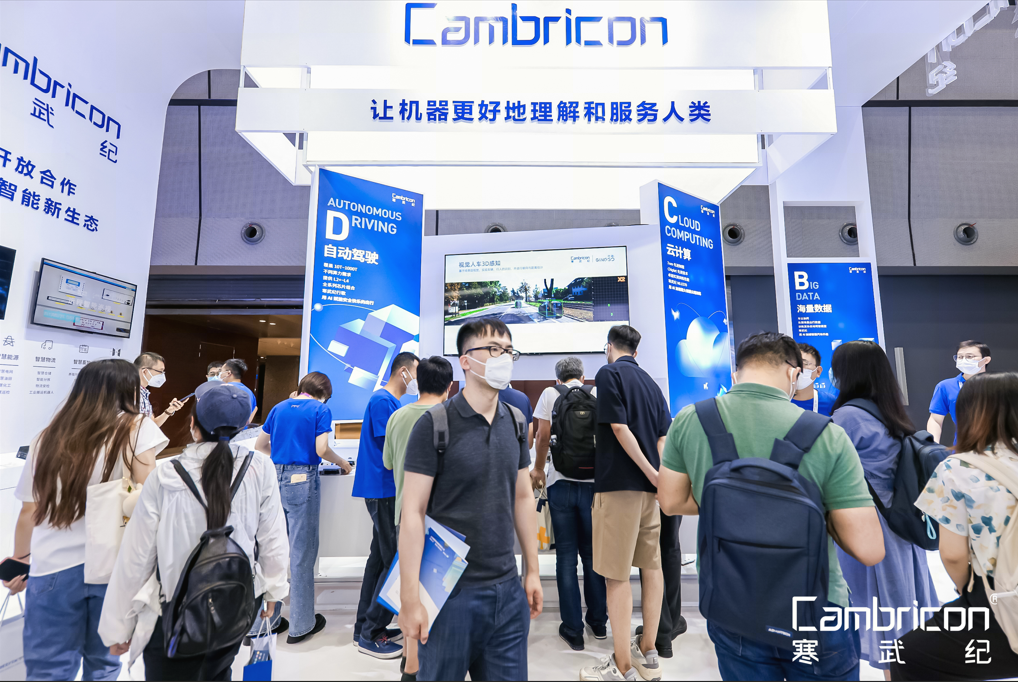

From Blacklisted to Billion-Dollar Profits: How Cambricon is Rewriting the AI Chip Story
Is it possible for sanctions designed to cripple a nation’s technological ambitions to actually fuel its rise? Recent developments in China’s AI chip market suggest that the answer might be a resounding yes. Cambricon Technologies, once struggling under the weight of US sanctions and Nvidia’s dominance, has reported a staggering 1.03 billion yuan profit for the first half of 2025. This incredible turnaround highlights the growing strength of China’s domestic AI ecosystem and the increasing demand for domestic AI chips.
The Rise of Cambricon: A Chinese AI Chip Success Story
Cambricon Technologies’ journey from near-collapse to industry leader is a compelling narrative of resilience and innovation. The company’s ability to thrive in the face of adversity showcases the potent combination of government support, market demand, and technological advancement within China’s burgeoning tech sector. Cambricon’s success begs the question: Can Chinese innovation truly flourish independent of Western technology?
Record-Breaking Financial Performance
The numbers speak volumes. Cambricon’s financial resurgence is nothing short of astonishing.
- Profit Surge: A jump from a 533 million yuan loss in the first half of 2024 to a 1.03 billion yuan profit in the same period of 2025.
- Revenue Explosion: A 44-fold increase in revenue, reaching 2.9 billion yuan.
- Earnings Per Share (EPS): An EPS of 2.48 yuan, indicating a sustained trajectory of profitability.
This exceptional financial performance signals a major shift in China’s semiconductor capabilities and marks Cambricon as a key player in the global AI landscape. These figures are more than just corporate wins, they symbolize China’s technological resilience.
Market Valuation Soars: The Price of AI Ambition
Investors have reacted to Cambricon’s success with unbridled enthusiasm, driving its valuation to extraordinary heights.
- Stock Price Surge: An 11.6% jump in stock price on a single Monday, reaching 1,384.93 yuan.
- Price-to-Earnings (P/E) Ratio: An astounding P/E ratio of 4,463 times, dwarfing even the premium valuation of Kweichow Moutai (a luxury liquor maker), which trades at around 20 times earnings.
- Stellar Returns: A 383% increase in stock value in 2024, followed by more than doubling since mid-July 2025, resulting in a remarkable 562% return since September 2024.
This market euphoria underscores the strong belief in China’s AI future and the potential of companies like Cambricon to capitalize on the growing demand for AI solutions. The high P/E ratio, however, also points to potential risks and the need for Cambricon to maintain its rapid growth trajectory to justify its valuation.
The DeepSeek Effect and China’s AI Renaissance
The rise of DeepSeek, a Chinese AI startup renowned for its cost-effective approach to artificial intelligence, played a crucial role in Cambricon’s success. DeepSeek’s ability to achieve impressive results with domestically produced AI chips validated the potential of China’s homegrown AI ecosystem. This validation ignited a “gold rush” for domestic chips, benefiting companies like Cambricon. DeepSeek has demonstrated that Chinese AI technology can compete on a global scale.
US Sanctions: A Blessing in Disguise?
Paradoxically, US sanctions, intended to hinder China’s technological advancement, may have inadvertently fueled Cambricon’s growth. The restrictions on access to advanced US technologies forced Chinese companies to look inward, creating a captive market for domestic AI chip providers like Cambricon. The pressure from Beijing on local firms to prioritize domestic processors further amplified this effect.
Specifically, when Washington added Cambricon to its Entity List in December 2022, it restricted the company’s access to advanced US technologies. Furthermore, restricted versions of Nvidia chips for the Chinese market, like the H20, weren’t as attractive to domestic companies, creating a void for Cambricon to fill. This shift in market dynamics highlights the unintended consequences of geopolitical strategies in the tech sector.
Can Cambricon Compete? The Technical and Strategic Landscape
While Cambricon’s financial success is undeniable, questions remain about its ability to compete with established players like Nvidia in terms of technological prowess and manufacturing capabilities.
Siyuan 690: A Rival to Nvidia’s H100?
Cambricon is betting on its Siyuan 690 processor to challenge Nvidia’s H100. Founded by brothers Chen Yunji and Chen Tianshi, graduates of China’s elite “genius youth class,” Cambricon is pouring resources into developing cutting-edge AI chips. While detailed specifications of the Siyuan 690 remain confidential, its validation by the China Academy of Information and Communications Technology as DeepSeek-compatible hardware indicates its potential.
However, it’s essential to note that competing with Nvidia requires more than just raw performance. Ecosystem compatibility and software support are crucial factors. Chinese AI companies increasingly need chips optimized for their specific algorithms and cost structures, which Nvidia’s export-restricted chips struggle to provide. This need for customized solutions gives Cambricon an advantage in the domestic market.
The $5 Billion Bet on Large Language Models (LLMs)
Cambricon is making a significant investment in the future, allocating 5 billion yuan to fund the development of chips specifically designed for large language models. This investment reflects the company’s commitment to staying at the forefront of AI technology.
The allocation breaks down as follows:
- 2.9 billion yuan for LLM chips
- 1.6 billion yuan for software
- The remainder for working capital
This substantial investment signifies Cambricon’s ambition to not just compete but potentially leapfrog generations of chip development. Goldman Sachs has set a bullish price target of 1,835 yuan for Cambricon’s stock, reflecting confidence in the company’s ability to capitalize on sustained demand from Chinese cloud giants like Tencent. Tencent is a major player in China’s tech landscape, and its potential adoption of Cambricon’s chips could significantly boost the company’s revenue.
The Uncomfortable Truth: Sustainability and Manufacturing Challenges
Despite its remarkable success, Cambricon faces significant challenges that could impact its long-term sustainability.
- Client Concentration Risk: Cambricon’s explosive growth may be masking a dangerous reliance on a few large customers. The loss of even one or two major clients could have a devastating effect on its revenue.
- Manufacturing Limitations: While China can design competitive AI chips, its ability to manufacture them at scale without access to cutting-edge Western equipment remains an open question.
- Foundry Dependence: Cambricon likely relies on domestic foundries like SMIC or Hua Hong Semiconductor, which lag behind TSMC (Taiwan Semiconductor Manufacturing Company) by several process generations.
- Moore’s Law and Physics: Advanced AI workloads demand the most efficient chips available, and manufacturing limitations could hinder Cambricon’s ability to compete on a global scale.
| Feature | Cambricon | Nvidia |
|---|---|---|
| Origin | China | USA |
| Target Market | Primarily China | Global |
| Manufacturing | Domestic Foundries | Primarily TSMC |
| Technology Access | Limited by US Sanctions | Access to Global Tech |
The New Semiconductor Reality: A Bifurcated World
Cambricon’s turnaround is indicative of a broader shift in the semiconductor industry. The era of global integration, where American designs were manufactured in Taiwan and assembled in China, is coming to an end.
What we are witnessing is the emergence of parallel technological universes. Chinese AI companies will increasingly optimize for domestic chips, while American firms double down on Western hardware. This bifurcation could lead to technological tribalism and potentially slow down innovation for everyone. The real winners in this scenario may be countries like Europe and India, which are quietly developing their own semiconductor capabilities without the baggage of a tech cold war.
Conclusion: A New Chapter in the AI Chip Wars
Cambricon Technologies’ remarkable turnaround proves that China can indeed build a domestically powered AI ecosystem. The question is whether this success comes at the cost of optimality and whether a bifurcated global technology system will ultimately serve anyone’s interests. While investors seem to believe that the benefits of technological sovereignty outweigh the potential drawbacks, the long-term implications remain uncertain.
What do you think? Will Cambricon continue to defy expectations, or will the challenges of manufacturing and client concentration ultimately limit its potential? Comment below and share your thoughts on the future of the AI chip market.
Sources & Further Reading:
Original article at techwireasia.com


