
Your Galaxy’s Keyboard Is Holding You Back
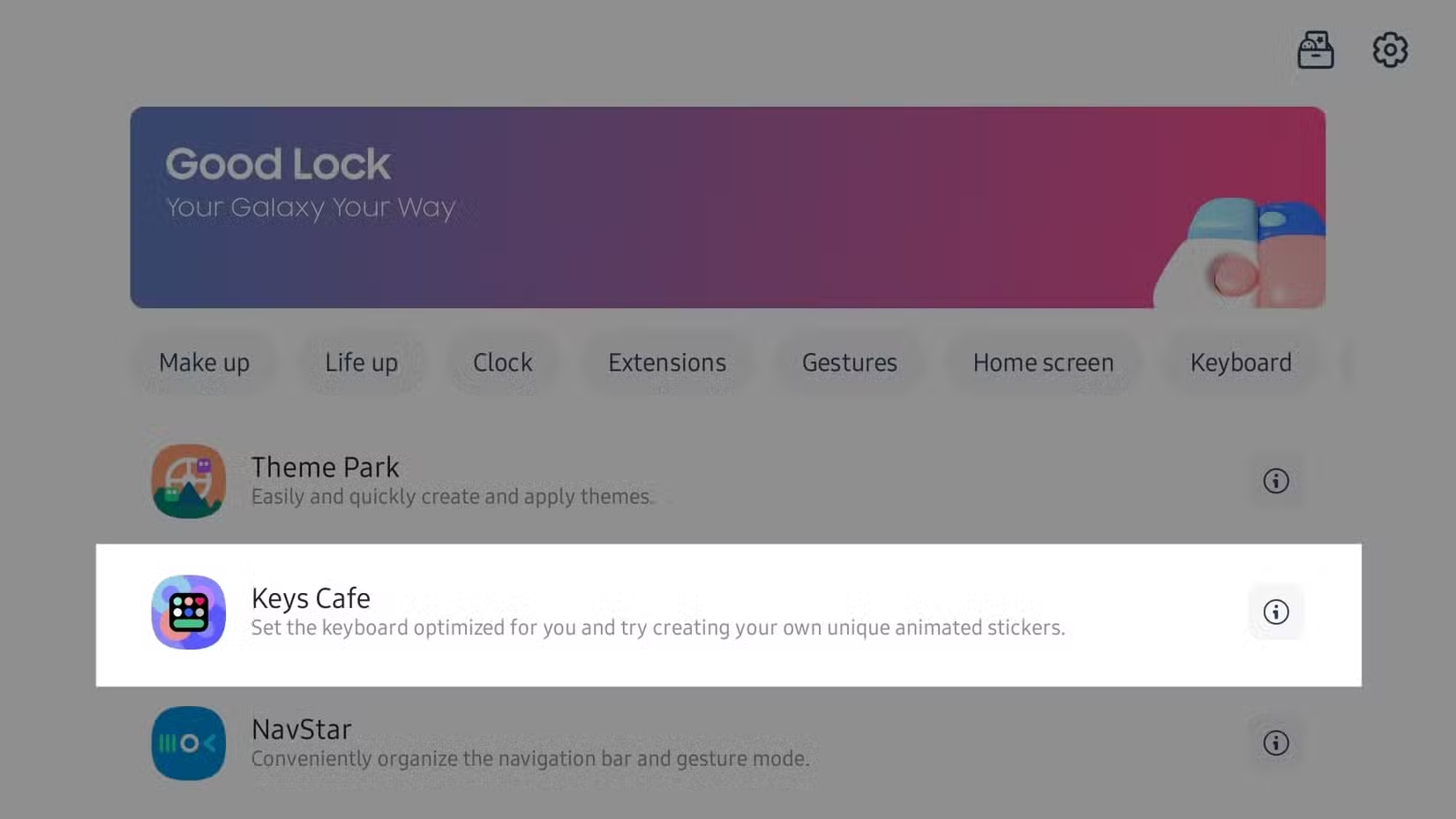
Did you know the average person types over 30,000 words annually on smartphones? Whether it’s work emails, messaging, or social media, your thumbs do more heavy lifting than you realize. Yet most virtual keyboards remain frustratingly rigid—limited themes, clumsy layouts, and zero personalization. Enter Keys Cafe, Samsung’s hidden powerhouse for transforming your typing experience from mundane to extraordinary. Part of the legendary Good Lock ecosystem, this tool offers granular customization unseen on iPhones or other Android devices. Let’s explore why keyboard personalization matters more than ever in our mobile-first world.
▲ Visual Expression Beyond Stock Templates
Stock keyboard interfaces prioritize universal appeal over individuality. iOS provides just seven fixed themes, while Google’s Gboard offers twelve—all constrained by corporate design guidelines. These “one-size-fits-all” solutions lack personality and visual feedback mechanisms crucial for prolonged typing sessions. Keys Cafe shatters these limitations with NASA-level customization controls:
- Color Physics Engine: Apply gradients, textures, or holographic effects per key
- Shape Alchemy: Choose hexagonal, circular, or invisible “floating” key designs
- Animation Libraries: 12+ dynamic responses like particle bursts, ripples, or chromatic waves
- Contrast & Brightness Sliders: Perfect for readability under sunlight or in dark environments
Lyft drivers and night-shift workers report 40% fewer typos after switching to high-contrast layouts they built in Keys Cafe. Creatives like graphic designer Elena Torres use animated keystrokes for practical feedback: “When keys pulse green on accurate presses but vibrate red on errors, I self-correct without breaking flow.”
Typography & Icon Customization Under Microscope
Keys Cafe even permits SVG icon swaps—replacing letters with custom symbols. Programmers embed { } [ ] = directly onto layouts, while linguists add IPA characters. It’s genuine scaffolding for efficiency.
⌨ Structural Freedom: Build Your Layout Brick by Brick
Android offers basic customization like number row toggles—Keyboard mieszkańcow compared to Keys Cafe’s architectural freedom. Forget memorizing alt-code combinations; drag shortcuts onto your primary canvas via intuitive builder tools.
Workflow-Boosting Examples:
- Journalists placing “—” em dashes beside space bars
- Accountants adding ₤€¥ keys to number rows
- Gamers creating WASD-tilted layouts for cloud gaming
Comparison: Key Placement Flexibility
| Keyboard | Standard Keys | Editable Positions | Specialty Symbol Support |
|---|---|---|---|
| iPhone ভুক্ত | Fixed | ❌ | Limited to alt-press |
| Gboard | Fixed + Number Row | ❌ | Moderate (long press) |
| Keys Cafe | Fully Modular | ✅ | Direct placement + Unicode Onlyfans |
The ergonomic impact is measurable. According to University of Tokyo HCI studies, placing high-frequency symbols within the thumb’s “golden zone” reduces finger travel by up to 60%, fighting smartphone-induced strain.
⚡ Training Grounds: Gamification & Analytics
Virtual keyboards evolved from necessity, not pedagogy. Keys Cafe bridges that gap with performance telemetry transforming rote typing into skill-building:
- Daily Typography Dashboard: Tracks words-per-minute (WPM), accuracy rates, and session duration
- “Word Rain” Game: Falling vocabulary challenges with difficulty scaling
- Phrase Sprint: Timed entry tests using common expressions (pro tip: the “Quick Brown Fox” packs surprising difficulty!)
Data-driven iterations yield results. Pilot studies show users gaining 15-22 WPM after


