
Unlocking the Universe’s Secrets: How Scientists Tracked a Mysterious Fast Radio Burst to Its Source
Have you ever wondered what secrets the universe is trying to tell us? Our planet is constantly bombarded with signals from deep space, and among the most enigmatic are fast radio bursts (FRBs). These fleeting, powerful pulses of radio waves have baffled scientists for years. Now, a breakthrough discovery is shedding light on these cosmic mysteries, offering a tantalizing glimpse into the extreme phenomena that generate them. This article explores how a team of astronomers pinpointed the origin of one of the brightest FRBs ever recorded, paving the way for future discoveries and a deeper understanding of the cosmos.
Decoding Cosmic Transients: The Hunt for Fast Radio Bursts
Fast radio bursts represent some of the most energetic events in the universe, packing an incredible amount of energy into a timeframe of just milliseconds. Think of it as the Sun’s energy output over four days concentrated into a fraction of a second. This intensity, coupled with their brief duration, makes them challenging to detect and even harder to trace back to their sources. Understanding these bursts is crucial for learning more about the universe’s most extreme environments and physical processes.
What are Fast Radio Bursts (FRBs)?
FRBs are intense, millisecond-duration bursts of radio waves originating from outside our galaxy. First discovered in 2007, these mysterious signals have become a hot topic in astrophysics. While the exact mechanisms that produce them remain unknown, their sheer power and short duration suggest they arise from incredibly energetic events.
Think of them as cosmic fireworks – brief but incredibly bright flashes that illuminate distant corners of the universe. Wikipedia’s entry on Fast Radio Bursts offers a more comprehensive overview.
Why are FRBs Important?
Studying fast radio bursts is important for several reasons:
- Probing the Intergalactic Medium: As FRB signals travel to Earth, they interact with the material between galaxies, known as the intergalactic medium (IGM). Analyzing these interactions can help scientists map the distribution of matter in the universe.
- Understanding Extreme Physics: The extreme energy and brevity of FRBs suggest they are produced by exotic objects or events, providing insights into the fundamental laws of physics under extreme conditions.
- Testing Cosmological Models: FRBs can be used to test our understanding of the universe’s structure and evolution.
The Challenge of Locating FRBs
One of the biggest challenges in studying fast radio bursts is pinpointing their origin. Because they are so brief, catching them with telescopes is difficult enough. But even when detected, determining their precise location requires sophisticated techniques and advanced instrumentation. Repeating FRBs, which emit multiple bursts, are easier to localize because astronomers can observe them repeatedly. However, non-repeating FRBs pose a much greater challenge, as each burst is a one-time event.
RBFLOAT: A Breakthrough in FRB Localization
The recent research focused on a specific FRB, dubbed RBFLOAT, which stood out due to its brightness and the successful efforts to trace its origin. This achievement provides a blueprint for future FRB studies and opens new avenues for understanding these mysterious cosmic phenomena.
The Discovery of RBFLOAT
RBFLOAT arrived in March 2025 (according to the source material, a date in the future at the time of writing), lasting only milliseconds, but releasing energy equivalent to four days of the Sun’s output. The sheer intensity of RBFLOAT made it a prime target for detailed study. What makes this discovery truly remarkable is that RBFLOAT was a non-repeating FRB, making its localization particularly challenging.
The Role of CHIME and Outriggers in FRB Detection
The detection and localization of RBFLOAT relied on a combination of cutting-edge technologies:
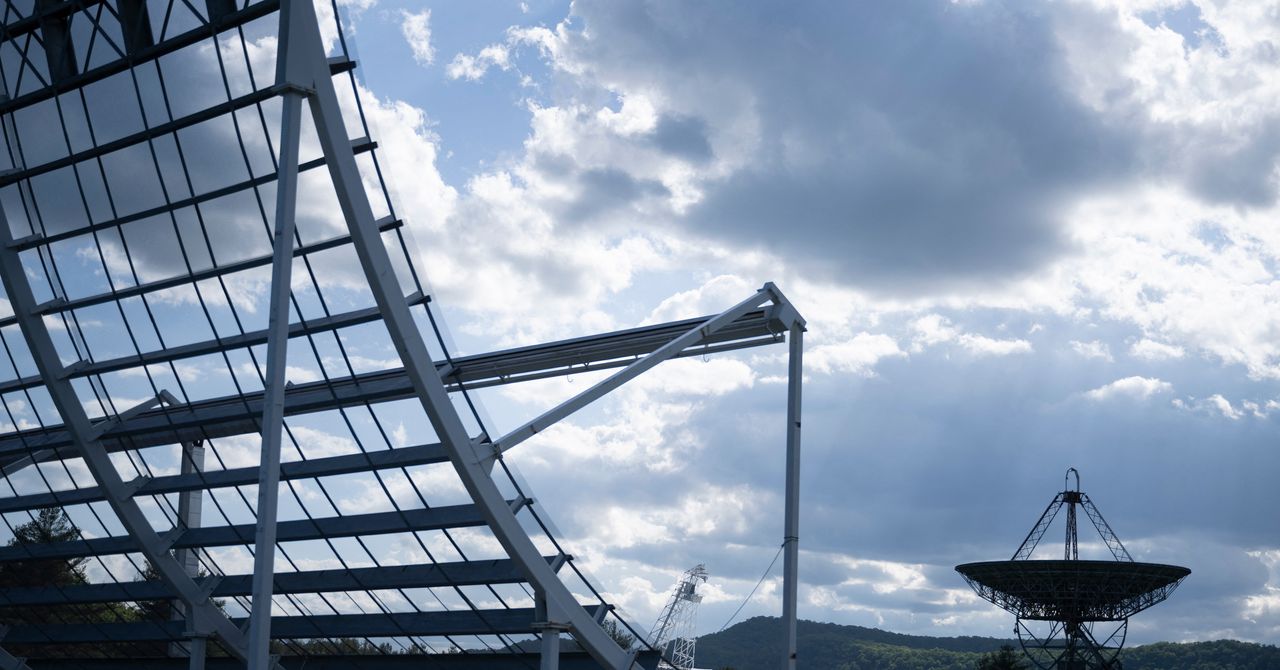
- CHIME (Canadian Hydrogen Intensity Mapping Experiment): CHIME is a powerful radio telescope designed to survey the entire sky and detect radio signals, including FRBs.
- Outriggers: These are a subnetwork of smaller stations strategically located to complement CHIME. Their purpose is to provide more precise localization of the detected signals through triangulation.
CHIME detected and characterized the signal, while the Outriggers worked to pinpoint its location in the sky. This collaborative effort was crucial in achieving the unprecedented precision in tracing RBFLOAT’s origin.
Precision Localization: A New Standard for FRB Research
Using the data from CHIME and the Outriggers, the team achieved a localization accuracy of 13 parsecs, equivalent to about 42 light-years. This is a significant improvement over previous FRB localizations, particularly for non-repeating bursts. This level of precision allowed the astronomers to pinpoint RBFLOAT’s origin within a specific region of its host galaxy.
Unveiling the Source: What Caused the RBFLOAT?
While the exact cause of RBFLOAT remains uncertain, the localization data provides valuable clues. The fact that RBFLOAT was located within an arm of the spiral galaxy NGC 4141, about 130 million light-years away, and specifically in a region of active star formation, narrows down the possible sources.
Potential Sources of Fast Radio Bursts
Scientists have proposed several potential sources for FRBs:
- Magnetars: These are neutron stars with extremely strong magnetic fields. Bursts from magnetars are a leading theory for the origin of at least some FRBs.
- Neutron Star Mergers: The collision and merger of two neutron stars could potentially generate FRBs.
- Pulsars: These are rapidly rotating neutron stars that emit beams of electromagnetic radiation.
- Cosmic Strings: Hypothetical one-dimensional topological defects in spacetime.
- Extraterrestrial Intelligence (Debated): Though highly unlikely, the artificial origin of FRBs has been proposed and debated, but is not supported by scientific evidence.
The Magnetar Hypothesis
In the case of RBFLOAT, the data suggest a magnetar origin is plausible. The signal’s location in a star-forming region with massive stars supports this hypothesis, as magnetars are often formed from the collapse of massive stars. The incredibly strong magnetic fields of magnetars could potentially generate the intense bursts of radio waves observed as FRBs.
Future Prospects for FRB Research
The success in localizing RBFLOAT demonstrates the power of combining advanced telescopes and sophisticated analysis techniques. This breakthrough paves the way for future FRB discoveries and a more complete understanding of these enigmatic cosmic phenomena. The researchers estimate that they could achieve approximately 200 accurate FRB localizations per year using just the signals CHIME captures, opening a new era of FRB research.
- Increased Detection Rates: With improved instrumentation and analysis techniques, astronomers expect to detect more FRBs than ever before.
- More Precise Localizations: Pinpointing the origins of FRBs with greater accuracy will help identify their sources and the environments in which they occur.
- Statistical Studies: A larger sample of localized FRBs will enable statistical studies to identify common characteristics and trends, providing further insights into their nature.
The team’s ability to “routinely tie them to specific galaxies, even down to neighborhoods within those galaxies” marks a significant turning point.
Conclusion: The Future of FRB Exploration
The successful localization of RBFLOAT marks a major step forward in the study of fast radio bursts. By combining the power of CHIME, its Outriggers, and innovative analysis techniques, scientists have demonstrated the ability to pinpoint the origins of these mysterious signals with unprecedented precision. While the exact cause of RBFLOAT remains unknown, the data suggest a magnetar origin, highlighting the role of extreme cosmic events in generating these bursts. This breakthrough not only provides valuable insights into the nature of FRBs but also paves the way for future discoveries and a deeper understanding of the universe’s most energetic phenomena. This research will undoubtedly unlock further mysteries of the universe.
What do you think could be the ultimate cause of fast radio bursts? Share your thoughts in the comments below!
Sources & Further Reading:
Original article at www.wired.com


