
The Ghost in the Machine: Claude’s Free Incognito Mode Signals a Shift in AI Privacy
Picture this: that sensitive thought experiment you typed into an AI chatbot late at night, could it resurface unexpectedly later, perhaps during a critical work presentation? This fear of digital permanence fuels a growing demand for privacy in artificial intelligence interactions. Enter Anthropic, shaking things up significantly by making its AI privacy features, specifically Incognito mode, completely free for all Claude users. In an era where tech giants often gatekeep privacy behind paywalls, this bold move highlights a fundamental shift. It recognizes user trepidation about data trails while making cutting-edge AI more accessible. This commitment to ephemeral interactions without compromising core functionality through its paid memory system signifies a nuanced approach to the complex relationship between utility and confidentiality.
Why the Fear? Understanding the Demand for Ephemeral AI
The digital landscape is littered with anxieties about data collection. Studies consistently show users prioritize privacy, yet feel powerless controlling their data:
- A Prewo Research Center survey revealed 81% of Americans feel they have little control over data collected by companies.
- 77% expressed concern about how companies use their information online.
- High-profile data breaches and misuse scandals have eroded trust in tech platforms.
This global concern translates directly to generative AI. Users hesitate to explore sensitive topics – finance, health, creative writing, or controversial ideas – when questions might be stored indefinitely. Anthropic’s decision to offer a free, robust Incognito mode directly addresses this chilling effect, encouraging unfiltered exploration crucial for AI’s potential.
Your Private Sanctuary: How Claude’s Incognito Works
Activating Incognito mode is deliberately simple, ensuring privacy isn’t just promised, but demonstrably delivered:
- The Ghost Button: A discreet ghost icon appears when starting a new chat.
- Visual Confirmation: A distinct black border and explicit “Incognito” label immediately signal the chat’s private status.
- Plain Vanilla Feature: This mode is accessible to anyone using Claude, regardless of subscription tier (including free users).
- The Disappearing Act: When you close the Incognito chat window, it effectively vanishes. Key characteristics:
- No History: Doesn’t appear in your chat history sidebar.
- No Memory: Claude won’t reference this conversation in future dialogues.
- Limited Retention: Anthropic temporarily retains interactions for 30 days solely for safety and abuse prevention, then permanently deletes them. This practice aligns with industry standards to combat misuse without compromising user anonymity in the long term. Think of it as a safety net, not a data silo.
Think of it as a digital “thinking space” where you can brainstorm wildly, ask uncomfortable questions, or explore niche topics without leaving a trace. It’s the AI equivalent of whispering a secret to a trusted confidante who instantly forgets.
Beyond Embarrassment: Unlocking the Power of Ephemeral Chats
While shrugging off awkward queries is a benefit, Incognito mode’s power lies deeper:
- The Ultimate Mental Sandbox: Test hypotheses, explore creative concepts, or practice difficult conversations without fear of these exploratory thoughts influencing later, potentially more formal, interactions. Extensive research into experimental psychology highlights the importance of low-stakes environments for fostering deep creativity and learning.
- Research Without Bias: Investigate conflicting viewpoints on sensitive topics without committing your browsing history or influencing tailored future responses.
- Learning in Confidence: Newcomers intimidated by AI can experiment freely, lowering the barrier to entry significantly.
- Emotional Safety: Explore personal challenges, relationship dynamics, or mental health concerns without creating a permanent, potentially sensitive digital record.
Incognito mode fosters a unique kind of interaction – one defined by absolute immediacy and impermanence, which paradoxically can make it feel more authentically human and judgment-free.
Memory Unleashed: Claude’s Assistive Recollection (For Climbing the Subscription Ladder)
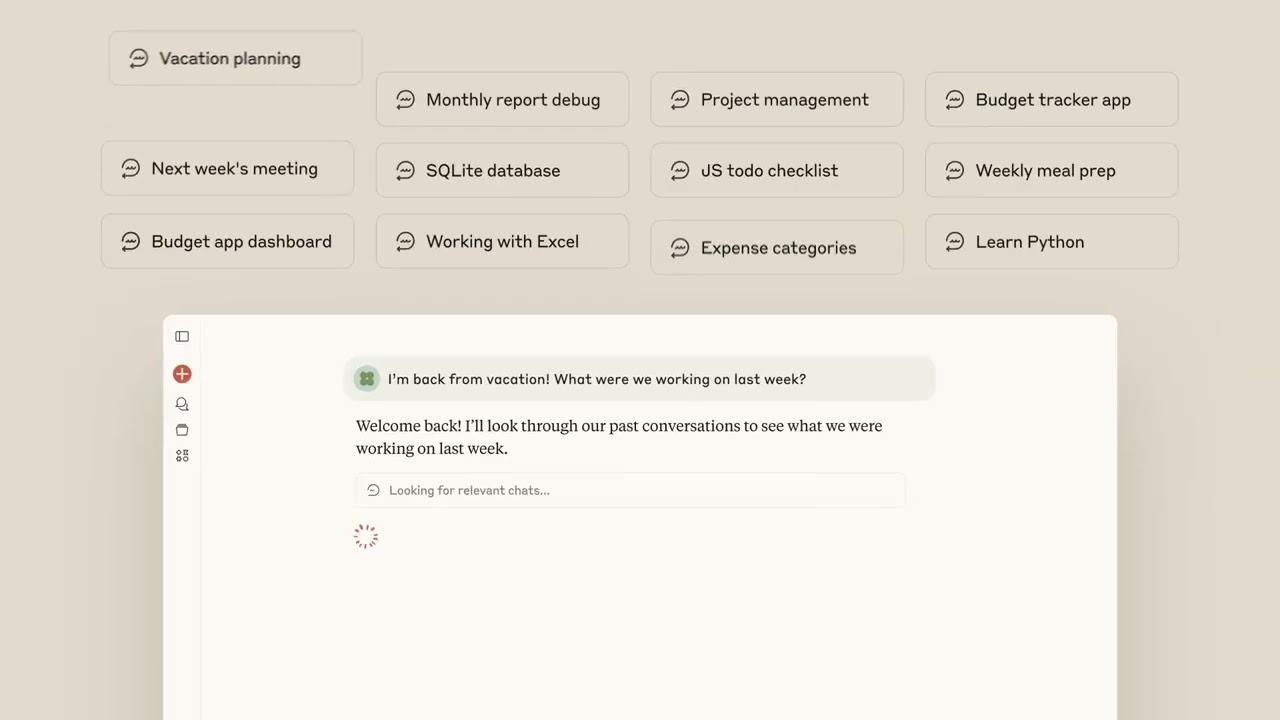
Contrasting sharply with the ephemeral nature of Incognito mode is Claude’s newly launched long-term memory system. Designed for continuity and enhanced productivity, it targets paying subscribers on Claude Max, Team, and Enterprise plans. It’s a sophisticated tool, not just a storage bin:
- Contextual Recall: Claude remembers crucial details from previous conversations within specific contexts (like a project).
- Project Mode Integration: Retains relevant information and progress within dedicated “Project” spaces. A user writing a novel can seamlessly return days later, and Claude recalls characters, plot points, and style preferences.
- Preference Storage: Learns your tone of voice, formatting requirements, or specific working methods for consistent output.
- Problem-Solving Continuity: Helps you pick up complex tasks across multiple sessions without losing crucial threads.
- Strict Isolation: Critically, memory is compartmentalized. Personal Incognito chats don’t bleed into work project memory, and vice-versa, maintaining necessary boundaries.
Intelligence, Not Opposites: How Memory & Incognito Perfectly Coexist
This is Anthropic’s masterstroke. Incognito mode and long-term memory aren’t competing features; they’re complementary tools serving distinct user needs:
-
Use Incognito When:
- Privacy is paramount.
- Exploration requires zero record.
- You need a clean, unbiased slate free from past influences.
- The interaction is temporary and self-contained.
-
Use Memory When:
- Continuity and context enhance productivity.
- Building on previous work is essential.
- You welcome personalized assistance based on established patterns.
- Managing complex, ongoing projects demands persistent information retention.
This approach offers unprecedented choice. Users control their own data narrative. Nothing gets permanently saved without explicit user opt-in for memory features. If you don’t need or want memory, even as a paid subscriber, you don’t have to engage with it. It’s an “opt-in everywhere” design philosophy prioritizing user autonomy.
Transparency Triumphs: Setting Claude Apart from the AI Chorus
While competitors offer similar concepts, Claude’s implementation stands out through clarity and user-centric design:
| Feature | Claude | ChatGPT (OpenAI) | Gemini (Google) |
|---|---|---|---|
| Ephemeral Mode | Free Incognito (visual cues, 30-day safety hold) | GPT-4 Only (Temporary Chat – not always prominent) | Conversations maybe visible to human reviewers? |
| Access Control | Free for all tiers | Advanced features usually require Plus/Enterprise | Tied to Google Account controls, nuances unclear |
| Visual Signaling | Strong (Icons/Borders) | Minimal/Text-based | Minimal |
| Memory Opt-In | Explicit, drop-down confirmation | Context retention options | Limited control over chat history retention scope |
| Data Isolation | Strong (Project separation, Incognito privacy) | Some customization possible | Unclear boundaries between personal/Assistant memory |
Claude wins significant points for its clear visual indicators for Incognito mode and its transparent, unambiguous process for opting into memory. This levels the playing field, making sophisticated AI privacy features understandable and manageable for everyday users, not just tech experts. As explained in resources on “usable security” from institutions like NIST, clear interfaces build trust in complex systems (NIST Usability).
The Flip Side: Considering the Drawbacks of Impermanence
While Incognito offers profound privacy, its “no trace” ethos presents limitations:
- Vanishing Vaults: If you forget to copy crucial insights generated during an Incognito session before closing, retrieving that information is impossible. The trade-off for privacy is absolute permanence.
- No Projects Integration: Currently, Incognito mode cannot be used within Claude’s “Projects” feature. Complex work requiring both privacy from histories and structured organization faces a gap.
- The Paradox: Ephemerality contrasts with expectations of smart assistants “learning” from interactions. It offers a clean slate but potentially misses opportunities to learn user preferences over time (within ethical bounds) – though that’s precisely what paid memory is for elsewhere.
- Limited Memory Scope: The memory feature itself is currently restricted to higher subscription tiers, making this potent combination of privacy + continuity less accessible to free users and smaller teams.
Beyond Convenience: The Deeper Human Connection
Anthropic’s duality reveals a fascinating truth: Humans don’t need or want total recall from their AI tools – they need appropriate recollection. The ability to forget, or choose strategically when to remember, resonates deeply. It maps onto how human cognition and relationships work: we remember crucial details contextually and discard the irrelevant or temporary. An AI that can mimic this contextual forgetting feels less like an omnipresent surveillance tool and more like a responsive partner, capable of both discretion and helpful recall based on context and permission. It reflects a fundamental shift from perceiving AI as an all-knowing oracle to recognizing it as a configurable tool – one that can adapt to our need for both sanctuary and continuity.
Ephemeral Thoughts, Enduring Implications
Anthropic’s free Incognito mode and tiered memory system represent a notable maturation in conversational AI. It moves past the simplistic privacy vs. utility binary. By providing robust ephemeral interactions for all and advanced, compartmentalized recall for those who need it (and pay for it), Claude empowers users with unprecedented control over their AI data footprint. The clear visual cues and opt-in philosophy for memory establish a benchmark for transparent design. While limitations exist, particularly around data recovery in Incognito mode and current access to memory features, the overall direction prioritizes user agency. This approach acknowledges a core truth: trust in AI isn’t just built on impressive output, but fundamentally on respecting user boundaries and offering clear choices about where, when, and how their interactions leave a mark. As AI becomes ever more entwined with our daily lives, will other players prioritize privacy for everyone, not just premium subscribers? We’d love to hear your thoughts on AI privacy choices. What features matter most to you?


