
Reimagining Mobile Gaming: The Unprecedented Power of Asus’ Dual-Screen Vision
What if the future of high-performance gaming and creative work doesn’t lie in ever-thinner single-screen laptops, but in harnessing the vast real estate of two brilliant OLED displays? With the unveiling of the ROG Zephyrus Duo at CES 2026, Asus doesn’t just flirt with this concept—it delivers the most audacious dual-screen gaming laptop ever conceived. This machine transcends typical “experiments,” packing desktop-replacing power into a chassis boasting two stunning 16-inch screens, demanding attention from hardcore gamers and creators alike. Its significance lies in aggressively tackling a persistent challenge: overcoming the limitations of mobile screen space while integrating bleeding-edge components without compromise. Let’s dissect why the ROG Zephyrus Duo might be the harbinger of mainstream dual-screen power.
The Dual-Canvas Paradigm: Beyond Gimmickry
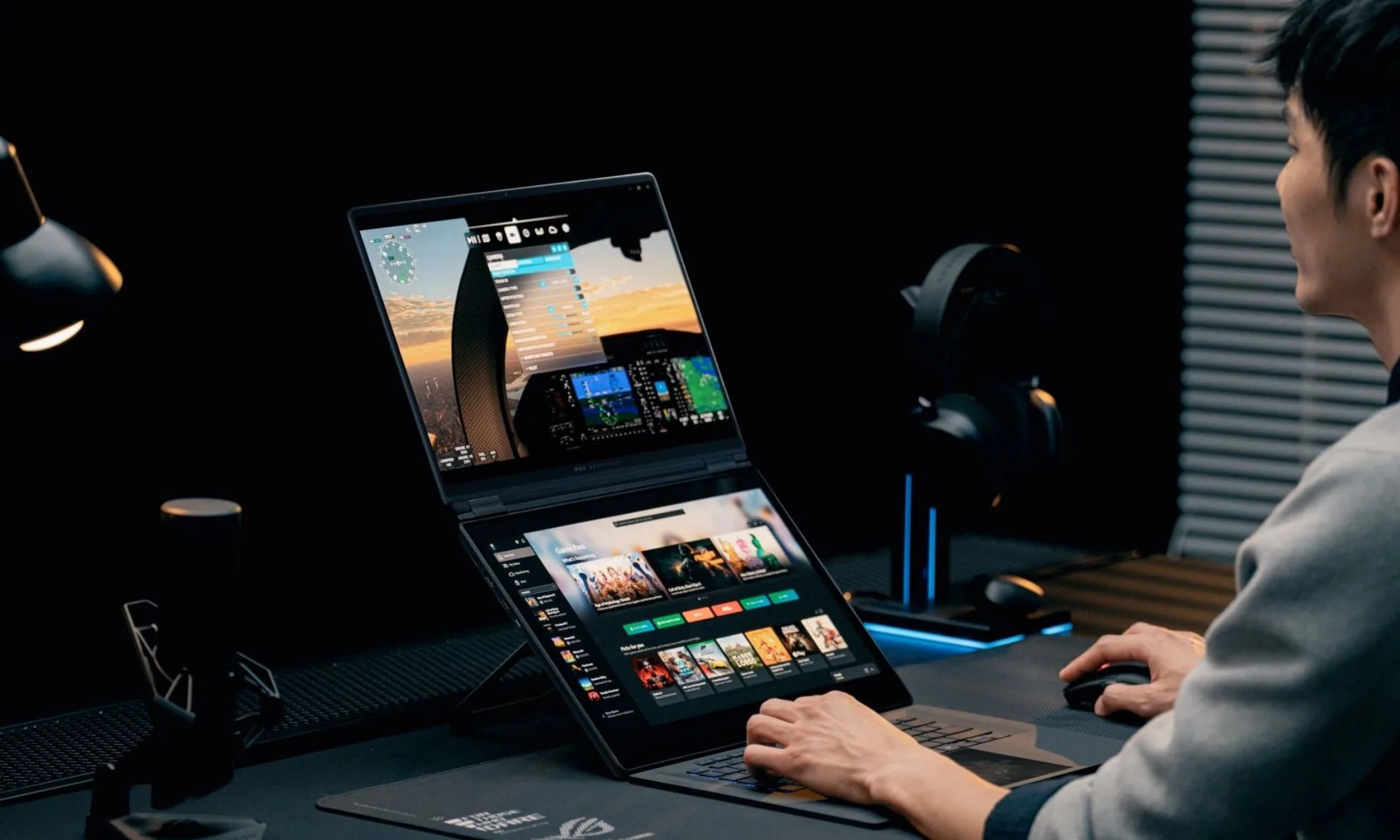
Gone are the days of dual screens being a niche curiosity. The Zephyrus Duo embodies a fundamentally transformed workflow approach. Featuring two identical 16-inch, 3K resolution ROG Nebula HDR OLED panels, each offers a breathtaking visual experience:
- 360-Degree Productivity & Immersion: The integrated kickstand unlocks unprecedented flexibility. Configure them vertically (like an immense digital book) for coding documentation, lengthy scripts, or gaming maps/guides. Stack them horizontally for an expansive cinematic view or parallel app workflows unmatched by any traditional laptop.
- Magnetic Keyboard Mastery: Asus resolves the key ergonomic dilemma – where does the keyboard go? The included magnetic keyboard accessory brilliantly perchates atop the lower screen or detaches entirely for wireless use. This liberates the entire canvas when full-screen immersion is paramount while providing a traditional typing experience otherwise.
- Visual Fidelity Experts Demand: Each OLED panel isn’t just large; it’s technically elite. Boasting a 120Hz refresh rate, 0.2ms response time, and HDR support, motion blur vanishes, crucial for competitive gaming. The jaw-dropping peak brightness of 1,100 nits ensures stunning HDR highlights and razor-sharp visuals even in bright environments.
Lithography Muscle: Driving Twin Displays Without Compromise
Feeding pixels to two high-resolution OLED screens while handling AAA titles demands immense computational firepower. The Zephyrus Duo’s specification sheet reads like a desktop enthusiast’s wishlist seamlessly integrated into a mobile powerhouse:
| Specification | Highest Available Tier | Significance |
|---|---|---|
| Processor (CPU) | Intel Core Ultra 9 Processor 386H (16-core) | BF CPU utilization across gaming, streaming, and multitasking workload demands efficiently. |
| Graphics (GPU) | NVIDIA GeForce RTX 5090 Laptop GPU | Next-gen GPU tackles dual-screen gaming resolutions and intensive creator apps. |
| System Memory (RAM) | Up to 64GB LPDDR5X-8533 | Facilitates massive game worlds/data sets; mandatory for multi-stream setups. |
| Storage (SSD) | Up to 2TB PCIe Gen5 SSD (2x M.2 Slots*) | Lightning-fast load times; ample space for games/media libraries; upgradable. |
| Connectivity | Wi-Fi 7, Bluetooth 6.0, Dual Thunderbolt 4 (100W PD) | High-speed wireless transfers; wired connections to fast external displays/storage. |
This combination addresses the core critique of previous dual-screen devices: performance bottlenecks. The RTX 5090 Laptop GPU (anticipated successor to the Ada Lovelace architecture) aims to deliver frame rates capable of leveraging the 120Hz potential of both panels simultaneously. Coupled with Intel’s flagship Core Ultra 9 CPU, the Duo positions itself beyond gaming, targeting demanding creators performing 3D rendering, intricate video editing, or complex simulations requiring expansive multi-window UIs.
Innovation Beneath the Surface: Cooling and Craftsmanship
Marrying such potent hardware with dual high-brightness OLEDs presents an immense thermal challenge. Heat dissipation becomes paramount:
- Custom Vapor Chamber: Asus engineers implemented an advanced vapor chamber cooling solution designed specifically for this unique chassis. This system spreads heat rapidly over a large surface area using evaporation and condensation cycles, far more efficiently than standard heat pipes/heat sinks alone. It’s critical to prevent CPU/GPU throttling and maintain screen integrity under sustained load.
- Premium CNC Construction: The robust chassis isn’t just for show. Machined from aluminum alloy via CNC (Computer Numerical Control), it ensures rigidity, aids heat conduction from internal components, and provides a top-tier feel. This luxurious craftsmanship signals the Duo’s flagship status, aiming to justify an anticipated premium price point.
Connectivity is equally robust: Two Thunderbolt™ 4 ports (with DisplayPort 2.1 and 100W Power Delivery) offer incredible bandwidth for external GPUS, monitors, or storage arrays. HDMI 2.1 FRL future-proofs connections to high-end TVs/displays. The inclusion of a high-speed UHS-II SD card reader caters directly to photographers and videographers – a thoughtful touch reinforcing the creator focus alongside gaming prowess.
Weighing Ambition: The Pros and Cons of a Dual-Screen Future
The ROG Zephyrus Duo 2026 forces a reevaluation of mobile computing form factors:
- Unmatched Productivity & Immersion: Provides near-desktop levels of screen real estate portable enough to carry. Gameplay advantages include having world maps/chat streams/docs perpetually visible without alt-tabbing.
- Cutting-Edge Performance: Specs rival top-tier traditional laptops, eliminating the “performance sacrifice” penalty some competitors incurred. OLED/HDR quality is state-of-the-art.
- Design Ingenuity: Solved keyboard placement dilemma and innovative kickstand enhance usability significantly over earlier dual-screen attempts.
However, realities persist:
- Portability Trade-off: At 2.85 kg and featuring a physically large footprint (24.68 x 35.5 cm), its mobility compromises. Battery life (90Wh capacity divided between two screens) could be a significant constraint during unplugged use despite OLED efficiency. Asus OLED Tech Overview generally notes efficiency gains vs. LCDs, but driving two units offsets this significantly.
- The Pricing Factor: With premium specs, OLED panels, and complex engineering, pricing remains undisclosed but is expected to be stratospheric. Will mainstream adoption follow? Accessibility hurdles remain substantial. History suggests early adopters, like gamers using unique setups requiring extensive screen space, undergo giant costs regardless hurdles persuade willingness.
A Bold Glimpse of What’s Next
The Asus ROG Zephyrus Duo (2026) is far more than a mere laptop; it’s a compelling argument that dual screens can become a viable, high-performance reality. It successfully tackles core feasibility hurdles via brute-force specs, innovative cooling, and clever design mechanics like the magnetic keyboard. Its arrival signals potential inflection point mainstream mobile computing forms evolves commoditizing multi-screen workflows universally accessible without attaching overt compromises. While practical constraints regarding portability, battery runtime, and likely cost present barriers for average users, its existence forcefully proves dual-screen machines possess chrome neither inherently niche underpowered devices fraught limitations compromises epic potential unlocks entirely new productivity creative workflows unprecedentedly immersive gaming experiences windigned. Perfect crafted diamond though heralds glimpse tantalizing future desktop-level performance limitless canvas fits backpack extraordinarily transforming work play possibilities. Is this the shape mobile computing destined? Possibly. Does maximize tangible benefits persuasively powerful argument advantages overwhelming early adopters pioneers paved path innovations eventually filter accessible tiers industry widens. What applications envision harnessing twin OLED displays? Could revolutionize workflow game? Sound thoughts!


