
Will Showrunner be the “Netflix of AI,” or Just Another Overhyped Tech Fad?
Remember the virtual reality craze? For a while, it seemed like VR was poised to revolutionize everything from gaming to movies. Despite some early successes, like an Emmy award for Oculus Story Studio, the technology never quite reached mainstream adoption. Now, Edward Saatchi, co-founder of Oculus Story Studio, is back with a new vision: Showrunner, a generative AI platform that aims to put the power of content creation directly into the hands of users. But can Showrunner overcome the pitfalls that plagued VR, or is it destined to become another flash in the pan? This article will delve into the details of Showrunner, exploring its potential, its challenges, and the implications it holds for the future of entertainment.
From VR Failure to AI Ambition: The Story of Edward Saatchi and Fable
Saatchi’s journey from VR evangelist to AI proponent is a cautionary tale of technological hype and the harsh realities of consumer adoption. The closure of Oculus Story Studio in 2017 served as a wake-up call, forcing him to re-evaluate what audiences truly want.
The Lessons Learned from Oculus Story Studio’s Demise
The failure of Oculus Story Studio, despite its early promise, highlighted the challenges of forcing new technologies onto an audience. Saatchi admits his team was overly confident, believing they could easily disrupt the established Hollywood order. However, the reality was far different. As Saatchi noted, their “net impact on the industry was zero in the end, and our revenue from VR movies was probably $10.”
The core issue, as Saatchi sees it, was the awkward hybrid of passivity and interactivity that VR demanded. Viewers were caught between watching a movie and playing a game, never fully immersed in either. This realization led him to seek a more dynamic and engaging form of entertainment, ultimately leading him to generative AI.
The Spark: A VR Bottleneck and the Genesis of a “Digital Being”
Saatchi’s interest in generative AI wasn’t born from a desire to simply automate content creation. It stemmed from a technical obstacle encountered while developing a VR adaptation of Neil Gaiman’s Wolves in the Walls. The team wanted Lucy, the main character, to have natural conversations with viewers. However, existing technology limited her to pre-scripted dialogue, hindering the sense of realism.
This limitation sparked the idea of building Lucy as a complex “digital being” capable of nuanced interactions. While early attempts to achieve this with OpenAI fell short, the experience convinced Saatchi that generative AI held the key to a new form of interactive entertainment. The goal became creating not just a character, but a simulated world for that character to inhabit, giving them context and depth.
Showrunner: A “Netflix of AI” or a User-Exploitation Engine?
Showrunner is the culmination of Saatchi’s post-VR vision. It’s a generative AI platform currently accessible via Discord, allowing users to create short animated videos by prompting the AI with specific scenarios. For example, a user could request a scene of Elon Musk and Sam Altman discussing the possibility of turning homelessness into a software-as-a-service product.
How Showrunner Works: Prompting for Content Creation
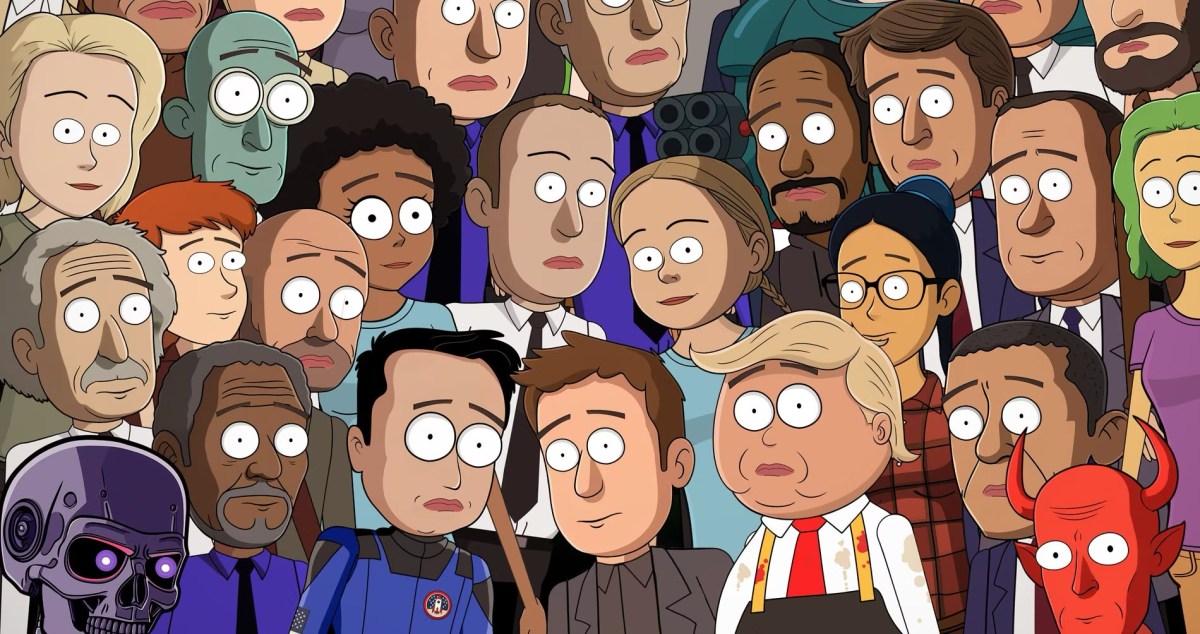
The platform offers a selection of characters and art styles, allowing users to tailor their prompts to fit the aesthetics of pre-set “shows” like Exit Valley, a cartoon that blends the styles of Silicon Valley and Family Guy. The resulting clips, while undeniably AI-generated, showcase the potential of the technology. The AI-generated voices, though somewhat awkward, are designed to mimic the real-life individuals being portrayed, and the animation, while stiff, is improving.
Currently, the service is free, but Fable plans to introduce a subscription model, charging $10-$20 per month for access. This raises the question: What are users paying for? Are they paying for the convenience of generating content, or are they contributing to a system that ultimately benefits large corporations?
Unlicensed South Park Episodes and the Challenges of AI Comedy
One of Showrunner’s early experiments involved generating unlicensed South Park episodes. While the AI could mimic the show’s visual style and musical cues, it struggled to capture the show’s signature comedic timing and the chemistry between characters. The resulting episodes were described as poorly written fanfiction, highlighting the limitations of AI in replicating the nuances of human creativity.
This experiment revealed that while generative AI can approximate artistic styles, it still struggles with the more complex aspects of storytelling, such as humor and character development. This raises doubts about Saatchi’s claim that Showrunner could eventually produce content on par with The Simpsons, Euphoria, or Toy Story.
Licensing IP and the Potential for User-Generated Content
Fable’s long-term vision for Showrunner involves licensing intellectual property from major studios like Disney. This would allow users to generate scenes featuring characters from popular franchises like The Mandalorian. Saatchi envisions a future where users can create “millions of new scenes, thousands of episodes, or even their own movies” within established universes.
He uses the example of a Star Wars model developed under the direction of Dave Filoni, offering users the chance to “explore the world through prompting” and “inadvertently trigger scenes within those worlds in a way that would make it feel as though you’re uncovering something unknown.”
However, this vision raises ethical and economic questions. If studios own anything generated with Showrunner’s branded models, and users have to pay to use the service, are subscribers essentially becoming unpaid employees working for Hollywood?
The Ethical Tightrope: Balancing Innovation and Exploitation
Saatchi insists that Showrunner is a revolutionary tool that will empower users and create new opportunities for independent creators. He argues that indie filmmakers could license their projects to Showrunner and receive a portion of the revenue generated by users creating scenes with their models.
“This could create something where creators can earn money when people are emotionally connected enough to their work that they themselves want to make something with it,” Saatchi explains.
However, the business model bears a striking resemblance to platforms like Roblox and Fortnite, where users contribute content that primarily benefits the corporation’s bottom line. The key difference is that Showrunner plans to charge users upfront, raising concerns about potential exploitation.
The Promise of Supplementation, Not Replacement
One of the common arguments made by proponents of generative AI is that it will supplement, not replace, human creativity. Saatchi echoes this sentiment, stating that he sees Showrunner as a platform meant to enhance traditional entertainment, not eliminate it. He emphasizes that Fable works with human artists and animators to develop visual assets, believing that “something is just clearly lost without that.”
He acknowledges the potential for AI to displace jobs, but argues that focusing solely on cost-saving measures misses the bigger picture. “If all that we can do with such a powerful technology is just cut jobs, what was the point?” he asks.
The challenge, however, lies in ensuring that AI tools are used ethically and responsibly, creating new opportunities for human creativity rather than simply automating it out of existence.
Key Questions for the Future of Showrunner
- Will Showrunner be able to overcome the quality gap and create truly compelling content? The current output, while promising, is still far from matching the quality of professionally produced entertainment.
- Can the business model be structured in a way that benefits both users and creators, without resorting to exploitation? Finding a fair and equitable revenue sharing system will be crucial for the platform’s long-term success.
- Will Showrunner be able to navigate the legal and ethical challenges of using licensed IP? Ensuring that the platform respects copyright and intellectual property rights will be essential for building partnerships with major studios.
- How will Showrunner address the concerns about AI displacing creative jobs? Actively working to support and empower human artists and animators will be crucial for mitigating the negative impacts of the technology.
Conclusion: A Leap of Faith or a Repeat of Past Mistakes?
Showrunner represents a bold attempt to harness the power of generative AI for entertainment. Edward Saatchi’s vision of a “Netflix of AI” is ambitious, but the platform faces significant challenges. Overcoming the limitations of AI-generated content, establishing a fair business model, and addressing ethical concerns will be crucial for Showrunner’s success. Whether it becomes a revolutionary tool for user-generated entertainment or simply another overhyped tech fad remains to be seen.
What do you think? Can Showrunner live up to its potential? Comment below!
Sources & Further Reading:
Original article at www.theverge.com


