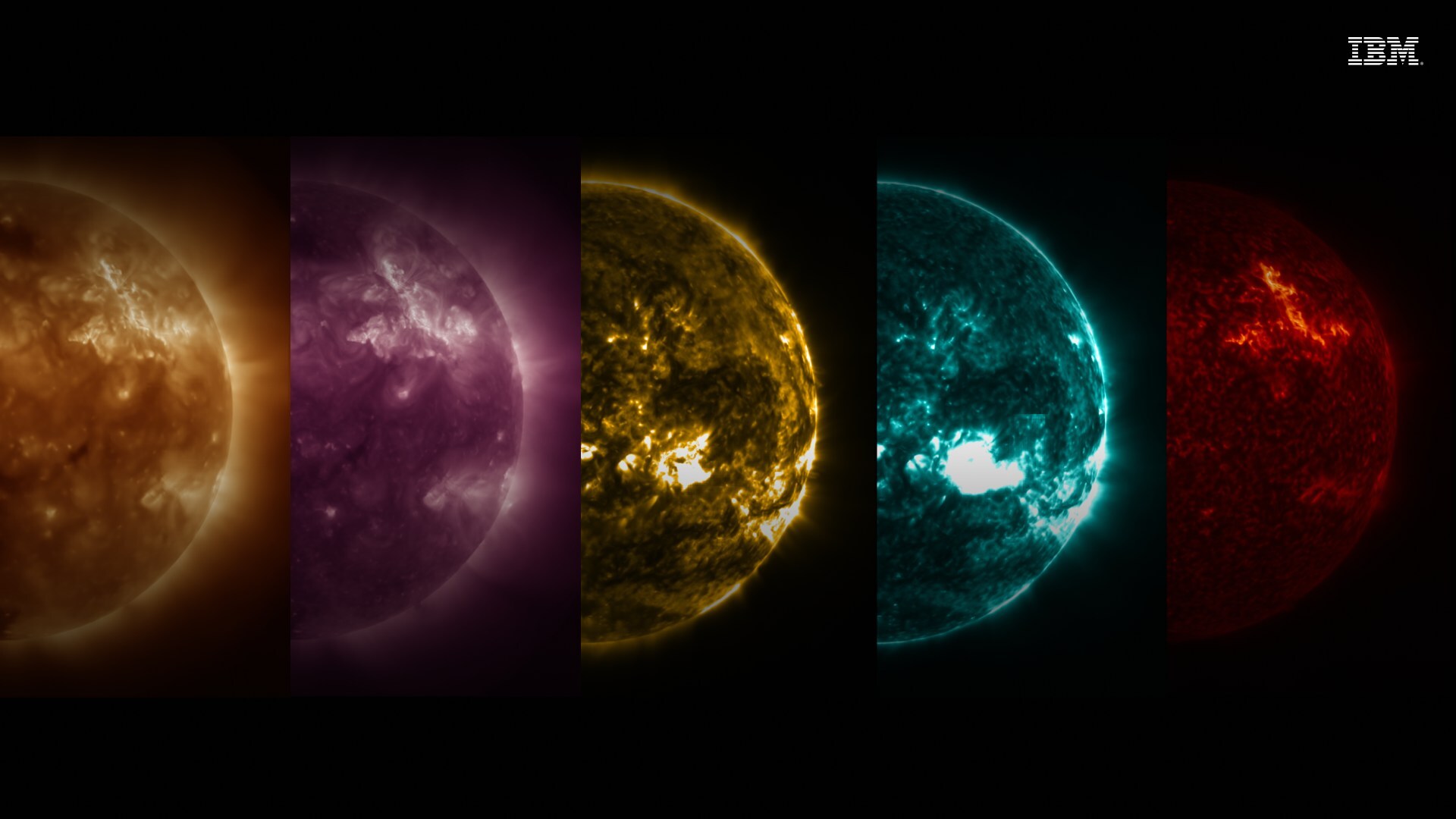

Is the Earth Ready for the Next Big Solar Storm? NASA and IBM Team Up to Find Out.
What if a solar storm hit Earth with the same ferocity as the Carrington Event of 1859, causing widespread blackouts and crippling our modern technological infrastructure? The potential economic devastation, estimated at trillions of dollars, underscores the urgent need for improved space weather forecasting. Now, NASA and IBM have joined forces to tackle this challenge head-on, unveiling Surya, a cutting-edge open-source artificial intelligence model designed to analyze the Sun and predict disruptive solar events with unprecedented accuracy. This collaborative effort promises to revolutionize our understanding of space weather and mitigate the growing risks posed by solar activity.
Understanding the Threat: Why Solar Storm Prediction Matters
Space weather, driven by the Sun’s dynamic activity, poses a significant threat to our increasingly technology-dependent society. Solar flares, sudden bursts of energy, and coronal mass ejections (CMEs), massive eruptions of plasma and magnetic field, can unleash a barrage of radiation and charged particles towards Earth. These events can disrupt:
- Satellite Communications: GPS navigation, satellite television, and communication networks are all vulnerable.
- Power Grids: Geomagnetically induced currents (GICs) from solar storms can overload and damage transformers, leading to widespread blackouts.
- Aviation: Airline routes, especially polar routes, can be affected by radiation exposure and communication disruptions.
- Telecommunications: Damage to undersea cables could sever internet connectivity worldwide.
- Astronaut Safety: Increased radiation levels pose a serious threat to astronauts in space.
The Lloyds of London estimate of a $2.4 trillion global economic loss over five years from a major solar storm highlights the immense financial and societal implications. Accurate and timely solar storm predictions are crucial for taking proactive measures to protect critical infrastructure and minimize potential damage. Just as we rely on weather forecasts to prepare for hurricanes and blizzards, advanced space weather forecasting is essential for safeguarding our technological infrastructure against the Sun’s powerful outbursts.
Surya: An AI-Powered Weather Forecast for Space
Developed jointly by IBM and NASA, Surya represents a significant leap forward in solar weather prediction. Named after the Sanskrit word for the Sun, the model is designed to analyze vast amounts of solar data and forecast potentially hazardous events, particularly solar flares, with greater accuracy and speed. According to IBM, Surya has demonstrated a 16% improvement in solar flare classification accuracy compared to previous methods, offering potentially crucial early warning systems for at-risk systems.
Juan Bernabe-Moreno, director of IBM Research Europe, UK and Ireland, aptly described Surya as “a weather forecast for space,” emphasizing the model’s role in anticipating and preparing for potentially disruptive solar storms. This analogy underscores the importance of proactive measures and the need for advanced tools to understand and mitigate the risks associated with space weather.
How Surya Works: Leveraging Data and AI for Improved Solar Predictions
Surya’s improved predictive capabilities stem from several key innovations:
- Massive Training Dataset: Surya was trained on nine years of high-resolution data from NASA’s Solar Dynamics Observatory (SDO). This comprehensive dataset, the largest of its kind, provides a detailed record of solar activity, allowing the AI model to learn complex patterns and correlations.
- Open-Source Platform: By releasing Surya as an open-source model on Hugging Face, IBM and NASA are encouraging collaboration and innovation within the scientific community. This allows researchers and developers worldwide to build upon the model, customize it for specific applications, and contribute to its ongoing improvement. This approach fosters a collaborative ecosystem that accelerates the development of space weather forecasting technologies.
- High-Resolution Heliophysics Observations: Unlike traditional prediction methods that rely on limited satellite views, Surya utilizes the largest curated dataset of high-resolution heliophysics observations. This detailed data enables the model to capture solar features at levels of detail previously unseen in large-scale AI, leading to more accurate predictions.
- Multi-Architecture Solution: The sheer size of the solar images used to train Surya presented a major technical challenge. IBM engineers developed a multi-architecture solution to efficiently handle this massive dataset, enabling the model to process and analyze the information effectively. This innovative approach allows Surya to leverage the full potential of the available data, maximizing its predictive capabilities.
Key Features of Surya Model:
| Feature | Description | Benefit |
|---|---|---|
| Training Data | Nine years of high-resolution data from NASA’s Solar Dynamics Observatory (SDO) | Provides a comprehensive and detailed record of solar activity for the AI model to learn from. |
| Open-Source Availability | Released on Hugging Face | Encourages collaboration and innovation within the scientific community. Allows researchers to build upon and customize the model. |
| Prediction Horizon | Can predict solar flares up to two hours in advance | Provides valuable early warning for protecting critical infrastructure and minimizing potential damage. |
| Improved Accuracy | 16% improvement in flare classification accuracy compared to previous approaches | Enables more reliable and timely warnings of potentially disruptive solar events. |
| Focus Areas | Solar winds, solar flares, and the Sun’s extreme ultraviolet output. | Improves our understanding of space weather and its impact on Earth. |
| Applications | Space weather monitoring, protecting agriculture, and transport networks. | Can be used to develop strategies to mitigate the risks posed by solar activity. |
Applications Beyond Prediction: The Broader Impact of Surya
Surya’s applications extend far beyond predicting solar flares. The model and its associated dataset offer valuable resources for researchers studying various aspects of solar activity, including:
- Mapping Solar Flares: Understanding the location, intensity, and duration of solar flares is crucial for predicting their impact on Earth.
- Analyzing Solar Winds: Solar winds, streams of charged particles emanating from the Sun, can disrupt satellite communications and cause geomagnetic storms.
- Predicting Solar Activity Cycles: The Sun’s activity follows an 11-year cycle, with periods of increased and decreased solar flare activity. Understanding these cycles can help scientists anticipate future space weather events.
- Improving Space Weather Monitoring: The model provides real-time data and analysis that helps improve overall awareness of current and potential space weather risks.
- Protecting Agriculture and Transport Networks: Solar storms can disrupt GPS navigation, which is essential for precision agriculture and transportation systems. Early warnings can help minimize disruptions and ensure the continued operation of these critical sectors.
By making Surya open source, IBM and NASA aim to foster a wider understanding of space weather and empower researchers to develop innovative solutions for protecting our technology-dependent society. The model provides a framework for understanding how solar activity impacts critical systems and technologies on Earth.
Addressing “People Also Ask” Questions: Anticipating Public Interest
- What is space weather and why is it important? Space weather refers to the conditions in space caused by the Sun’s activity that can affect Earth and its technological systems. It’s important because solar storms can disrupt satellites, power grids, communications, and navigation systems.
- How can solar flares affect Earth? Solar flares can emit radiation that disrupts radio communications, damages satellites, and causes auroras. Strong flares can also lead to geomagnetic storms that affect power grids and pipelines.
- What are the effects of a strong solar storm? A strong solar storm can cause widespread power outages, disrupt GPS and communication systems, damage satellites, and pose health risks to astronauts. The economic impact can be significant, potentially reaching trillions of dollars.
- How do scientists predict solar storms? Scientists use satellites and ground-based observatories to monitor the Sun’s activity and analyze data to predict solar flares and coronal mass ejections. AI models like Surya are improving the accuracy and speed of these predictions.
- What is being done to protect Earth from solar storms? Efforts include developing better prediction models, hardening critical infrastructure against solar storms, and establishing emergency response plans. The goal is to minimize the impact of solar storms on society.
The Future of Space Weather Forecasting
Surya marks a significant step forward in space weather forecasting, but it is just the beginning. As data collection and AI technologies continue to advance, we can expect even more accurate and timely predictions of solar events. This will enable us to better protect our critical infrastructure, safeguard our astronauts, and minimize the economic and societal impact of space weather.
The collaboration between IBM and NASA highlights the power of combining scientific expertise with cutting-edge technology to address complex challenges. By making Surya open source, they are fostering a collaborative ecosystem that will accelerate the development of innovative solutions for space weather forecasting.
Conclusion: A Brighter Future for Space Weather Prediction
The unveiling of Surya represents a pivotal moment in our efforts to understand and mitigate the risks posed by solar storms. This innovative open-source AI model, trained on a massive dataset of solar observations, offers unprecedented capabilities for predicting solar flares and other disruptive events. By empowering researchers and developers worldwide, IBM and NASA are paving the way for a safer and more resilient future in the face of space weather challenges.
The potential benefits of Surya are far-reaching, from protecting our power grids and communication systems to safeguarding astronauts and minimizing economic losses. As we continue to refine and improve space weather forecasting technologies, we can look forward to a future where we are better prepared for the Sun’s dynamic activity. What do you think of this collaboration between IBM and NASA? Comment below!
Sources & Further Reading:
Original article at techinformed.com


