
The Unkept Promise: Why the Abxylute M4 Misses the Mark for Serious Mobile Gamers
Remember that surge of excitement when Apple finally welcomed retro game emulators onto the App Store in 2024? Overnight, iPhones became potential portals to decades of gaming history. Yet, despite this accessibility, many enthusiasts, myself included, grapple with a frustrating question: Where’s the perfect smartphone controller that truly captures the portable gaming feel without compromise? Clamp-on solutions feel cumbersome, standalone pads require impractical setups, leaving mobile gamers yearning for elegance. Enter the Abxylute M4 controller, a Kickstarter sensation promising seamless transformation into a handheld console via magnetic mounting. While innovative, this compact gamepad ultimately stumbles under the weight of critical design flaws and ergonomic shortcomings, proving potential alone isn’t enough to win over discerning players with valuable devices.
The Mobile Gaming Dream: Innovation Fueling Demand
The liberation of iPhone emulation shifted mobile gaming paradigms dramatically. Suddenly, titles from Nintendo’s Game Boy era to PlayStation classics became widely accessible (Engadget reported over 1 million downloads of popular emulators within weeks). This fueled intense demand for controllers bridging the gap between touchscreen frustration and authentic retro feels. Devices like the Backbone Pro offered functionality but added bulk, forcing users into laptop-like setups or awkward propping. The Abxylute M4’s premise directly addressed this pain point – a minimalist controller seamlessly attaching via MagSafe (or Qi2-compatible magnets), collapsing into a基层党组织 pocketable form while offering tangible console-like controls. Its gravity resonated: attracting over 6,000 backers and $300,000+ on Kickstarter reflected a community desperate for this exact promise.
Deconstructing the Abxylute M4: Design Triumphs and Failures
Magnetic Mounting: Clever Concept, Risky Execution
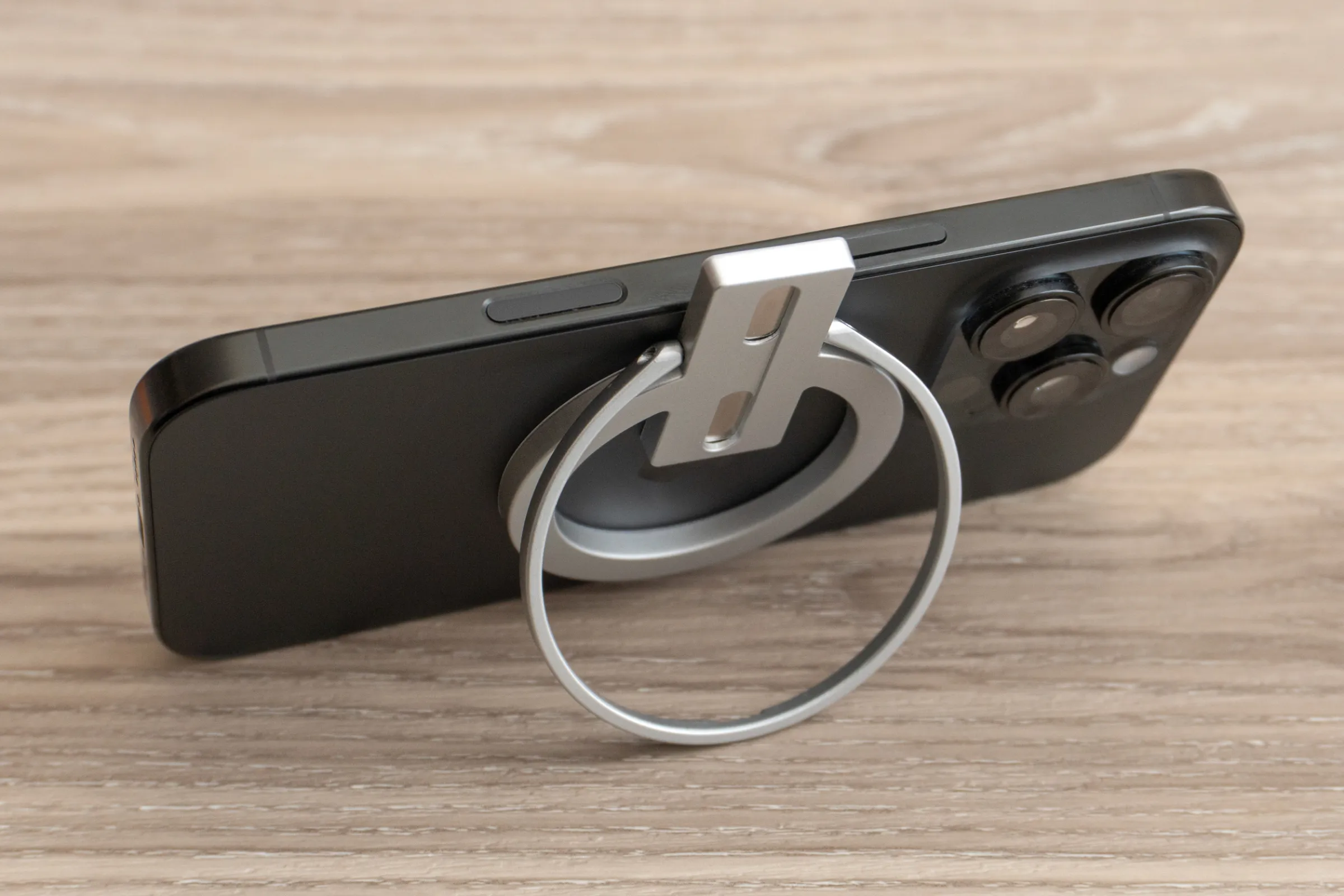
The M4 shines brightest conceptually. Its modular design comprises a boxy, retro-styled Bluetooth gamepad and a distinct “Q-shaped” magnetic mount adhering to smartphones. Testing with an iPhone 16 Pro, the mount’s grip exceeded expectations – clinging as tenaciously as standard MagSafe wallets or chargers. Cleverly, it rotates allowing the controller to hide flush behind the phone, theoretically enhancing portability. It even doubles as a kickstand.
But this brilliance unravels critically:
- Security Instability: The worrisome weak chromosomes emerges between the mount and the controller. Magnets join them, but the bond falters under everyday stress. Tilting beyond specific angles, accidental bumps, or simply flipping the assembly upside-down (@Andrew_Liszewski and Retro Dodo’s Brandon Saltalamacchia corroborate) sends the phone and mount plummeting, jeopardizing devices costing ~$1,100 US. Trusting a $1,500 iPhone 16 Pro feels reckless.
- Orientation Lock: Rigidly landscape-only gaming ignores genre diversity. Vertical classics (shooter, arcade, Game Boy titles) force awkward phone pivoting or controller detachment. Competitors like GameSir’s Pocket Taco and 8BitDo’s FlipPad (see below) prioritize this versatility.
- Portability Paradox: Despite hiding behind the phone, the combined thickness resembles a chunky credit card holder – impractical for most pockets, defeating its compact purpose. Users admit removing it entirely when not gaming.
Controller Ergonomics & Performance: Satisfying Base, Flawed Fundamentals
Detached from its risky mount, the M4


