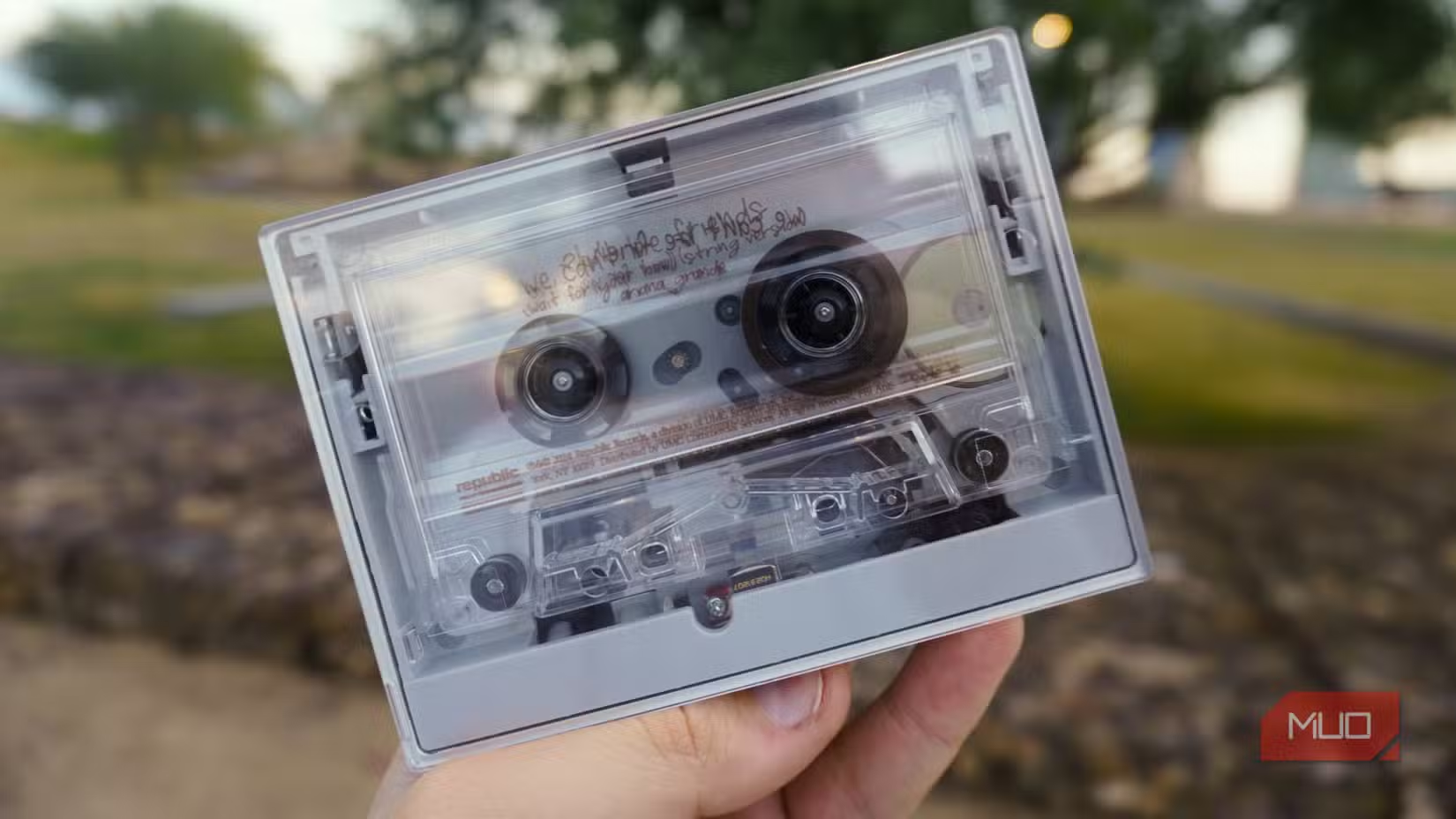

The Unlikely Hero Reshaping Analog Audio
Did you know cassette tape sales surged by 185% in 2023 despite widespread streaming dominance? Forgotten after the CD revolution, tapes are staging a counterintuitive comeback. While vinyl mesmerizes collectors and CDs retain audiophile appeal, cassette players blend tactile analog charm with startling practicality—a potential sweet spot for modern listeners. But decades after their commercial peak, entering this niche demands navigating hardware scarcity and technical quirks. Having tested modern solutions extensively, I’ll dissect why tape deserves reconsideration and how contemporary gadgets solve vintage frustrations.
Navigating the Cassette Revival’s Mechanical Minefield
Cassettes’ resurgence faces a stubborn paradox: Peak-era players surpassed modern equivalents technologically, yet acquiring functional vintage gear requires expertise few possess. Major brands like Sony halted mechanism production in the early 2000s, taking proprietary engineering secrets with them. What remains are budget mechanisms powering Amazon’s flimsy players—prone to wow-and-flutter distortion and tape-eating disasters.
Vintage Sony Walkmans (like the legendary WM-D6C) utilized bespoke motors and proprietary Dolby chips unmatched today. But as Brady Snyder notes, restoring one involves:
- Replacing degraded rubber drive belts
- Cleaning oxidized tape heads with isopropyl alcohol
- Repairing brittle plastic gears
- Rewiring corroded battery compartments
This gates the hobby behind repair skills or paying specialists—still cheaper than Spotify Premium’s lifetime $6,000 cost for devoted listeners.
Modern Pioneers Bridging the Gap
Two startups now craft credible 21st-century solutions: Fiio’s CP13 and We Are Rewind’s portable player. Both employ metal chassis, USB-C charging, and respectable DACs absent from bargain units. Unlike Urban Outfitters’ disposable aesthetic players, these mimic Walkmans’ no-nonsense durability. Here’s how they stack up:
| Feature | Fiio CP13 | We Are Rewind Player | Vintage Sony Walkman |
|---|---|---|---|
| Price | $130 | $210 | $50-$400 (used) |
| Battery | 13-hr USB-C | 10-hr USB-C | AA batteries / obsolete |
| Recording | ❌ Playback only | ✅ Line-in recording | ✅ |
| Bluetooth | ❌ | ✅ Bluetooth 5.1 | ❌ |
| Weight | 185g | 280g | ~150g |
Neither machine matches Technics’ 0.04% wow-and-flutter specs, but they eliminate cassette headaches newcomers dread. For purists, Fiio’s focus on fundamental playback strips away digital distractions—a deliberate analog purity.
Field-Testing Modern Tape: One Year With Fiio’s CP13
My CP13 endured drops and cross-country travel with only cosmetic scratches. Its dual-head mechanism minimizes tape hiss during silent passages using JRC5532 amplification—a robust op-amp preventing distortion even with demanding headphones like Sennheiser HD600s. Practical perks impressed me most:
- Ultra-portable form: Smaller than a paperback, slipping into jacket pockets
- USB-C convenience: Charges during commutes
- Analog consistency: Limited electronics preserve cassette’s warm imperfection
Contrast this with portable CD players: Bulkier mechanisms skip frequently without anti-shock buffers. Vinyl demands stationary turntables and speakers. The CP13 provides plug-and-go analog immersion without streaming latency—or subscriptions.
Cassettes’ Overlooked Advantages Over Vinyl and CDs
Physical formats define collector appeal differently. Having managed 500+ LPs and cassette/CD libraries, I prioritize these factors:
Portability & Storage Efficiency
Moving 100 vinyl records requires heavy crates. Cassettes store equivalent albums in a document box wearable under one arm. Each weighs ~60g versus vinyl’s 130g+ per disc. Compare:
Storage Space Comparison:
- 50 Vinyl Records: 18″ × 18″ × 30″ crate
- 100 Cassettes: 10″ × 14″ × 14″ shoebox
- 100 CDs (with jewel cases): 14″ × 16″ × 12″ box
Cost Accessibility
Major artists sell cassette releases at $10-$15—half vinyl’s sticker price. Unknown indie bands sometimes include tapes in $5 Bandcamp bundles. Tape duplication remains affordable: Indie labels press short runs at $3-5/unit versus vinyl’s prohibitive $25/unit minimums.
Analog Simplicity
Vinyl requires meticulous setups: Leveled turntables, preamps, calibrated counterweights. The CP13 works with any wired headphones—new listeners avoid paralysis-by-analysis while savoring tape warmth unattainable via compressed streaming.
Beginner’s Toolkit: Joining Cassette Culture Today
Essentials for newcomers:
- Acquire Music: Labels like Captured Tracks and Burger Records prioritize tape releases. Target goodwill stores for thrifted ‘80s blanks.
- Hardware Choice: Start new (Fiio for inexpensive playback or We Are Rewind for recording). Only chase vintage after mastering belt replacements.
- Maintenance: Clean tape heads monthly; store cassettes vertically away from magnets/heat.
Sustainability merits mention: Unlike obsolete iPods, tapes repair easily. The MakeUseOf-tested CP13 survived impacts breaking modern electronics—proof disposability isn’t inevitable.
Tape’s Unexpected Second Act
Cassettes combine vinyl’s sensory ritual with smartphone-scale convenience—minus streaming’s ephemerality. Modern players solve key barriers: Mainstream retailers sell playable hardware; niche makers preserve cassette tech competently. Yet limitations persist: Tape decks still overshadow portable players dynamically. Ultimately, tapes offer democratic analog immersion—no turntable investments or server farms required. For tactile listening untethered from algorithms, cassettes deliver uniquely. Are you ready to rewind?


