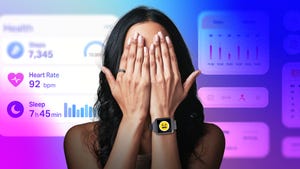

Every time I wear a smartwatch, I notice my anxiety increases — specifically, health anxiety. Also known as hypochondria or illness anxiety disorder, it makes me worry that I am or might become sick, even when I’m perfectly healthy.
The irony? Part of my job involves testing health-monitoring wearables, including fitness trackers and smart rings. While I love exploring this technology and believe it can help you learn more about your body, I’ve had to learn how to use it mindfully so my anxiety isn’t triggered.
“Healthy adults and people with pre-existing medical conditions are increasingly using these devices to manage their health. Whether 24/7 access to health data from a wearable actually helps or potentially harms people is really unclear,” says Dr. Lindsey Rosman, assistant professor of medicine in the Division of Cardiology and co-director of the Cardiovascular Device and Data Science Lab at UNC School of Medicine.
When you add the ability to search your symptoms online or ask an AI chatbot about every health concern that pops into your head, it becomes much harder to discern what’s useful and what’s harmful.
To help myself and others navigate this world, I reached out to experts for their advice.
1. Turn Off Health-Related Alerts
Rosman has seen clinically that it can be helpful to reduce or turn off the features that make you anxious. This is especially useful for people with pre-existing conditions already being treated, as irregular heart rhythm notifications may only increase anxiety and prompt unnecessary calls to your doctor.
Plus, certain medications can affect the accuracy of wearable sensors, triggering unfounded alarms. “We published a case report on a patient who performed over 900 EKGs,” Rosman notes — a clear sign of how wearables can fuel rather than soothe anxiety.
2. Set Boundaries With Your Data
You don’t need to check your metrics every hour. Set specific times to review your data — once a day or a few times a week — rather than constantly monitoring. Remember: these devices are tools, not diagnostic instruments.
3. Know When to Take a Break
If your wearable is making you more anxious, not less, take it off for a few days. The data will still be there when you’re ready. Sometimes the healthiest thing you can do is disconnect from the numbers and listen to your body instead.


