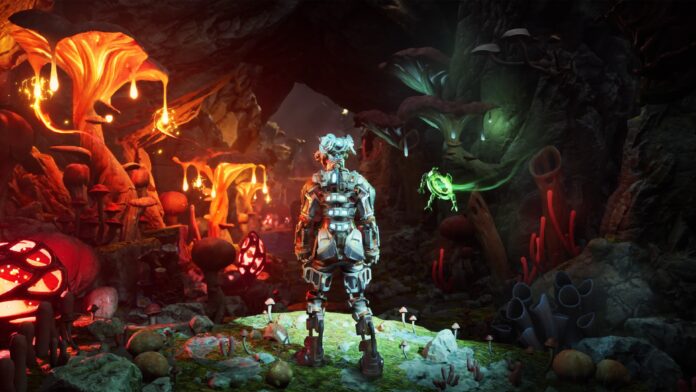

Advanced rendering features like ray tracing, Unreal MegaLights, and neural supersampling have been primarily associated with Nvidia’s PC graphics cards. But Arm recently announced that these technologies are coming to mobile devices through its latest GPU architecture and a partnership with game developers.
Enter Arm’s Mali G1
Arm launched the Mali G1 as part of its Lumex platform late last year. Mobile processors featuring the G1 have already shown greatly improved ray tracing performance, but the next generation introduces support for neural upscaling features that closely resemble Nvidia’s DLSS technology.
Mali G1’s Neural Supersampling and Denoising (NSSD) and Neural Frame Rate Upscaling (NFRU) function similarly to Nvidia’s DLSS, Ray Reconstruction, and Frame Generation technologies. These techniques use AI to render games at a lower internal resolution and then upscale them, saving performance while maintaining visual quality.
Neural Doom: The First Showcase
The first mobile game to support these features is Neural Doom — an upcoming title from Sumo Digital that also supports Unreal Engine 5’s MegaLights technology. MegaLights, introduced in 2024, allows games to render scenes with a large number of dynamic light sources at a lower performance cost compared to earlier methods.
Sumo Digital told Digital Foundry that combining these systems allows Neural Doom to display a wide range of ray-traced light sources at roughly 30 frames per second. Implementing MegaLights consumes nearly half of the game’s rendering budget — about the same as more traditional alternatives. However, NSSD and NFRU are still undergoing optimization, so their final performance impact remains unclear.
What This Means for Mobile Gaming
Unreal MegaLights has so far been exclusively associated with high-end console and PC games, such as Microsoft’s upcoming Gears of War: E-Day. Bringing this technology to mobile devices, combined with neural upscaling, marks a significant leap forward for mobile graphics.
Other details still to be revealed include Neural Doom’s final release date and information about which devices will support the Mali G1 lineup. But one thing is clear: the gap between PC and mobile gaming graphics is closing faster than ever.


