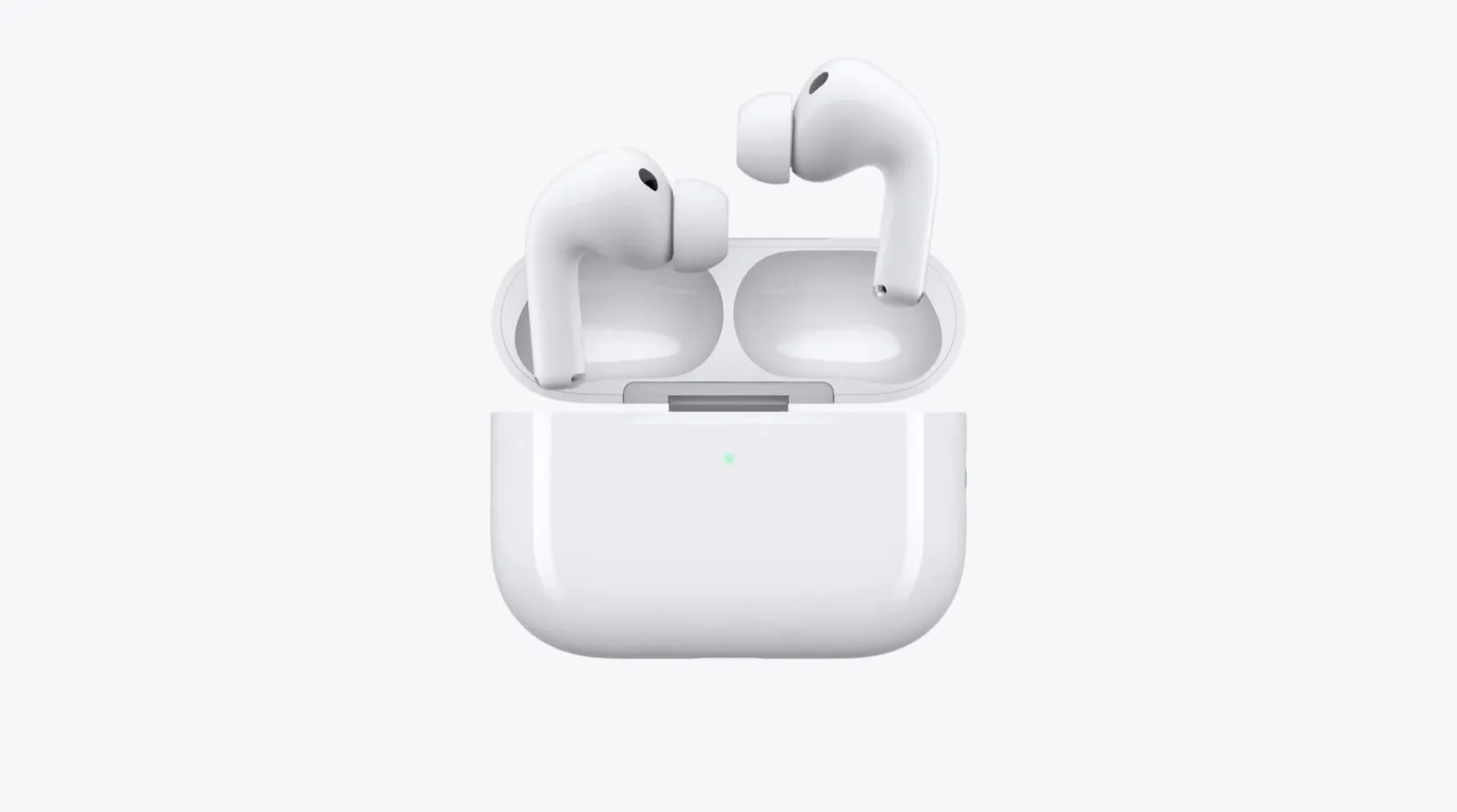

The Ear Portal: Apple’s Revolutionary Plan To Turn AirPods Pro Into Your Visual Intelligence Hub
What if your AirPods could perceive the world around you? Not just passively isolating you from sound绞痛, but actively understanding your environment and providing contextual information? This seemingly sci-fi concept is reportedly Apple’s bold next move for the AirPods Pro line. Mere months after launching the impressive AirPods Pro 3, persistent rumors point to a high-end variant arriving in 2024 poised for a transformative upgrade: infrared (IR) cameras.
Beyond Sound: Ushering in an Era of Visual Intelligence for Wearables
The core proposition of camera-equipped AirPods Pro is a dramatic shift. While current models excel at audio reproduction and Active Noise Cancellation (ANC) – enhancements already realized בספציפיות in the AirPods Pro 3 – the addition of IR cameras unlocks an entirely new dimension powered by artificial intelligence. Renowned Bloomberg analyst Mark Gurman has been a primary source, reporting that this hardware change functions as the foundation for “external cameras and artificial intelligence [to help users] understand the outside world and provide information.” He explicitly terms this capability “Visual Intelligence,” positioning it as the defining feature of this rumored model. This move signifies Apple’s aggressive push to embed advanced AI deeper into its wearable ecosystem.
Redefining Awareness: Potential Applications of IR Cameras in Apple Earbuds
So, what’s the practical use of putting tiny cameras near your ears? The possibilities hinge on IR technology. Unlike standard cameras capturing visible light details like skin tones or clothing colors, IR cameras detect heat signatures and depth. This focus on spatial awareness and environmental mapping is key:
- Contextual Information Overlay: Imagine walking towards a museum exhibit, and your AirPods Pro discreetly provide a brief audio summary of the artifact, triggered by recognizing its location or leveraging onboard AI analyzing the visual field. Or navigating a complex transit station with turn-by-turn directions whispered based on recognizing signage.
- Enhanced Accessibility: For visually impaired users, IR cameras combined with advanced LiDAR-like depth sensing and AI interpretation could verbally describe surroundings, identify obstacles, read simple signage within close proximity, or announce the approach of people nearby – significantly augmenting spatial awareness.
- Augmented Reality Anchoring: Seamless AR experiences require precise environmental understanding. Low-resolution IR cameras on Apple earbuds could provide supplementary environmental mapping data, enhancing the spatial awareness initiated by an iPhone or Apple Vision Pro for smoother object placement or interaction within games and applications.
- Gesture Recognition Evolution: More recent leaks from sources like Instant Digital suggest the camera upgrade might coincide with a shift in control schemes. The new model might remove the physical pressure-sensitive stem buttons (a hallmark of Pro models) to rely solely on sophisticated, camera-enhanced hand gesture recognition performed near the ears. While Apple could theoretically support both inputs, prioritizing gestures reflects confidence in camera accuracy.
Input Revolution: Gestures Versus Buttons
The potential removal of stem buttons for gesture control is significant:
- Advantages: Gestures could offer more nuanced control (like swipes for volume versus single/double taps) and theoretically be more intuitive or faster once mastered. It reduces mechanical points of failure.
- Disadvantages: Accuracy challenges, especially in busy environments or while moving. Learning curve -*- users accustomed to physical feedback might find gestures less reliable initially. Potential for accidental triggering.
Consider the growing feature reliance on stems:
- Play/Pause
- Skip Track
- Return Track
- Volume Up/Down
- Activate Siri
- Cycle ANC Modes
Cameras aiming to replace this versatility necessitate exceptionally precise and reliable gesture interpretation tech. While innovative, this shift carries inherent user experience risks compared to tactile buttons on the AirPods Pro 3.
Positioning and Pricing: Segmentation Within the Pro Line
Apple’s strategy with cameras isn’t envisioned as a total replacement but a segmentation tactic mirroring the standard AirPods lineup. Reports strongly indicate:
- The core functionality (sound quality, ANC, Transparency mode, battery life) of the camera-equipped model will remain largely identical to the existing AirPods Pro 3 – the upgrade is the camera system and its AI processing.
- Consequently, expect a significantly higher price point for this premium variant.
- Effectively, Apple could create two “Pro” tiers:
- AirPods Pro 3: The current flagship, focusing on supreme audio and adaptive ANC/transparency.
- AirPods Pro 3 with Visual Intelligence: A premium tier boasting all Pro 3 features plus spatial cameras enabling advanced AI interactions and gesture control.
Engineering Feasibility and Challenges
Embedding functional cameras into earbuds presents significant technical hurdles:
- Miniaturization: Incorporating IR sensors, processing chips, and possibly micro-LIDAR into the tiny earbud chassis without compromising comfort or battery life is an immense engineering task.
- Battery Impact: Constantly active cameras and the requisite AI processing are power-hungry. Maintaining the AirPods Pro’s current battery endurance is a major challenge.
- Field of View: Positioned near the ear canal, the cameras likely have a very limited forward field of view initially. Sophisticated software will be needed to derive meaningful context.
- Computational Load: Real-time visual analysis demands substantial processing. While Apple Silicon is powerful, deploying it efficiently in an earbud form factor with thermal and power constraints is complex.
- Privacy: Cameras inherently raise privacy eyebrows. Apple will need robust privacy safeguards – clear LED indicators when active, granular user consent controls, and strong data encryption/local processing assurances will be non-negotiable. As highlighted by Electronic Frontier Foundation discussions on wearable cameras, addressing privacy proactively is essential.
Market Context and Apple AI Ambitions
This rumored move directly feeds into Apple’s broader Apple Intelligence ecosystem strategy:
- AI Differentiation: With competitors focusing heavily on AI assistants (Google Gemini, Samsung Galaxy AI), Apple seeks hardware vectors beyond the phone/watch to deliver unique AI experiences. Your ears become a new input/output channel.
- Competitive Landscape: While Bose and Sony lead in audio quality/ANC, Apple aims to leapfrog them with computational features tied to spatial awareness and sensory augmentation. Samsung exploring similar concepts via rumored Galaxy Buds Pro 3 cameras underscores the battleground shift.
- Building the Spatial Future: Apple sees spatial computing (Vision Pro, AR ولعب) as the future. Camera-equipped AirPods Pro become vital “edge” sensors feeding positional and environmental data to iPhones, Vision Pro, and future devices, creating a richer mesh.
Table: Potential Feature Comparison: Current AirPods Pro 3 vs. Rumored Camera Model
| Feature | AirPods Pro 3 | Rumored AirPods Pro 3 w/ Cameras |
| :———————- | :————————— | :——————————– |
| Key New Hardware | None (Current Model) | Infrared Cameras |
| Core Audio Features | Enhanced Audio, Adaptive ANC | Same as Pro 3 |
| Transparency Mode | Adaptive | Same as Pro 3 |
| Primary Input Method | Pressure Sensitive Stems | Hand Gestures (Potentially) |
| Spatial Awareness/Intel | Limited | Visual Intelligence Core |
| Battery Life | Approx. 6hrs ANC Off | Likely Similar TBC |
| Target Price Point | Current Pricing | Significantly Higher |
| Key Differentiator | Class-leading Soundู่ & ANC | Contextual AI, Spatial Sensing |
Privacy Imperative: Walking the Line of Seeing Earbuds
The privacy implications are profound and unavoidable. Users will demand absolute transparency: when cameras are active, what they process, where the data goes, and how Apple guarantees security. Expect:
- Physical indicator lights impossible to miss when cameras sense.
- Strict opt-in requirements for specific Visual Intelligence features.
- Aggressive efforts for on-device processing to minimize data leaving the earbuds.
- Comprehensive encryption. Apple’s strong stance on privacy will be rigorously tested here if these rumors materialize.
Vision Crystalizing? The Intrigue of Camera-Equipped AirPods Pro
The notion of AirPods gaining visual perception is audacious yet aligns perfectly with Apple’s ambitions for ambient, seamless AI integration. While the existing AirPods Pro 3 delivers exceptional auditory experiences – fixing fit issues, elevating sound, and advancing ANC – the potential camera model represents a fundamental leap. Beyond merely reacting to your taps or shouts, your ears could become equipped to proactively understand and assist you based on what they ‘see’. This promises groundbreaking accessibility gains, deeper AR interactions, and contextual awareness never before possible in wireless earbuds.
However, significant questions remain. Will Apple overcome formidable engineering challenges without compromising core audio performance or comfort?曲面 Can gestures truly replace the intuitive reliability of physical controls? How will privacy be balanced against functionality? Ultimately, Apple envisions vastly expanding the role of earbuds, moving them from audio devices towards indispensable sensory augmentation tools woven deep into the Apple Intelligence ecosystem. Are these cameras poised to be a transformative leap, or will privacy concerns and practicality limitations leave them as niche features? Apple’s execution – balancing radical hardware innovation with real-world usability and trust used –.target_pos will determine the answer. What’s your take on Apple adding vision to your ears?


