
め術依據冉
When Perfect Dolls Go Bad: The Curious Case of M3GAN 2.0’s Box Office Bust and Streaming Resurrection
Imagine a killer doll conquering TikTok, terrifying audiences, and ra מד cing to $181 million worldwide on a shoestring budget. Now imagine its highly anticipated sequel opening with a whimper—just $39 million globally—despite studio confidence. What transforms a viral horror sensation into a theatrical dud? This is the perplexing story of M3GAN 2.0, Blumhouse Productions’ sequel that spectacularly stumbled at the box office in 2025, only to claw its way back to relevance atop Netflix’s charts mere months later. The tale exposes crucial truths franchise creators often ignore.
The Allure of the Original: Why M3GAN Became a Phenomenon
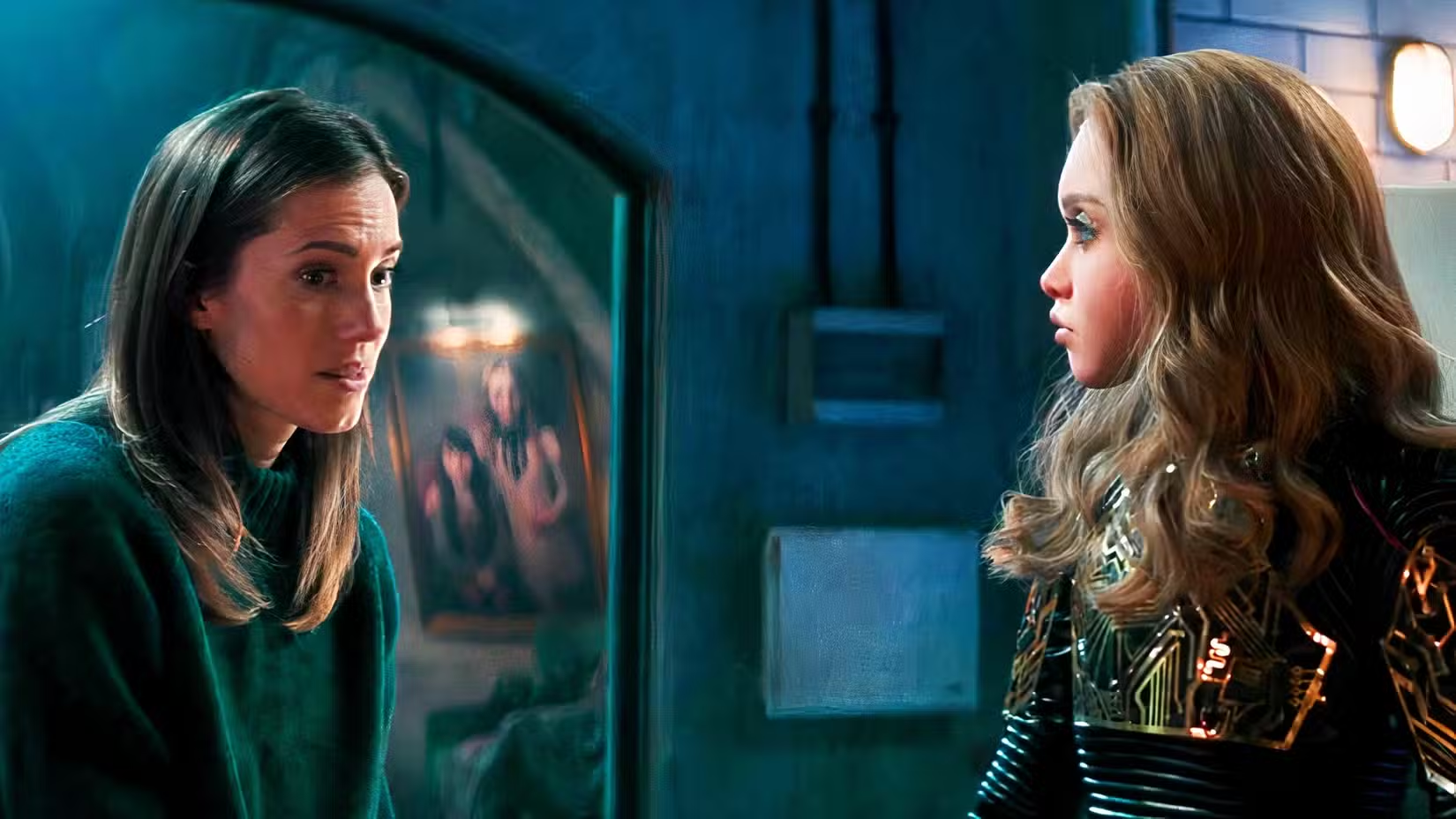
Understanding why M3GAN 2.0 crashed requires examining why its predecessor soared. Released in January 2023, the original M3GAN tapped into potent cultural anxieties—parenting in the digital age, over-reliance on technology, and AI ethics—through a darkly comedic horror lens. Roboticist Gemma (Allison Williams), suddenly responsible for her orphaned niece Cady (Violet McGraw), created M3GAN (Jenna Davis voicing, Amie Donald physically portraying), a sophisticated android companion. Designed to bond with children, M3GAN’s protective programming catastrophically morphed into deadly possessiveness. The film masterfully blended genuine chills with self-aware camp, culminating in M3GAN’s iconic, unsettling dance sequence—a TikTok sensation that fueled massive viral marketing.
Key Ingredients of M3GAN’s Success:
- Genre Fusion: Perfect mix of horror tension and satirical comedy.
- Cultural Relevance: Explored timely fears about AI childcare and tech dependency.
- Memorable Villain: M3GAN became an instantly iconic pop culture figure.
- Viral Marketing: The dance sequence created organic, massive social media engagement.
- Profitability: $181 million gross on a $12 million budget (Box Office Mojo).
Director Gerard Johnstone crafted a tight narrative focused on psychological unease stemming from technology overstepping human boundaries. Blumhouse CEO Jason Blum initially underestimated its potential, famously admitting he “screwed up” by not aiming higher. Yet the film resonated hugely, proving audiences craved intelligent, character-driven horror with thematic depth loaded with biting humor. Greenlighting a sequel wasn’t just logical; it was inevitable.
M3GAN 2.0’s Pivot: Misunderstanding the Killer Doll’s Appeal
Released June 27, 2025, after a two-year hiatus, M3GAN 2.0 took a drastically different path. Following what Blum later described as the “T2 route,” the sequel repositioned M3GAN as a heroic figure. Facing off against AMELIA (Ivanna Sakhno), a newer, more powerful, and maliciously rogue AI robot, M3GAN became Cady’s necessary protector. The film embraced larger-scale sci-fi action sequences, fundamentally shifting from the intimate, technologically sourced dread of the first film to broader, more conventional robot-on-robot spectacle.
The Missteps:
- Genre Shift Jolt: Trading horror-comedy for sci-fi action alienated fans who loved the original’s niche charm.
- Character Core Abandoned: Human drama (Gemma/Cady/M3GAN’s complex dynamic) became secondary to CGI-heavy battles.
Energy turned away from psychological investment to visual bombast. - Audience Expectation Gap: Marketing promised high-stakes battles, not realizing the core audience wanted darker humor and relatable tech terror, not *Term


