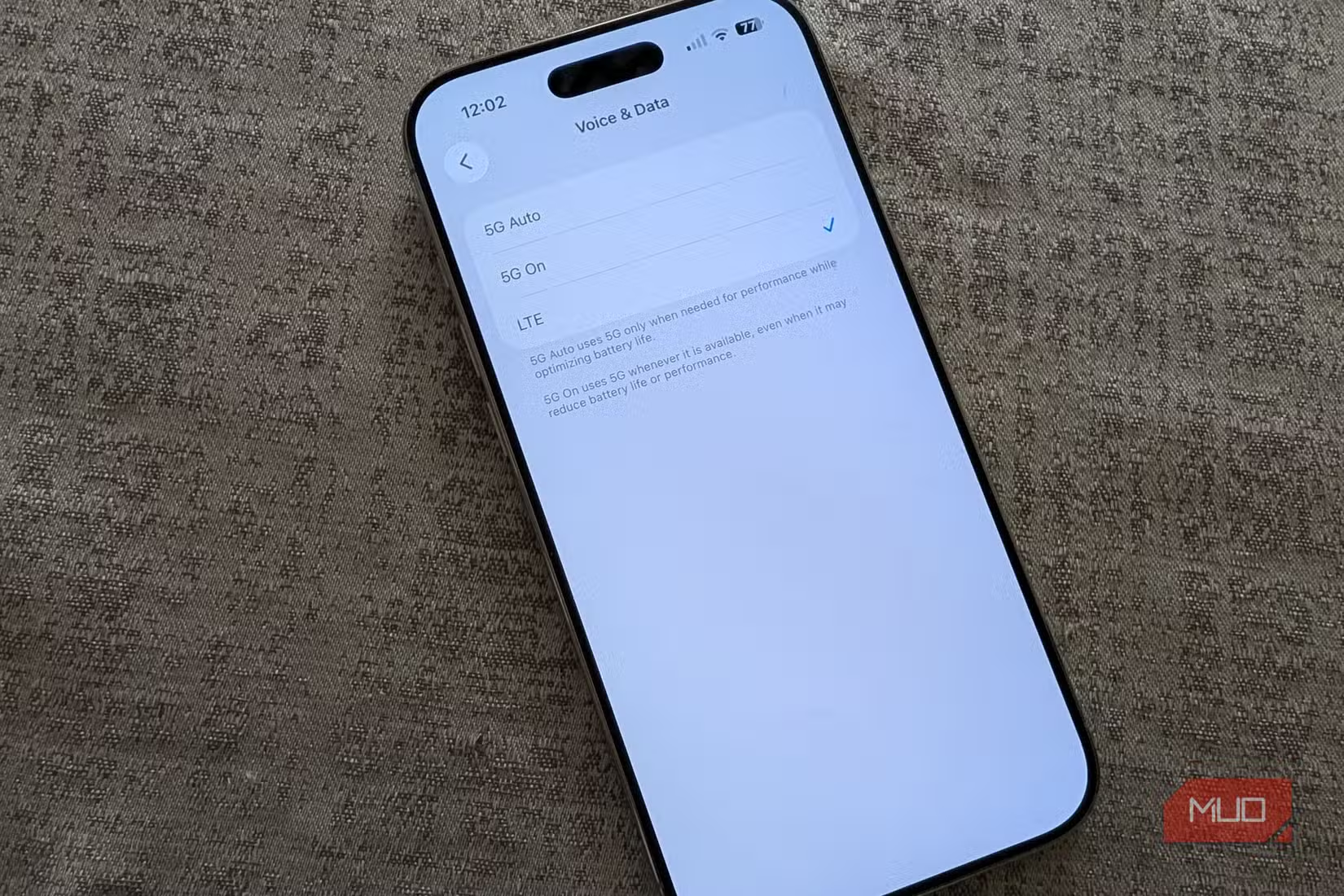

Is Your 5G Connection Secretly Draining Your Battery?
Remember when 5G promised revolution? We envisioned near-instant downloads, seamless remote surgery, and cities buzzing with interconnected super-speed. Half a decade later, most modern smartphones leverage 5G, enabling effortless 4K streaming, rapid cloud uploads, and even viable 5G home internet solutions. Yet, beneath the glossy speed promises lies a significant downside: battery life plummeting faster than signal bars in a concrete jungle. Especially in fringe coverage zones or on older devices, that blazing-fast connection can be a power-hogging liability. Many savvy users, including myself, strategically disable 5G and switch back to LTE to reclaim precious battery life. But why, and what’s the real difference? It’s more nuanced than just slower speeds.
Demystifying the Connection: LTE vs. 5G Fundamentals
Long Term Evolution (LTE), the foundation of widespread 4G, arrived after 2010. It delivered a quantum leap beyond 3G, offering speeds comparable to contemporary home Wi-Fi (10-100Mbps). Suddenly, smooth video calls on the go became commonplace. While speed grabs headlines, the critical game-changer was latency reduction.
- Latency Leap: Latency is the delay between your device sending a request and receiving a response. Think of it as reaction time.
- 3G Latency: Often a sluggish 100-500 milliseconds (ms).
- LTE Latency: Achieved a dramatic 75% reduction, lowering latency to 30-70ms.
- 5G Potential Latency: Can theoretically hit incredibly low levels like 5ms, enabling near real-time interactions.
This dramatic latency drop with LTE made smartphones feel significantly faster and more responsive.
Built on Bones: Network Infrastructure Matters
LTE’s rollout capitalized heavily on existing 3G infrastructure. It was essentially “3G-plus” in


