
The Unseen Earthquake: How Public Broadcasting Became Collateral Damage in America’s Information Wars
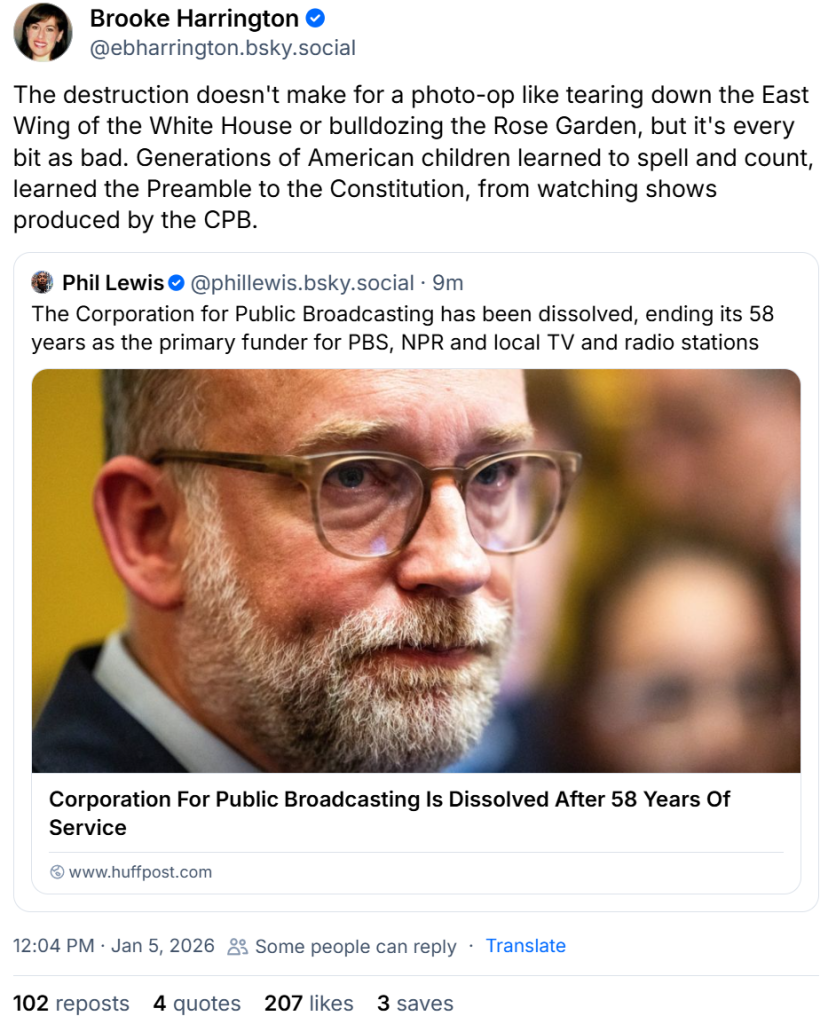
What happens when the very institutions designed to inform citizens equitably are systematically dismantled, not through overt censorship, but through financial strangulation and political ambivalence? This stark reality confronts us following the recent vote by the Corporation for Public Broadcasting (CPB) to officially shut down. This decision, directly tied to the evisceration of its federal funding exceeding $1 billion via Republican-backed legislation, didn’t just terminate an agency; it delivered a potentially fatal blow to a foundational pillar of public media accessibility in the United States. Public broadcasting, heralded as the closest America came to replicating robust, non-commercial media seen elsewhere, now faces a devastating endpoint. Its demise signifies more than budget cuts; it represents a critical failure in safeguarding an informed populace against rampant misinformation and partisan manipulation.
The Engine Room Silenced: Dissecting CPB’s Core Function and Untimely End
Often misunderstood as merely the parent of PBS and NPR, the CPB played a much more crucial, infrastructural role. Established in 1967, its explicit mandate was to foster a media landscape accessible to all Americans, irrespective of socioeconomic background or geographic isolation. As Patricia Harrison, CPB’s president and CEO, poignantly stated: “For more than half a century, CPB existed to ensure that all Americans—regardless of geography, income, or background—had access to trusted news, educational programming, and local storytelling.” Its funding model was ingeniously designed as a buffer. CPB allocated federal appropriations as seed money, which stations leveraged to raise significant additional local matching funds – often 6-to-1 or higher.
The fatal blow came not through direct legislation killing CPB, but through a stealthier tactic: massive financial desertion. The Republican-driven billionaire tax cuts effectively stripped CPB of its core federal appropriation exceeding $1 billion. Without this foundational funding mechanism, the entire ecosystem supporting the CPB mission became unsustainable.
The Immediate Consequences:
- Existential Threat to Local Stations: While flagship entities like NPR are less reliant directly on federal dollars today (roughly 1% of NPR’s budget), CPB channeled a staggering over 70% of its funds to approximately 1,500 local public radio and television stations nationwide. These stations, particularly in rural and underserved areas lacking commercial viability, relied on CPB grants not just for program acquisition, but for core operational costs, transmitter maintenance, and community outreach. Their survival is now deeply imperiled. This aligns with the broader crisis identified by researchers like those at the University of North Carolina’s Center for Innovation and Sustainability in Local Media, chronicling the rise of “news deserts” across America.
- Gutting Local Journalism: Many CPB-funded local stations invest significantly in original regional reporting – city council meetings, statehouse coverage, local investigative projects – areas often neglected by struggling commercial outlets. This vital local voice, fostering civic engagement and accountability, faces drastic reduction or elimination.
Beyond the Budget: Authoritarianism’s War Against Independent Information
Characterizing the CPB’s destruction as purely fiscal austerity overlooks the deeper, more sinister ideological motivation evident in the source content. The withdrawal of funding aligns perfectly with a long-standing animosity from authoritarian-leaning figures towards any media institution insulated from direct corporate or political control. Public broadcasting, in its ideal form, threatened this control precisely because it operated differently:
- Untethered from Perverse Incentives: Unlike corporate commercial media reliant on ad revenue driven by eyeballs and clicks (often prioritizing sensationalism and engagement over accuracy), public media’s core mandate focused on education, reliable information, and public service. This made it less susceptible to manipulation by powerful entities pushing narratives or suppressing inconvenient truths.
- Resistance to Manipulation: As highlighted, consolidated, billionaire-owned corporate media faces enormous pressure to appease advertisers (including political interests), avoid alienating audience segments, and prioritize profitability. This creates fertile ground for bad actors to “normalize, downplay, or validate” misinformation or authoritarian policies – precisely the critique leveled against outlets like CBS, the Washington Post, and the New York Times for various failures.
Integrated Information Warfare:
| Tactics Against Information Integrity | Examples |
|---|---|
| Defunding Public Alternatives | CPB shutdown, PBS/NPR budget cuts |
| Removing Media Consolidation Limits | FCC rollbacks allowing mega-mergers |
| Radical Ownership Changes | Acquisition of platforms/networks by right-wing billionaires |
| “Investigations” & Smear Campaigns | Political probes targeting public broadcasters’ perceived bias |
This multi-pronged strategy represents a coordinated effort to eradicate independent journalistic checks and balances, replacing them with an information ecosystem dominated by consolidated corporate interests sympathetic to specific political agendas or driven solely by profit motives. As the source declares: “They’re afraid of the truth and a functional press, and it’s not subtle.”
A History of Neglect and Complicit Silence: America’s Public Media Tragedy
Contrasted internationally, the U.S. approach to public broadcasting has always been anemic. Countries like the UK (BBC), Canada (CBC), Germany (ARD/ZDF), and Japan (NHK) demonstrate significantly higher per-capita public funding, resulting in more extensive services, deeper journalism, and unquestionable national cultural significance.
US Funding vs. Peers (Approx. Annual Per Capita):
- United Kingdom (BBC Licence Fee): ~£159 ($~198 USD)
- Germany (ARD/ZDF): ~€215 ($~230 USD)
- Canada (CBC): ~$29 USD
- United States (Pre-CPB Collapse): ~$3 USD
Decades of relentless Republican hostility – framing public media as wasteful, “liberal propaganda” – successfully constrained its potential. This political pressure often resulted in public broadcasters adopting excessive caution, arguably diluting their distinctiveness to appease critics.
However, culpability isn’t unilateral. As the source sharply notes, “Democrats historically have done a shit job defending journalism.” Beyond rhetorical support during funding crises, sustained commitment to proactive media reform – establishing new, durable funding models (like spectrum fees or trust funds), enforcing anti-monopoly rules, actively bolstering journalistic independence – has been glaringly absent. Democratic administrations failed to build robust defenses against the systemic assaults now culminating in CPB’s demise.
Compounding the problem is the corporate media’s own conflict of interest. Major conglomerates benefiting from consolidation often hesitate to vigorously cover the death of a competitor model – government-subsidized alternatives challenging their market “infotainment dreck.” The dismantling of CPB doesn’t threaten their bottom line; arguably, it reduces competition. This creates a reflexive silence or under-reporting on the profound implications of CPB’s collapse.
Silence of the Stations: An Uncertain Future for Local Voices and National Connection
The deafening sound you hear isn’t static; it’s the potential silencing of critical informational lifelines across rural America where alternatives are vanishing. Imagine a town:
- Where the local NPR affiliate shuts down, ending in-depth national news coverage from multiple perspectives.
- Where the PBS station vanishes, eliminating early childhood educational programming (a vital resource for families) and documentaries exploring critical local issues.
- Where the community radio station relying on CPB seed grants folds, removing the platform for local artists, city council debates, and hyperlocal reporting.
The indirect consequences ripple further:
- Homogenization of News: Reliance on national corporate outlets wire services increases, diminishing local context and investigative resources.
- Deepening Information Inequality: Low-income and geographically isolated populations disproportionately lose access to free, high-quality information and educational content.
- Erosion of Shared Cultural Experience: Programs fostering national dialogue and appreciation for arts/science/public affairs lose their primary distribution channel.
“This is a generational, devastating loss,” the source concludes, “Especially in terms of what could have been.” The CPB shutdown encapsulates the triumph of a cynical agenda prioritizing privatization and ideological conformity over the messy, essential work of fostering an informed citizenry capable of meaningful self-governance. Its closure serves as a chilling monument to the fragility of democratic institutions when systemic pressures go unchallenged. The lights on the studio signs might dim slowly, but the darkness their absence creates shapes us all. Did America truly value public media only after it fell silent? What solutions can emerge from its ashes?


