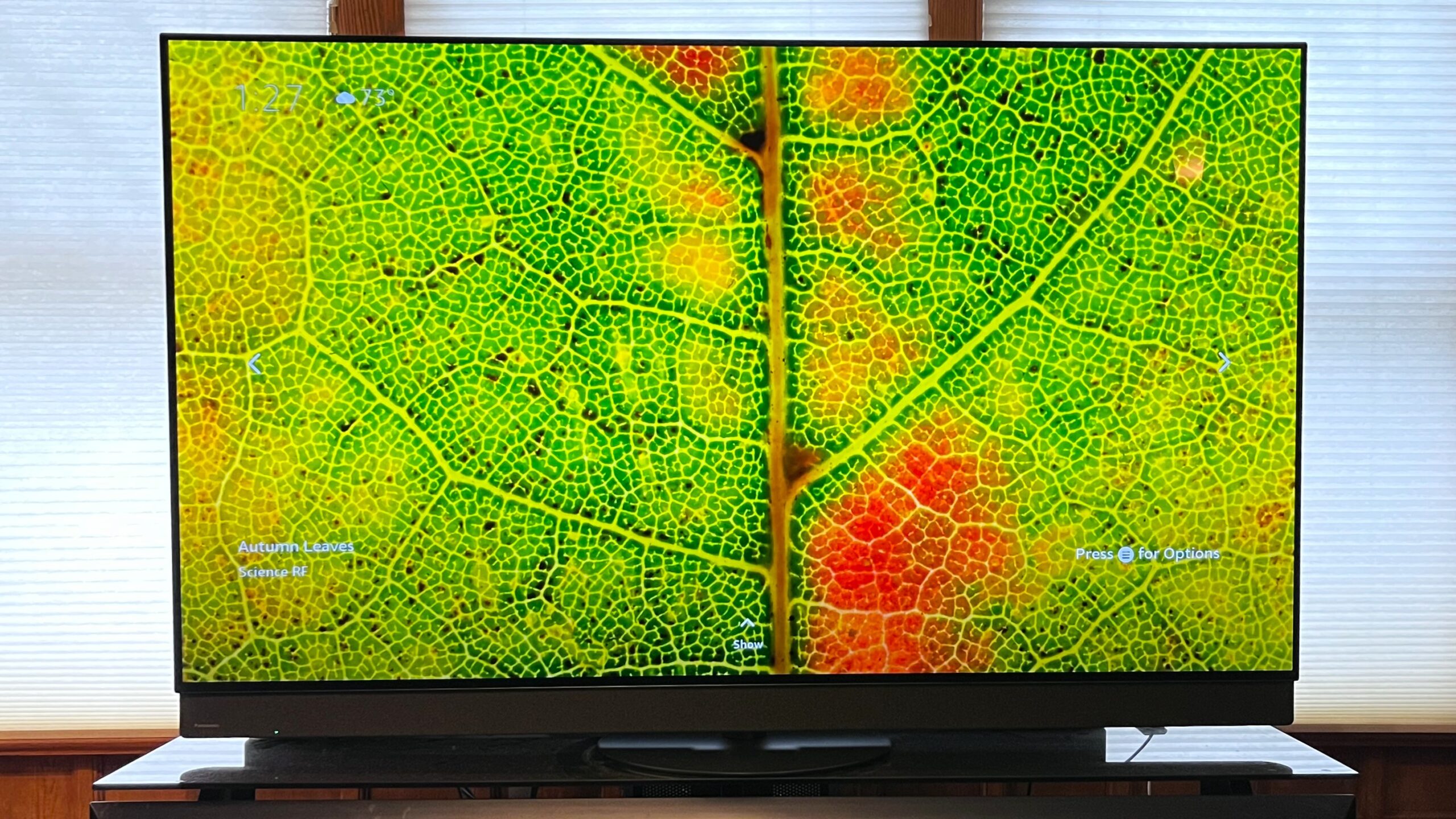

Is OLED TV Technology Now Unbeatable? The Breakthrough Year That Changed Everything
Remember when OLED TVs seemed destined to remain the “dark room specialist,” overshadowed by brighter LED rivals? That era is officially over. 2025 witnessed a seismic shift in home entertainment, marking arguably the most transformative year for OLED TVs since their commercial debut. Long-standing limitations were shattered: OLED panels achieved unprecedented brightness, conquering the Achilles’ heel that held them back. Beyond luminous leaps, glare was virtually eliminated, gaming features ascended, and prices plummeted, culminating in flagship models widely declared superior to the best LED and mini-LED competitors. If you’ve ever questioned OLED’s supremacy, this watershed year provides compelling answers, showcasing refinements that solidify its position as the pinnacle of TV technology.
The Blinding Revolution: OLED Brightness Shatters Expectations
Historically trailing LED/LCD TVs in peak luminance, OLED technology underwent a quantum leap in 2025, largely driven by LG Display’s relentless innovation.
- The Four-Stack Dawn: The cornerstone advancement was the commercial rollout of LG Display’s fourth-generation “four-stack” OLED panels. This architectural marvel places two blue OLED emitter layers between distinct red and green layers. The result is significantly increased light output efficiency.
- Numbers that Speak Volumes: Unveiled at CES 2025 with jaw-dropping claims nearing 4,000 nits – a 33% theoretical increase over 2024 flagships – real-world measurements confirmed extraordinary gains. The LG G5, utilizing this panel, achieved a blistering 2,268 nits peak HDR brightness in Filmmaker mode during professional reviews. Panasonic’s flagship Z95B, leveraging the same panel technology, delivered a similarly impressive 2,107 nits. These figures decisively erase the brightness gap with high-end LEDs, enhancing HDR impact dramatically. (Source: LG Display Technical Briefings, CES 2025).
- Beyond Luminance: Crucially, this brightness surge wasn’t isolated. LG Display’s integration of “ultra-low reflection technology” ensured the G5 offered a glare-resistant coating 30% more effective than its predecessor (G4), crucially maintaining OLED’s famed perfect black levels simultaneously. Color volume and accuracy also saw measurable enhancements, proving OLEDs are brighter and better overall TVs. This wasn’t just an incremental step; it was a foundational technology leap validating OLED’s future trajectory.
2025 Flagship OLED Brightness Comparison (Peak HDR Nits):
| TV Model | Panel Technology | Measured Peak Brightness (nits) | Key Anti-Reflection Feature |
|---|---|---|---|
| LG G5 | LG Display Four-Stack | 2,268 (Filmmaker Mode) | Ultra-Low Reflection (30% Improved) |
| Samsung S95F | Samsung QD-OLED | 2,109 | Glare Free 2.0 |
| Panasonic Z95B | LG Display Four-Stack | 2,107 | Standard LG Low-Reflection |
| Sony Bravia 8 II | Sony QD-OLED | 1,439 (Cinema Mode) | Proprietary Coating |
Glare Free 2.0: Banishing Reflections Without Compromise
Brightness means little if your screen turns into a mirror when the sun hits it. Historically, this was another OLED vulnerability – until Samsung’s Glare Free technology evolved.
- Matte Mastery: Building on the groundbreaking matte-coated panel debuted on the S95D, Samsung’s Glare Free 2.0 on the award-winning S95F represents the zenith of anti-reflective tech. This isn’t merely a superficial coating; it’s a sophisticated optical layer designed to scatter ambient light aggressively while preserving image integrity.
- Solving the Dark Room Paradox: Earlier anti-glare solutions risked “lifting” black levels or introducing “black crush” – loss of shadow detail in dark scenes (notably problematic in films like The Batman). The S95F’s implementation decisively overcame this. Reviews consistently noted vastly improved shadow detail accuracy in bright environments compared to its predecessor, eliminating distracting crush – a remarkable achievement for a matte panel.
- The Practical Upside: Combined with its stellar peak brightness exceeding 2,100 nits and top-tier gaming features (165Hz refresh, AMD FreeSync Premium Pro, Nvidia G-Sync), the S95F became the undeniable champion for living rooms flooded with natural light or adorned with bright lighting. It transformed OLED from a dark-room specialist into a truly versatile, all-room solution, proving that reflections no longer need dictate TV placement.
Sony’s Calculated Brilliance: Embracing QD-OLED Excellence
While LG Display-powered sets grabbed brightness headlines, Sony doubled down on Quantum Dot OLED (QD-OLED) technology with the Sony Bravia 8 II, showcasing a different facet of OLED refinement.
- Significant Gains Within a Realm: Sony marketed the Bravia 8 II as 150% brighter than its 2024 predecessor. Independent testing validated substantial progress, achieving 1,439 nits in Cinema Mode and 1,067 nits in Standard Mode. While slightly behind LG and Samsung flagships in sheer nits, this power boost is transformative for Sony’s traditionally bright-room-challenged OLEDs. (QD-OLED combines OLED’s pixel-level dimming with Quantum Dots for enhanced color purity and brightness – QD-OLED Wikipedia).
- The Sony Signature: Sony focused its strengths where it excels: meticulous picture processing and calibration. The Bravia 8 II delivered Sony’s hallmark color accuracy, refined motion handling (critical for sports and film), and industry-leading upscaling of lower-resolution content. Furthermore, its integrated speakers set a benchmark for sound quality, often negating the immediate need for a soundbar in medium-sized rooms.
- Strategic Shift Verified: Sony’s commitment to incorporating advanced QD-OLED panels, moving beyond older WOLED (White OLED) technology, paid dividends. This wasn’t just chasing specs; it represented Sony playing to its imaging strengths with a panel technology offering superior color potential and pixel responsiveness, solidifying its place among 2025’s elite despite not winning the brightness crown.
The Ultimate OLED Shootout: LG and Samsung Share the Spoils
How do you crown the King of OLEDs in such a stellar year? TechRadar answered this with an unprecedented blind comparison test pitting the titans – LG G5, Samsung S95F, Sony Bravia 8 II, and Panasonic Z95B – against each other.
- Methodology Matters: Crucially, logos were covered. Sets were numbered anonymously. Expert testers evaluated core performance pillars: Black Levels, Color Performance, Motion Handling (Action & Sports), and Upscaling Quality. This eliminated brand loyalty bias, focusing purely on perceived picture excellence.
- The Verdict Breakdown:
- Black Levels & Color: The Samsung S95F dominated, praised for deepest perceived blacks and the most vibrant “pop.”
- Motion Handling (Action): S95F emerged victorious again, offering the smoothest experience.
- Motion Handling (Sports) & Upscaling: LG G5 decisively won Upscaling and tied with Panasonic Z95B in Sports clarity.
- A Worthy Tie: When points were aggregated, LG G5 and Samsung S95F emerged deadlocked. The LG’s unparalleled upscaling prowess (crucial for streaming and broadcast TV) balanced Samsung’s advantage in raw image pop and black level excellence in the test environment. This deadlock wasn’t a cop-out; it was powerful proof that both TVs represent the absolute zenith of OLED picture quality achieved to date, each excelling in slightly different priorities. The Sony and Panasonic were superb but, in this high-stakes face-off, just a step behind the co-champions.
Falling Prices, Rising Value: OLEDs Become Accessible
The narrative that OLED TVs are prohibitively expensive belongs in the past. 2025 accelerated aggressive pricing strategies, especially visible during Black Friday.
- Landmark Discounts: Traditional price premiums eroded significantly. The flagship LG G5 65″ witnessed a dramatic slash from $3,339.99 to $1,999.99 at Best Buy – a $1,340 saving. Samsung’s S95F 65″ saw its price fall from $2,997.99 to $2,287.99 on Amazon. Sony’s Bravia 8 II 55″ dropped from $2,599 to $1,998.
- A Trend, Not a Fluke: These weren’t isolated fire sales. They represent a broader trend driven by increased manufacturing efficiency, competition, and panel supply diversification (Samsung Display’s QD-OLED alongside LG Display). Premium OLED technology is transitioning from luxury outlier to a compelling mainstream premium choice. Ownership of the pinnacle of TV tech no longer requires astronomical investment.
The year 2025 wasn’t merely incremental for OLED; it was revolutionary. Sony proved the merits of engineering-first QD-OLED adoption. Samsung vanquished reflections conclusively. LG Display demolished the brightness barrier and fueled exceptional improvements across brands. Pricing trends made flagship-tier performance remarkably accessible. When LG and Samsung’s best go toe-to-toe in blind testing and analysts declare a tie, that consensus speaks volumes: OLED technology, across key implementations, delivered a Tour de Force performance. The gap between OLED and alternative technologies wasn’t just closed; OLED decisively pulled ahead, cementing its reign as the undisputed king of picture quality and overall viewing experience. Have these advances convinced you to finally embrace OLED? Share your thoughts below!


