
Qualcomm Enters the AI Datacenter Race: Can They Disrupt the Market?
Will Qualcomm, known for its Snapdragon mobile processors, succeed where others have faltered and make a significant dent in the AI datacenter market? While NVIDIA and AMD currently dominate, Qualcomm has announced its entry with a focus on AI inference workloads using its new AI200 and AI250 accelerators. The company’s strategy centers on delivering high performance at low power and cost, addressing critical pain points for AI operators. This article will dissect Qualcomm’s announcement, explore the potential impact of its technology, and analyze the challenges it faces in competing with established players. Qualcomm’s new AI inference solutions might just shake up the industry.
Qualcomm Unveils AI Accelerators for Data Center Inference
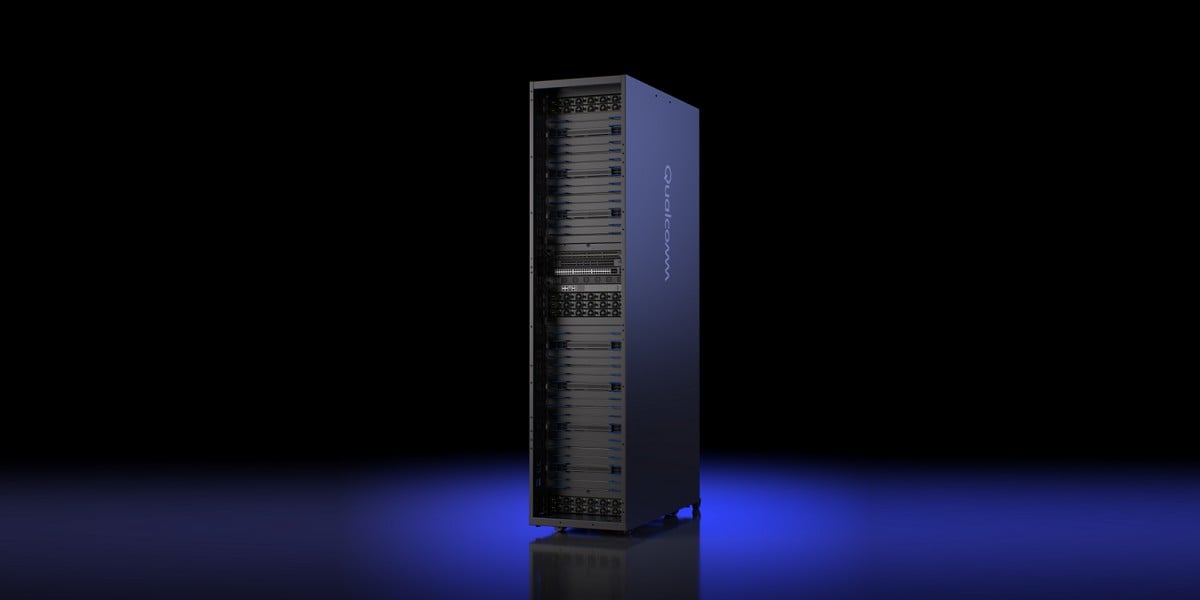
Qualcomm’s recent announcement signals a bold move into the AI datacenter space, specifically targeting AI inference. The company is introducing two new chip-based accelerator cards, the AI200 and AI250, accompanied by pre-configured rack systems designed to house them. Qualcomm aims to differentiate itself by focusing on energy efficiency, memory capacity, and overall cost-effectiveness, positioning its solutions as a compelling alternative to existing offerings.
AI200 and AI250: A Glimpse at the Hardware
While details remain somewhat scarce, Qualcomm has provided some key specifications for its new AI accelerators.
- AI200: This accelerator boasts an impressive 768 GB of LPDDR memory per card.
- AI250: The AI250 promises a “generational leap” in efficiency and performance, leveraging “innovative memory architecture based on near-memory computing.” Qualcomm claims it will deliver over 10x higher effective memory bandwidth and significantly lower power consumption compared to existing solutions.
The rack systems housing these cards will feature direct liquid cooling for optimal thermal management, PCIe for scalability, Ethernet for scale-out capabilities, confidential computing for secure AI workloads, and a total rack-level power consumption of 160 kW.
Focusing on AI Inference: A Strategic Choice
Qualcomm’s decision to focus on AI inference is a strategic one. AI inference refers to the process of using a trained AI model to make predictions or decisions on new data. It’s a computationally intensive task, especially for generative AI models like those used in chatbots and image generation.
While AI training (the process of creating the AI model) typically requires immense processing power, the inference stage accounts for the majority of the long-term operational costs of AI systems. Therefore, optimizing inference performance and energy efficiency is crucial for making AI deployments economically viable.
Addressing the Pain Points of AI Operators
Qualcomm’s messaging directly addresses three critical pain points faced by AI operators:
- Energy Costs: The energy consumption of AI applications is a significant concern, particularly for large-scale deployments.
- Cooling Infrastructure: High energy consumption leads to increased heat generation, requiring expensive and energy-intensive cooling systems in datacenters.
- Memory Capacity: The amount of memory available to AI accelerators limits the size and complexity of the models they can run, or the number of models that can be run simultaneously.
Qualcomm is positioning its AI200 and AI250 accelerators as solutions that can alleviate these pain points, offering a lower total cost of ownership through improved energy efficiency and increased memory capacity. The 768GB of memory on the AI200 significantly exceeds offerings from competitors like NVIDIA and AMD.
Qualcomm’s Competitive Advantage: Power Efficiency and Memory
Qualcomm’s heritage in mobile processor design gives it a distinct advantage in power efficiency. Snapdragon processors are renowned for their ability to deliver high performance while consuming minimal power. Qualcomm is leveraging this expertise to create AI accelerators that can do more with less energy.
The focus on near-memory computing in the AI250 is particularly intriguing. Near-memory computing, also known as processing-in-memory (PIM), involves performing computations directly within or very close to the memory chips. This reduces the distance data needs to travel, leading to significant improvements in speed and energy efficiency. Wikipedia provides an excellent overview of processing-in-memory architectures.
Comparing Qualcomm’s Approach to the Competition
The AI accelerator market is currently dominated by NVIDIA and AMD. NVIDIA’s H100 and A100 GPUs are widely used for both AI training and inference, while AMD’s Instinct MI series offers competitive performance.
Here’s a simplified comparison of key considerations:
| Feature | Qualcomm | NVIDIA | AMD |
|---|---|---|---|
| Focus | AI Inference, Power Efficiency, Memory Capacity | AI Training & Inference, Broad Ecosystem | AI Training & Inference, Open Source Initiatives |
| Key Technology | Near-Memory Computing (AI250), High Memory | CUDA Platform, Tensor Cores | ROCm Platform, CDNA Architecture |
| Targeted Market | Large-Scale AI Operators, Cloud Providers | Enterprises, Research Institutions, Cloud Providers | Enterprises, Research Institutions, Cloud Providers |
| Key Differentiator | Low Power, High Memory Capacity, Rack-Scale Solutions | Mature Software Ecosystem, High Performance | Open Source Focus, Competitive Pricing |
It is important to note that this comparison is based on currently available information and is subject to change as Qualcomm releases more details about its products.
The Role of the Hexagon NPU
Qualcomm’s announcement highlights its “NPU technology leadership,” referring to the Hexagon-branded neural processing units (NPUs) integrated into its mobile and laptop processors. The Hexagon NPU in the Snapdragon 8 Elite SoC, for example, includes 12 scalar accelerators and eight vector accelerators, supporting various data precisions (INT2, INT4, INT8, INT16, FP8, FP16). These NPUs provide valuable experience in designing and optimizing hardware for AI workloads. This expertise likely influences the design of the AI200 and AI250 accelerators.
Challenges and Opportunities for Qualcomm
Despite its strengths, Qualcomm faces several challenges in entering the AI datacenter market.
- Competition: NVIDIA and AMD are well-established players with strong customer relationships and extensive software ecosystems.
- Ecosystem Development: Qualcomm needs to build a robust software ecosystem around its AI accelerators to attract developers and ensure compatibility with popular AI frameworks.
- Hyperscaler Adoption: Securing partnerships with major hyperscalers (e.g., Amazon AWS, Microsoft Azure, Google Cloud) is crucial for gaining widespread adoption.
However, Qualcomm also has significant opportunities:
- Demand for Energy Efficiency: As energy costs rise, there is increasing demand for energy-efficient AI solutions.
- Growing AI Market: The AI market is expanding rapidly, creating opportunities for new players.
- Rack-Scale Solutions: Offering pre-configured rack systems simplifies deployment and management for customers.
The announcement of Humain as a customer, targeting 200 megawatts of Qualcomm AI200 and AI250 rack solutions, provides initial validation for Qualcomm’s strategy. However, the delayed availability of the AI250 until 2027 raises questions about the immediate impact of Qualcomm’s entry.
Conclusion: A Promising Start with Uncertainties
Qualcomm’s entry into the AI datacenter market with its AI200 and AI250 accelerators is a significant development. The company’s focus on energy efficiency, memory capacity, and rack-scale solutions addresses critical pain points for AI operators. Qualcomm’s heritage in mobile processor design and its expertise in NPUs provide a solid foundation for success. However, the company faces stiff competition from established players like NVIDIA and AMD, and it needs to build a robust software ecosystem to attract developers. The lack of details available on the AI250 and the lengthy wait time makes it difficult to immediately assess its impact, though the stock market reacted positively to the announcement. The partnership with Humain provides early validation, but securing broader adoption, particularly among hyperscalers, will be crucial for Qualcomm’s long-term success.
What do you think? Will Qualcomm disrupt the AI datacenter market, or will NVIDIA and AMD maintain their dominance? Comment below!
Sources & Further Reading:
Original article at go.theregister.com


