
When Titans Leap: Inside Oracle’s Wild Ride and AI’s Precarious Heights
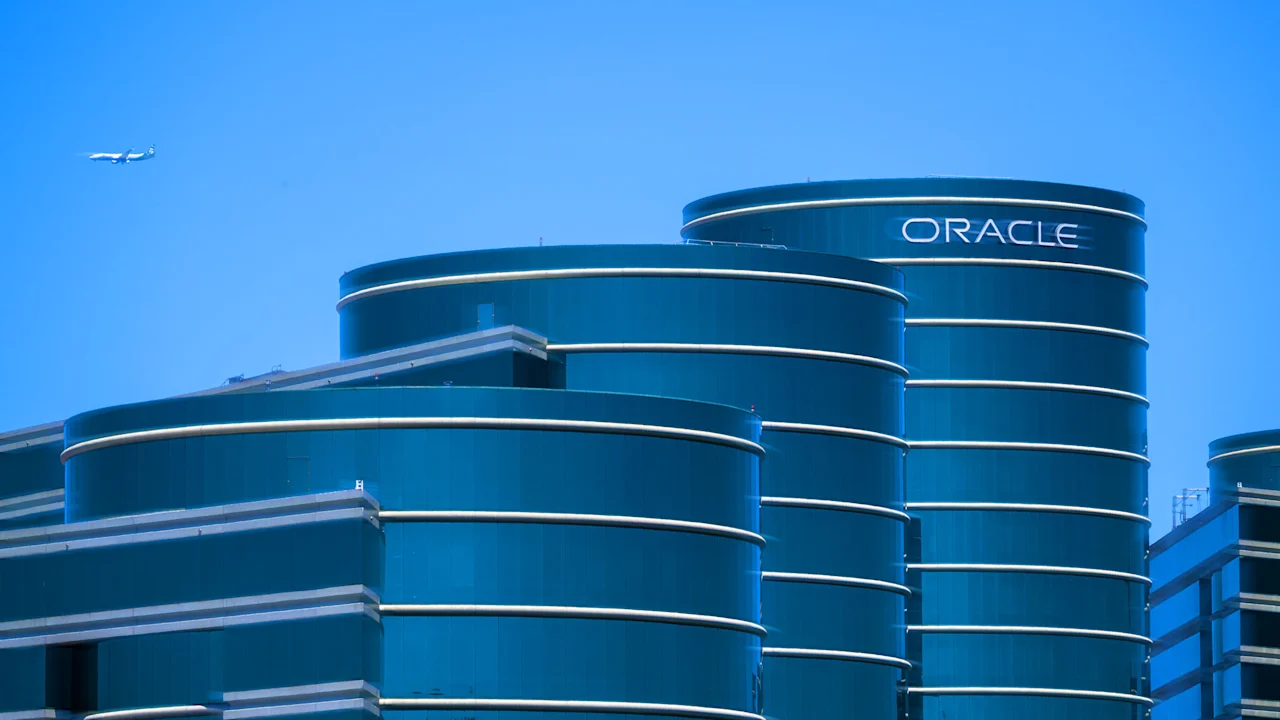
Picture this: the world’s richest person dethroned overnight, not by some newcomer, but by a grizzled tech veteran whose company rocketed 40% in a single day. That’s the reality Oracle and its co-founder, Larry Ellison, delivered last week. In a breathtaking sequence, Oracle not only reported earnings (which actually missed expectations!) but unveiled a staggering $300 billion cloud deal with OpenAI. Ellison briefly surpassed Elon Musk in net worth, riding the single-largest daily wealth surge Bloomberg has ever recorded. Investors cheered, but beneath the deafening applause, a persistent, nervous question hums: Is the AI bubble reaching its peak, poised for a spectacular, devastating pop? This isn’t just about Oracle’s windfall; it’s a stark illustration of the massive bets and escalating risks defining today’s AI boom.
Oracle’s Stratospheric Surge: The Anatomy of a Moonshot
Wednesday, September 11th, 2024, will likely enter Oracle’s corporate lore. Despite failing to hit analyst targets for earnings per share and revenue in its fiscal Q1 report, Oracle’s stock embarked on a staggering trajectory. The catalyst? A single number that blew Wall Street projections out of the water: $455 billion in Remaining Performance Obligations (RPOs). This figure, representing contracted future revenue not yet recognized on the books, skyrocketed 359% year-over-year. Analysts had predicted a robust but far more modest $180 billion. This explosion signals enormous confidence in Oracle’s cloud infrastructure services, primarily driven by surging AI computing demand.
**Oracle's Q1 Shockwave: Key Metrics**
| Metric                         | Reported Figure | Analyst Estimate | Year-over-Year Change |
| :----------------------------- | :--------------: | :--------------: | :------------------: |
| Remaining Performance Obligations (RPO) | $455 Billion    | ~$180 Billion    | +359%                |
| Share Price Gain (Single Day)  | ~+40%           | -                | -                    |
| Larry Ellison's 1-Day Wealth Gain | $20 Billion+ (Record) | - | -          |
The news only intensified with the Wall Street Journal report confirming an unprecedented cloud contract: OpenAI committing roughly $300 billion over five years to Oracle for immense computing power – energy equivalent to fueling 4 million homes. This dual force of colossal future commitments propelled Oracle, traditionally a slower-moving enterprise software giant, directly into the stratosphere of AI infrastructure leaders.
Echoes of the Nvidia Phenomenon: Deja Vu with Distinctions?
Oracle’s dramatic ascent undeniably evokes memories of another AI darling: Nvidia. Starting its precipitous climb in 2023, Nvidia’s stock has surged an eye-watering 390% over two years, doubling since April 2024 alone. It commands a colossal $4.3 trillion market cap, largely fueled by insatiable demand for its graphics processing units (GPUs), the engines of current AI model training.
- The Similar Playbook: Both companies experienced hyper-growth driven by explosive AI infrastructure demand. Investors are betting heavily on their foundational roles in the AI supply chain – hardware chips for Nvidia, cloud compute/database power for Oracle.
- The Pivotal Differences & Shared Concerns: While Oracle boasts massive, diverse RPOs primarily among enterprise clients, Nvidia faces a worrying concentration risk. A staggering 39% of its Q2 revenue came from just two anonymous major customers (widely speculated to be hyperscalers like Google and Microsoft). This over-reliance makes Nvidia intensely vulnerable to shifts in a few partners’ strategies. Oracle’s valuation also soared to a concerning height: its shares traded at nearly 50 times 12-month forward earnings post-surge – its highest forward Price-to-Earnings (P/E) ratio since the dot-com crash (which peaked near 120). Nvidia trades at a forward P/E of roughly 75. Both multiples far exceed historical norms for established tech companies, signaling extreme market optimism bordering on exuberance.
Sam Altman, the CEO behind the colossal OpenAI deal with Oracle, offers a nuanced, somewhat paradoxical perspective. Last month he stated: “Are we in a phase where investors as a whole are overexcited about AI? My opinion is yes.” Yet he immediately followed with, “Is AI the most important thing to happen in a very long time? My opinion is also yes.” This encapsulates the tension: profound belief in AI’s long-term potential collides with fears of unsustainable short-term market inflation.
Mounting Evidence: A Gathering Storm of Bubble Fears
The whispers about an AI bubble transforming into shouts aren’t solely tied to Oracle’s wild week. Astute market observers have been flagging dangers for months.
In July, Torsten Sløk, Chief Economist at Apollo Global Management, issued a stark warning: AI stocks are now more overvalued than tech stocks were at the 1999 dot-com peak. “The difference between the IT bubble in the 1990s and the AI bubble today,” Sløk wrote, “is that the top 10 companies in the S&P 500 today are more overvalued than they were in the 1990s.” His analysis suggests investors are betting future AI profits are astronomical, but current prices have disconnected from actual, present-day earnings for giants like Nvidia, Microsoft, Apple, Alphabet (Google), and Meta. This echoes concerns voiced by others:
- Joe Tsai (Alibaba Chairman): Warned U.S. AI stocks are in a “bubble”.
- Tom Siebel (C3.ai Founder & Tech Veteran): Has also publicly cautioned about an AI valuation bubble.
- Historical Parallels Revisited: Comparisons inevitably turn to the dot-com bubble (late 1990s) and earlier episodes like the “Nifty Fifty” era (early 1970s), where concentrated groups of high-flying stocks crashed spectacularly.
Warning Signs of a Potential AI Bubble
- Sky-High Valuations: Forward P/E ratios (e.g., Oracle 50x, Nvidia 75x) dramatically exceeding long-term averages and historical norms.
- Extreme Market Concentration: The top 5 companies in the S&P 500 (MSFT, AAPL, NVDA, GOOG, AMZN – all heavily involved in AI) now hold a record ~30% of the index’s total market capitalization, exceeding dot-com era concentration. (Source: S&P Global)
- Narrative-Driven Investment: Stock prices soaring on potential future AI revenue streams that may be years away or whose magnitude is highly uncertain. As Sløk noted “The trend of AI stocks up 100% in six months is not sustainable.”
- Insider Cautions: Founders and leaders within the AI field itself (like Altman) acknowledging overexcitement among investors.
The Looming Danger: Concentration and the Domino Effect
This extreme concentration within the S&P 500 doesn’t prove a bubble exists but highlights intrinsic systemic vulnerability. Unlike the dot-com era’s broader (though often flimsy) spread of internet plays, today’s market ascendancy rests disproportionately on the shoulders of a handful of tech behemoths all heavily invested in AI’s promise. If generative AI adoption slows, fails to monetize as expected, triggers unexpected regulatory crackdowns, or faces significant technological roadblocks (e.g., compute/cost limitations, persistent hallucinations), the consequences could cascade catastrophically.
Imagine investor confidence wobbles in AI’s near-term profitability. A significant correction in just a few key players like Nvidia, Microsoft, or even Oracle could trigger a generalized market plunge far beyond the tech sector, given their mammoth weightings in indexes. Pension funds, ETFs, and mutual funds held widely by the public would be severely impacted. This interconnectivity amplifies the risk inherent in the current AI gold rush frenzy evidenced by deals like Oracle’s OpenAI bonanza. The potential for a collapse in AI valuations poses a systemic threat far dwarfing the impact of individual company failures.
We stand at a fascinating, potentially perilous, inflection point. The Oracle story – a historic stock surge fueled by an unimaginably large AI contract – perfectly captures the breathtaking pace and colossal sums involved in this technological revolution. The transformative power of artificial intelligence is undeniable. Yet, the market’s reaction carries echoes of past speculative manias, amplified by unprecedented industry concentration and sky-high valuations detached from earnings reality. Bullish convictions in AI’s long-term benefits clash fiercely with the sobering warning signs flashing in the present. Can the future revenue promised by companies like Oracle justify today’s nosebleed-inducing prices before reality sets in? Or are we witnessing the inflation of a bubble that threatens not just tech fortunes, but the entire market’s stability? The magnitude of bets like OpenAI’s raises the stakes astronomically. The tech titans are soaring – the only question is, how hard will the landing be? What’s your take on the sustainability of the AI boom? Share your thoughts below!


