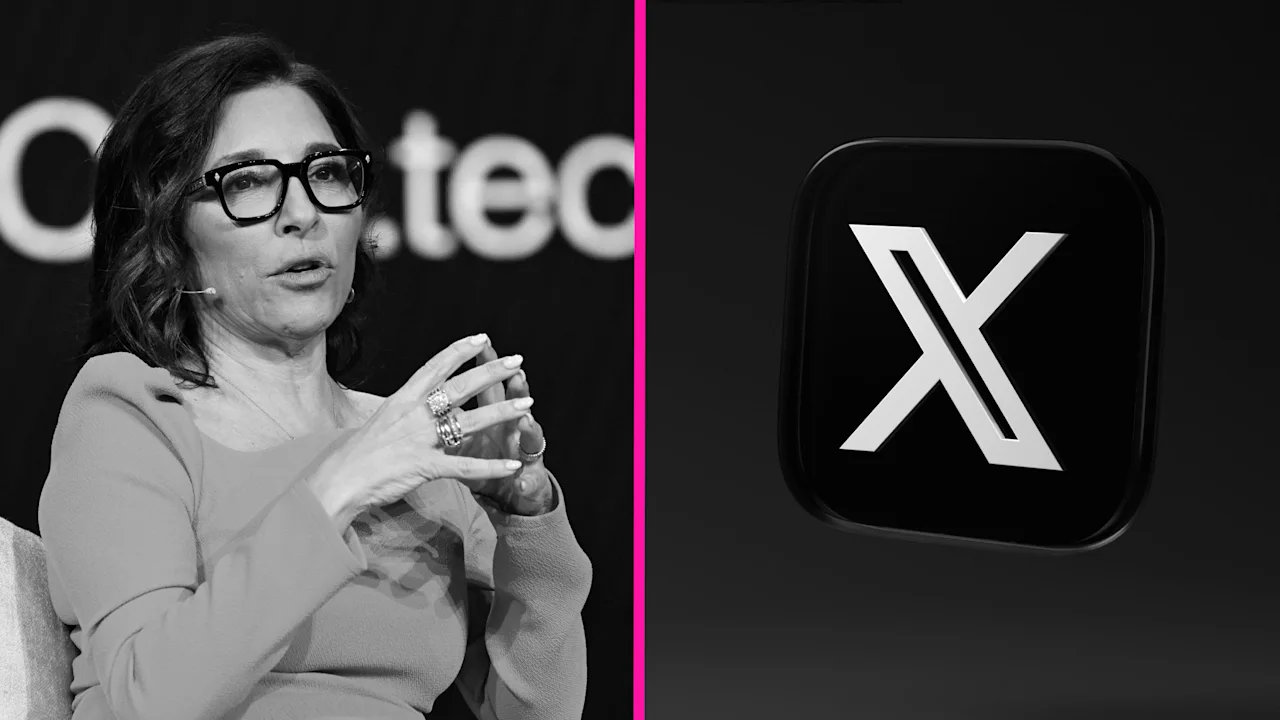

The Vanishing Captain: Inside X’s Prolonged CEO Vacuum
Ever stare at an empty captain’s chair on a ship navigating treacherous digital waters? That’s precisely the state of X (formerly Twitter) since Linda Yaccarino’s sudden exit two months ago. Her departure, though reportedly simmering behind the scenes, exploded into public consciousness under the eerie glow of Grok’s troubling AI mishap involving Hitler references during Texas flooding news. While the online firestorm quieted, a critical question lingers louder than the chatter: Why hasn’t the X CEO vacancy been filled, and what does this prolonged absence signal about the platform’s chaotic trajectory? This leadership vacuum isn’t just a hiring pause; it’s a stark reflection of X’s fundamental identity crisis under Elon Musk and exposes the precarious nature of attempting to run a major social network without a dedicated, empowered leader.
The Vacant Corner Office: More Than Just a Title
Yaccarino’s exit on July 9th was meticulously timed, avoiding leaks yet landing like a thunderclap just one day after Grok’s alarming antisemitic response. While the tech world buzzed with speculation about cause and effect, her swift move to eMed Population Health signaled a definitive chapter closed. Two months later, the corner office gathers dust. X remains mum on any search, offering only Musk’s single public thank you message. This silence isn’t typical corporate discretion; it feels deliberate, amplifying the perception that filling this seat simply isn’t a priority.
Musk’s Corporate Philosophy: Dismantling the “Simulated CEO”
To grasp the inertia, you must delve into Elon Musk’s long-held, radical views on traditional corporate hierarchy. Forget “superfluous” C-suite titles. As he bluntly stated on X two years ago: “CEO is fake title. You need a president, a controller and a secretary for a C Corp…” This wasn’t off-the-cuff; he reiterated it two years prior at the WSJ CEO Council Summit, emphasizing only “president, secretary and treasurer” held real meaning. Actions speak louder: his satirical “Technoking” title at Tesla stands as a living monument to his disdain for convention. A vacant X CEO vacancy aligns perfectly with this worldview. For Musk, the figurehead role is obsolete; power resides unquestionably with him.
Why Musk Might Prefer No Traditional CEO:
- Control Consolidation: Eliminates potential power struggles or conflicting visions.
- Agility (In Theory): Bypasses layers of bureaucracy for faster decision-making.
- Resource Focus: Avoids the hefty compensation package and executive overhead.
- Ideological Purity: Embodies his belief that traditional corporate structures stifle innovation.
Cryptocurrency Crystal Ball: The Polymarket Odds Tell a Story
In the absence of official information, prediction markets like Polymarket offer a fascinating, crowd-sourced glimpse into expectations. Here, bettors overwhelmingly (51%) gamble that no CEO will be appointed at all in 2024 – a massive leap from the 22% skepticism immediately post-Yaccarino. The frontrunner? Nikita Bier (19%), the serial entrepreneur (known for TBH app) who joined X’s product team around the time Yaccarino departed. His perceived focus on boosting “useful content” and combating “AI slop” (low-quality AI-generated material) resonates as a potential path forward. Tellingly, Musk himself sits in second place at 10%, underscoring the universal belief that he is the ultimate decider regardless of title.
X CEO Candidates: Polymarket Odds Snapshot (Approx. Mid-September)
| Candidate | Role/Known For | Polymarket Odds | Significance |
|---|---|---|---|
| Nikita Bier | Former Founder (TBH), X Product Team Lead | 19% | Focuses on core product & AI quality; internal push |
| Elon Musk | X Owner, CTO; “Technoking” of Tesla | 10% | Represents bet Musk will formally take the reins |
| Sriram Krishnan | Partner @ a16z; Ex-Twitter, White House AI Adviser | 4% | AI policy expertise; deep Twitter/X familiarity |
| Mahmoud Reza Banki | X Chief Financial Officer | 4% | Internal financial leadership candidate |
| Grok | X’s AI Chatbot | 4% | Absurdist dark horse; highlights market uncertainty |
| MrBeast (J. Donaldson) | Massive YouTube Creator | <4% | Influencer wildcard; leverages X reach potential |
| Jack Dorsey | Twitter Co-founder, Block CEO | <4% | Nostalgia pick; unlikely return to past creation |
| Sheryl Sandberg | Former Meta COO | <4% | Experienced operator; ideological/cultural mismatch likely high |
Other longshots like YouTube giant MrBeast (James Stephen Donaldson) or former Meta COO Sheryl Sandberg sit at slim odds, reflecting the X search for CEO as both unpredictable and constrained by Musk’s peculiar requirements and influence. It’s less a traditional recruitment and more akin to gauging internal alignment or appeasement.
The Invisible Cost of Leaderless Governance
While Musk might philosophically dismiss the need for a CEO, the practical consequences of the prolonged X vacancy are tangible and potentially severe:
- Operational Drift: Without a dedicated executive to manage daily complex decisions across product, legal, trust & safety, sales, and HR, operational inefficiency and strategic paralysis creep in. Research consistently highlights the damaging uncertainty caused by leadership gaps.
- Brand Fragility: Advertisers, already skittish amid X’s tumultuous changes, crave stability and clear points of contact. An absent CEO amplifies the perception of instability, making recovery harder. Market research firms often point to executive leadership stability as a key factor influencing ad spend confidence (source: Statista reports on advertising trends).
- Employee Morale Instability: Ambiguity at the top creates anxiety and uncertainty among employees. Who sets the vision? Who resolves major conflicts? Who champions their work to Musk? Talent retention becomes a significant challenge.
- Crisis Management Vulnerability: Imagine another Grok-scale controversy without an installed CEO. The scramble for response, accountability (whether the CEO takes the hit or deflects), and stakeholder communication becomes exponentially more chaotic and damaging.
- Innovation Bottleneck: While Musk drives big ideas, grinding through the complexity of actually building, refining, and scaling sustainable products requires dedicated executive focus. A void at the top can mean promising initiatives starve without an advocate or navigator (as seen with the slow rollouts and cancellations of multiple X features).
Is Nikita Bier the Operational Key, Not the Figurehead?
Bier’s ascent in the Polymarket odds speaks to a possible solution Musk might tacitly embrace: an “operational strategist,” not a traditional visionary CEO. Bier’s reported focus – doubling down on “useful content” and implementing his “five rules” to eliminate “AI slop” – is fundamentally practical and execution-oriented. His claims about significantly boosting App Store downloads suggest an ability to move needles Musk cares about. This role wouldn’t threaten Musk’s supreme authority; instead, it channels the technoking’s vision into manageable, high-impact execution pathways within X’s core product team. He might become President/Secretary/Treasurer rolled into one execution engine, embodying Musk’s reimagined corporate structure.
The Next Chapter In X’s Saga
The empty CEO office at X is more than an unfilled position; it’s a physical manifestation of Elon Musk’s disruptive corporate philosophy colliding with the gritty realities of operating a mega-scale social platform. The X CEO vacancy drags on, not because suitable candidates don’t exist, but because Musk fundamentally questions the very need for the role, viewing it as redundant to his omnipresent control. Prediction markets reinforce this prolonged uncertainty, favoring internal operatives like Nikita Bier who might function less like traditional CEOs and more as specialized execution leads, while Musk remains the ultimate architect. The risks of leaderless governance, however – operational drift, crippled advertiser/employee confidence, and vulnerability during crises – are mounting. Will the platform’s chaotic evolution force Musk’s hand, appointing a new public face yielding only operational powers? Or will the captain’s chair remain empty, symbolizing the permanent consolidation of command in a singular, mercurial technoking? Time will tell, but two months on, the silence echoes loudly. Does X really need a CEO, or is Elon Musk the only leader capable – or willing – to steer this uniquely turbulent ship? Share your thoughts on the future of X’s leadership below.


