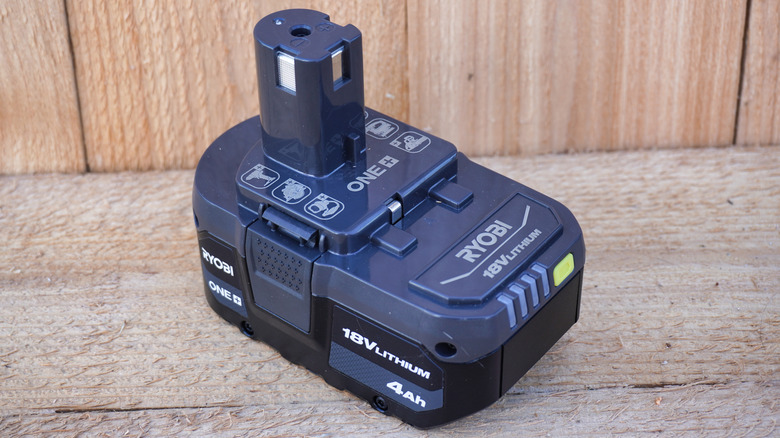

The Hidden Firestorm: Why Resetting Your Ryobi Battery Isn’t Worth the Risk
Have you ever frantically searched online for a way to revive a dead Ryobi battery, tempted by videos claiming a simple “reset” will save you the cost of a replacement? Resetting a seemingly dead Ryobi battery is presented across forums and video platforms as a clever hack, a triumph over planned obsolescence. But beneath the promise of a quick fix lies a terrifying truth: these DIY methods are inherently dangerous, posing a severe fire and explosion hazard. Understanding the very real risks of forcibly resetting a Ryobi battery—compared to the importance of safe battery handling and the manufacturer’s recommended solutions—isn’t just about convenience; it’s a critical safety imperative. The potential consequences go far beyond a bricked battery, reaching into the realm of property destruction and personal injury.
Anatomy of a Lethal Shortcut: Decoding the DIY Reset Myth
The methods touted online for reviving a Ryobi lithium-ion battery share a common, dangerous approach: bypassing the battery’s complex internal safety systems. At its core, the “reset” typically involves:
- Direct Voltage Application: Using an external power source like a phone charger to apply voltage directly to the battery terminals. The idea is to “jumpstart” voltage into completely depleted cells, tricking the Ryobi charger into recognizing and accepting the pack again.
- Internal Manipulation: Some guides encourage opening the battery housing (a significant step in itself that voids warranty and risks damage), then shorting specific points on the internal circuit board to reset a protective chip or manually charging individual cells.
The allure is clear: potentially saving $50-$150 on a new battery. However, this ignores the sophisticated engineering built into every lithium-ion power tool battery. These packs are not simple containers of energy; they are equipped with Battery Management Systems (BMS) designed specifically to prevent dangerous conditions. Forcibly bypassing these protections by resetting a Ryobi batterynullifies the safeguards designed to keep you safe.
The Ticking Time Bomb: Thermal Runaway and Lithium Battery Perils
Why is resetting a Ryobi battery so hazardous? It boils down to the fundamental chemistry and physics of lithium-ion technology powering not just your tools, but also smartphones, laptops, and EVs. These batteries pack immense energy density into a small space – a feature that also makes them vulnerable to catastrophic failure if mishandled.
- Energy Density Double-Edged Sword: Lithium-ion cells store a significant amount of electrical energy in a compact format. A seemingly minor incident can release this energy violently.
- Thermal Runaway: The Point of No Return: This is the core danger. It’s an uncontrollable exothermic chain reaction within the battery cell. If a cell is damaged (physically like from a drop, electrically like from short-circuiting during a risky reset, thermally like from overcharging, or chemically from deep discharge), internal temperatures can skyrocket rapidly.
- The Chain Reaction: Elevated temperature decomposes the electrolyte solution inside the cell, producing flammable gases and more heat. This decomposes more electrolyte, generating even more heat and gas – an exponential, unstoppable feedback loop.
- The Result: The cell pressure builds until it vents violently, releasing hot gases and toxic chemicals, and almost inevitably igniting. The fire is intense, chemical-based, and notoriously difficult to extinguish. NASA cites thermal runaway as a critical safety concern for their aerospace applications, highlighting its destructive potential.
- Domino Effect (Propagation): In a multi-cell pack like a Ryobi battery, one cell undergoing thermal runaway generates enough heat to trigger neighboring cells, quickly turning a small incident into a major fire involving the entire battery pack. Firefighters face extraordinary challenges extinguishing these fires, as water is often ineffective and specific agents are required.
Statistics paint a concerning picture. Forestry equipment manufacturer Stihl has acknowledged the increase in battery fire incidents. Underwriters Laboratories (UL) emphasizes the risks associated with exposure of lithium-ion batteries to improper charging, damage, or electrical faults – precisely the conditions DIY resets create. The U.S. Consumer Product Safety Commission (CPSC) continues to investigate numerous fires linked to lithium-ion batteries, particularly those in micromobility devices, underscoring the real-world dangers when these systems fail.
| Risk Comparison: DIY Reset vs. Safe Alternatives |
|——————————————————————–|————————————————-|
| Factor | DIY Reset Attempt | Safe Alternatives (Warranty/Replace) |
| Fire/Explosion Risk | Very High: Directly bypasses safety systems | Negligible: Uses approved & safe protocols |
| Personal Safety | Severe Hazard: Risk of burns, inhalation | Safe: No inherent safety risks |
| Battery Longevity | Uncertain, Likely Reduced: Damaged cells remain unreliable | Guaranteed (Warranty): Functioning new pack |
| Financial Risk | Wasted Effort + Property Damage Potential | Warranty: Free; Replacement: Fixed Cost |
| Manufacturer Support | Voids Warranty Completely | Fully Supported & Encouraged |
| Knowledge Requirement | Highly Technical & Error-Prone | Simple User Process |
Manufacturer Mandate: Warranty is The ONLY Safe Path
Ryobi’s stance on battery resetting is unequivocal and unambiguous: do not do it. Their battery warranties explicitly exclude coverage for damage resulting from misuse, unauthorized modifications, or opening the battery casing. Attempting a reset immediately voids any warranty claim. Why this hard line?
- Engineered Safeguards are Non-Negotiable: Procedures like resetting a Ryobi battery dismantle the critical safety layers engineers spent years designing. Manufacturers cannot stand behind products subjected to such unpredictable and risky procedures.
- Liability and Consumer Protection: Endorsing dangerous workarounds opens the door to significant liability. Ryobi explicitly directs users to their warranty program or authorized replacements for safety reasons.
- Coverage Clarity: Ryobi warranties typically cover lithium-ion batteries against defects in materials and workmanship for three years. This is far more comprehensive protection than the false promise of a risky reset. Original tool retailers may offer additional warranties.
The Smart Solution: When Your Ryobi Battery Fails
Instead of risking catastrophe by resetting your Ryobi battery, follow the safe, manufacturer-approved path:
-
Check the Warranty First: This is always step zero. Locate your proof of purchase. Ryobi battery warranties are robust, often covering up to 3 years. Replacement under warranty is typically straightforward and free.
- Warning Signs: A significant drop in run-time, failure to charge properly, physical damage, or unusual heat/swelling during use or charging. If you observe swelling, cease use immediately, place the battery in a fire-proof container away from flammables, and contact Ryobi.
-
Firmware Flashes & Cradle Resets: Crucially, legitimate methods exist: Ryobi occasionally releases firmware updates for their chargers or tools that can resolve communication issues between the tool, charger, and battery. Sometimes, a specific reset sequence on the charger cradle (detailing this for specific Ryobi 40V Home Depot chargers, for example, differs from the dangerous battery reset methods discussed). Always refer to official Ryobi documentation or contact support for these safe resets at the charger level.
-
Controlled Depletion (If Warranty Expired & Safe): If your battery is dead but not damaged or swollen and you are absolutely certain it’s simply deeply discharged (not recommended for novices), placing it on the charger for only a few minutes (3-5), then into a tool until it stops, then back on the charger for another few minutes might occasionally wake the BMS. This requires extreme caution and monitoring for heat. Stop immediately at any sign of warmth or if unsuccessful within a short timeframe. This is NOT a “forced reset” and carries significantly less risk than voltage injection, but caution is paramount.
-
Replacement: If the warranty has expired or the battery shows physical damage, replacement is the only truly safe and reliable option. Lithium-ion batteries are consumable components with a finite lifespan (typically 3-5 years depending on usage and care). They are designed to be replaced at end-of-life. Investing in a new battery from reputable dealers offers predictable performance and safety assurance. Explore recycling options for the old battery.
Prioritize Safety, Ditch the Danger
The perceived savings of resetting a Ryobi battery pale in comparison to the potential devastation of a lithium-ion battery fire. Thermal runaway is a rapid, extreme, and uncontrollable phenomenon. Mishaps during DIY resets—a reversed connection, a momentary short, an overzealous voltage application—are exceedingly easy to make and can have catastrophic consequences within seconds. Ryobi provides safe channels for resolving battery issues through warranties and straightforward replacement. Choosing these routes isn’t just adhering to policy; it’s a fundamental act of protecting yourself, your home, and anyone nearby. Responsible lithium-ion battery disposal facilitates resource recovery and minimizes environmental harm.
The question isn’t, “How do I hack my Ryobi battery to work again?” It should be, “Is saving $50 worth risking my house?” Let’s value safety over shortcuts. Have you ever witnessed the consequences of a battery mishap? Share your thoughts or experiences on responsible power tool care below.


