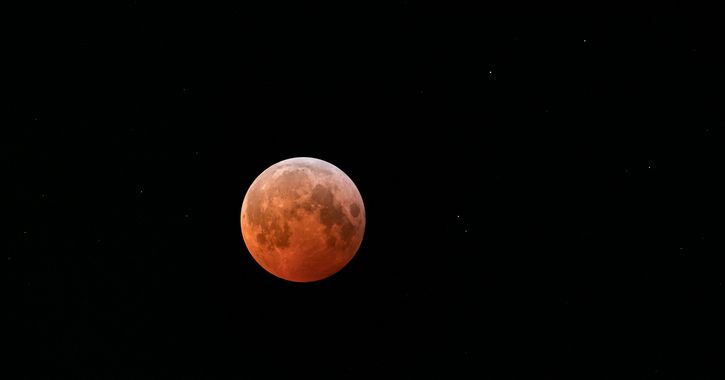

The Final Blood Moon of 2024: Your Guide to September’s Celestial Spectacle
What if the moon suddenly turned blood-red in the sky? On September 7, the second and last total lunar eclipse of 2024 will bathe our celestial neighbor in eerie crimson light, visible to over half the globe. Unlike solar eclipses requiring protective gear, this “blood moon” event offers safe, naked-eye viewing of one of astronomy’s most dramatic displays. This event not only provides breathtaking visuals but demonstrates fundamental physics at a cosmic scale. As the final total lunar eclipse until early 2026, its global visibility map—spanning Asia, Africa, and Australasia—offers millions a chance to witness this phenomenon. Understanding why the moon transforms during totality reveals intimate connections between light, our atmosphere, and orbital mechanics that govern life on Earth.
◈ The Alchemy of a Blood Moon: Rayleigh Scattering Decoded
When the Earth aligns perfectly between the sun and moon, our planet casts a shadow that should, in theory, cloak the moon in darkness. Yet during total lunar eclipses, it instead glows coppery-red. The transformation hinges on Rayleigh scattering—the same phenomenon that colors sunrises and sunsets.
Visible sunlight is a spectrum of wavelengths. Earth’s atmosphere acts like a prism, scattering shorter blue wavelengths while bending longer red wavelengths inward. During totality, this refracted red light becomes the only illumination reaching the moon. Astronomers quantify this effect using the Danjon Scale, which rates eclipse darkness (L=0, barely visible) to bright copper (L=4):
| Danjon Value | Moon’s Appearance | Atmospheric Conditions |
|---|---|---|
| L=0 | Very dark eclipse | High volcanic ash/clouds |
| L=1 | Dark gray/brown | Significant aerosols |
| L=2 | Deep red/rust | Moderate pollution |
| L=3 | Brick red | Clear skies |
| L=4 | Bright copper/orange | Exceptionally clear |
Historically, ultra-dark eclipses followed volcanic eruptions (e.g., Mount Pinatubo, 1992), while bright eclipses signal pristine air. While lesser-known than its solar counterpart, the mechanics of lunar eclipses[^1] fascinate astronomers for revealing atmospheric conditions in real-time.
[^1]: NASA Eclipse Science Overview: NASA Total Lunar Eclipses
◈ Global Visibility and Timing: Mapping the Eclipse Path
Unlike March’s eclipse favoring the Americas, September’s event will not be visible west of the Atlantic. The path of totality sweeps across continents where local night skies coincide with the eclipse window:
- Key viewing zones: All of Australia, East Asia (China, Japan), Southeast Asia (Indonesia, Thailand), Central/East Africa (Ethiopia, Kenya), and India.
- Excluded regions: The Americas, Western Europe, and Scandinavia.
Timeline in UTC (Convert to local time via Timeanddate.com):
- Partial eclipse begins: 15:42 UTC
- Totality starts: 17:30 UTC
- Peak eclipse: 18:11 UTC
- Totality ends: 18:50 UTC
- Partial ends: 20:55 UTC
City-Specific Examples:
- Sydney, Australia: Totality from 03:30–04:20 AM AEST (Sept 8)
- Tokyo, Japan: Totality from 02:30–03:20 AM JST (Sept 8)
- Nairobi, Kenya: Totality from 08:30–09:20 PM EAT
◈ The Almost-Supermoon Factor: Larger and Closer
This lunar eclipse holds an added twist. It occurs just 72 hours before perigee—when the moon is nearest to Earth (about 363,000 km away). Though not technically a “supermoon” (full moon at perigee), its proximity will make it appear ~6% larger and 15% brighter than a micro-moon eclipse. This celestial coincidence enhances visibility, especially during telescopic observations.
◈ Virtual Observation Guide: Streaming for Excluded Regions
If you reside outside visibility zones, the Virtual Telescope Project[^2], founded by astrophysicist Gianluca Masi, offers a lifeline. Their free YouTube livestream broadcasts the eclipse with professional telescopes positioned in eastern-hemisphere locations. Features include:
- Real-time color processing highlighting the red hue
- Expert commentary explaining phase transitions
- Time-lapse captures to replay totality
◈ Eclipse Frequency: The Long Wait Ahead
Post-September 7, total lunar eclipses enter a 18-month hiatus. NASA[^3] confirms the next totality on March 14, 2026, favoring North America and East Asia. While partial and penumbral eclipses occur more often, none rival the “blood moon” spectacle:
| Phase | Event Count (Annual Avg) | Visibility Duration |
|---|---|---|
| Total | 0–3 | Minutes to 108 minutes |
| Partial | ~2 | <3 hours |
| Penumbral | ~2 | Up to 4 hours |
◈ Cultural Significance and Historical Context
The blood moon has stirred human imagination for millennia. Ancient Mesopotamians viewed eclipses as divine omens, while the Inca believed a jaguar attacked the moon. Modern science dispels myths but amplifies wonder. The September 2024 eclipse coincides with Mid-Autumn Festival celebrations in Asia—where lunar symbolism features prominently in cultural rituals.
Conclusion: Observing the Cosmic Ballet
The September 7 eclipse concludes 2024’s lunar show with a vivid demonstration of orbital mechanics and atmospheric optics. From Rayleigh scattering’s magical scarlet filter to the near-supermoon bonus, this event unites hemispheres in shared skyward wonder. For millions under its path—or tuned into global streams—the blood moon remains astronomy’s most accessible spectacle: free, safe, and sublime. Mark your calendars for the brief totality window, check Timeanddate.com for your precise timing, and join the world in witnessing nature’s grand finale until 2026.
What was your most unforgettable eclipse experience? Share your thoughts below!
Sources & Further Reading:
Original article at www.wired.com


