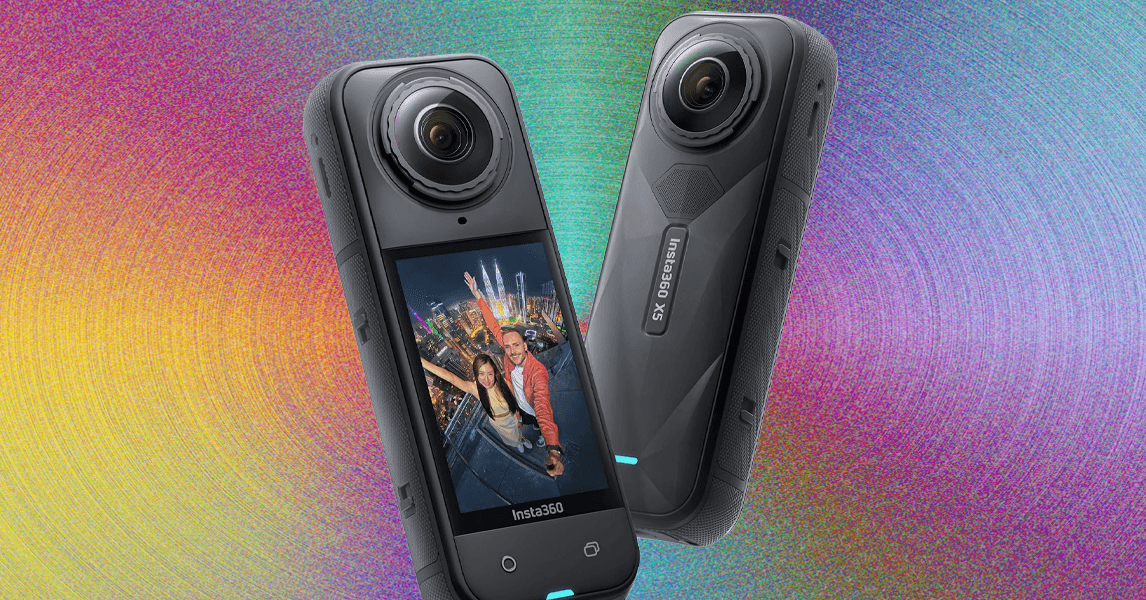

The 360 Camera Crossroads: Choosing Your Perfect Panoramic Performer in 2024
Imagine capturing every single angle of your skydive, your child’s first bike ride, or the electrifying ambiance of a concert crowd – all without worrying where to point the lens. That’s the revolutionary promise of 360 cameras, reshaping how everyday creators and adventurers document immersive experiences. While once niche and complex, modern consumer-grade 360 cameras like the Insta360 X4 offer stunning resolution and accessible editing tools, making panoramic video surprisingly approachable. But with models flooding the market boasting varied specs and price points, choosing the right 360 camera hinges deeply on understanding your unique needs – whether that’s creating seamless VR content, generating dynamic social media clips, or simply ensuring you never miss a key moment. Understanding this landscape is critical for investing wisely in this powerful, perspective-shifting technology.
Unlocking the World: Why Invest in a 360 Camera?
- The Core Dual Appeal: Fundamentally, 360-degree cameras serve two primary masters.
- First: Immersive VR Production. For creators aiming to produce true virtual reality experiences viewed on headsets like Meta Quest or PlayStation VR2, the highest possible native resolution is non-negotiable for visual fidelity and reducing the “screen door effect.” While prosumer cameras like the Insta360 X4 and Insta360 X5 are steps in this direction, professional projects often require even higher-end multi-camera rigs.
- Second: Reframing for Rectangular Reality: This is the predominant use case for most consumers. Instead of immersive viewing, you capture your entire surroundings and then, in post-production, reframe the footage. You select the specific angles, pan across the scene, or track moving subjects to create a conventional 16:9 video. The genius? You decide where to point the virtual camera after the event. (Learn more about Omnidirectional Images)
- The Power of “Shoot First, Point Later”: The magic lies in never missing the shot. A traditional DSLR or action cam must be aimed perfectly at the crucial moment. A 360 camera simply needs to be on and positioned reasonably well; the editing flexibility means you can always find the best angle retrospectively. This is transformative for documenting unpredictable action, group events, or capturing expansive environments without constant operator intervention.
Resolution Reality Check: Why Megapixels Matter More Here
In a world saturated with 4K smartphone cameras, resolution boasts often feel like marketing fluff. For 360-degree video, however, resolution is absolutely paramount. Why?
- The Physics of Panoramic Cropping: A 360 camera inherently captures an enormous spherical field of view using dual ultra-wide fisheye lenses. To produce a standard rectangular video from this footage, significant cropping is required – essentially, you’re zooming in dramatically on a small portion of that vast spherical canvas. This cropping drastically reduces the effective resolution of your final output.
- Example Breakdown: An impressive-sounding 8K (7680 x 3840) 360 video provides a spherical resolution of 7680 pixels around the 360-degree equator. To create a standard 1920×1080 (Full HD) video, you’re extracting roughly 1/4th of the horizontal sphere (90 degrees of view) and roughly 2/7ths of the vertical sphere (around 50 degrees, depending on final aspect ratio). This mathematically results in a ~2.7K-equivalent final pixel count translated to a 1080p frame.
- The Target: If your goal is a crisp 4K (3840×2160) final reframed video, you need a source 360 resolution high enough to withstand the zoom. Calculations suggest starting resolutions of 12K or higher are needed for truly sharp 4K output. While not commercially mainstream yet for consumers (the Qoocam 3 Ultra targets 8K), it underscores why pushing sensor resolution is a genuine necessity for 360 camera quality, unlike other camera types.
Mastering Reframing: The Digital Director’s Chair
Reframing transforms raw 360 footage into watchable content. It’s the cornerstone creative process:
- Capture Everything: Record your scene using the 360 camera, ideally mounted (often invisibly cloned out by software if using a “selfie stick”).
- Import & Process: Use the camera’s companion software (usually available for mobile and desktop) to stitch the footage into a seamless sphere. Modern solutions like Insta360 Studio do this remarkably well.
- Direct Your Story: Within this spherical canvas, you become the director. Use keyframes to:
- Set Frames: Define specific viewpoints you want the virtual camera to look at any given moment.
- Pan/Track: Smoothly move the viewpoint across the scene or follow a moving subject.
- Add Dynamic Moves: Create push-ins, pull-outs, and tilted angles for cinematic effect.
- Export: Render your directed sequence into a traditional video format ready for YouTube, Instagram Reels, TikTok, or your personal archives. Top software includes Insta360 Studio, GoPro Player, and Nebula for Kandao cameras.
The Contenders: Breaking Down Today’s Top 360 Camera Choices (2024 Landscape)
Based on extensive testing across scenarios like action sports, low-light interiors, and dynamic events, here’s how the leading options compare:
| Feature | Insta360 X5 ($699) 🔝 | Insta360 X4 ($499) 🔝 | GoPro Max ($422) | Insta360 One RS ($300 + Lenses) | Insta360 X3 ($250) |
|---|---|---|---|---|---|
| Max Native Res | 8K@30fps, 6K@60fps | 5.7K@60fps | 5.6K@30fps, 3K@60fps | 6K/5.7K@30fps (with 360 lens) | 5.7K@30/24/25fps |
| Action Cam Mode | 4K@60fps (single lens) | 4K@60fps (single lens) | 1440p@60fps (Hero Mode) | 4K@60fps (Leica 4K Lens) | 4K@30fps (single lens) |
| Sensor Size | 1/1.3″ | 1/2″ | Not Specified | 1/2″ (360 lens) | 1/2″ |
| Key Strengths | Best detail/sharpness, Active HDR, Fast Mode switching | Best all-rounder, Best balance price/performance, Excellent software | Robust GoPro ecosystem integration, Hypersmooth Stabilization, Front screen | Lens flexibility (Action/360), Rugged | Exceptional value for entry point |
| Key Limitations | Highest price point | Lower resolution than X5 still requires careful reframing | Older model, Max 2 likely imminent | Lower 360 video quality, Complex setup required for versatility | Limited stabilization & sharpness |
| Ideal For | Demanding creators prioritizing best reframed quality | Mainstream “shoot everything” versatility & best overall workflow | Existing GoPro ecosystem users wanting 360 option | Hybrid shooters prioritizing action upgrade path over pure 360 IQ | Budget-conscious 360 beginners |
-
(⭐⭐⭐⭐⭐) Insta360 X5 ($699): The New Quality King
- Upgraded Sensors: Its 1/1.3-inch sensors (larger than competitors) capture significantly more light and detail, pushing 8K resolution.
- Performance: Smooth 8K@30fps and 6K@60fps, delivering the best starting point for sharp reframed HD/4K(-ish) videos. Active HDR mode improves dynamic range.
- Workflow: Retains the streamlined Insta360 app/desktop software experience, crucial for turning footage into shareable clips.
- Best For: Creators prioritizing the absolute highest fidelity for reframed videos or VR development, especially in varied lighting. It’s an investment in future-proofed quality.
-
(⭐⭐⭐⭐) Insta360 X4 ($499): The Sweet Spot All-Rounder
- Evolution, Not Revolution: Builds on the popular X3 with a brighter screen, faster processor, longer battery, and enhanced AI features.
- Resolution: Still tops out at 5.7K, but stabilized by FlowState Stabilization (for gimbal-like smoothness) and offers a smoother experience than the X3.
- Action Mode: Excellent 4K@60fps standard action camera output via single lens mode – a huge plus.
- Best For: Most users who want a versatile, easy-to-use 360 camera delivering great reframing flexibility and reliable action cam performance at a compelling mid-range price. Offers the best overall balance.
-
(⭐⭐⭐️) GoPro Max ($422): Ecosystem Integration Champ
- GoPro DNA: Rock-solid waterproof build, industry-leading Hypersmooth stabilization, familiar GoPro modes (TimeWarp, PowerPano), and full compatibility with GoPro mounts.
- Resolution/Features: 5.6K@30fps, rugged design, includes “Hero Mode” for standard action shots (1440p@60fps).
- The Caveat: Significantly older (original Max launched in 2019). A highly anticipated “Max 2” capable of 8K resolution and featuring GoPro’s latest GP2 processor is widely expected imminently based on recent FCC filings and product cycles. Buying currently is risky. Waiting seems prudent unless heavily invested in GoPro mounts/apps.
-
(⭐⭐) Insta360 One RS ($300 + Lenses): The Ultimate Modular Experiment
- Modular Power: Its core strength is interchangeable lenses – swap between the 360 lens mod (~6K), the excellent Leica-branded 4K action lens, or a 1-inch sensor mod.
- Tradeoffs: While versatile, its pure 360 video quality lags behind the X4/X5, and achieving both 360 and top-tier action performance requires buying multiple lens modules ($300 for core, plus $200+ per lens kit).
- Best For: Users deeply invested in Insta360 modularity who prioritize having one camera core that adapts to multiple filming styles, accepting compromises on pure 360 performance. Less compelling now that X4 offers strong action mode.
Beyond the Best: Viable Alternatives & Models to Skip
- The Budget Gateway: Insta360 X3 ($250): An amazing entry point. While eclipsed by the X4’s polish, the X3 provides remarkably competent 5.7K footage and usable 4K action mode at a fraction of the cost. Perfect for 360 novices dipping their toes.
- The Wild Card: Qoocam 3 Ultra ($599): On paper, Kandao’s 8K camera with an ultra-wide f/1.6 aperture holds promise for significantly better low-light performance compared to the typical f/2+ apertures of competitors. However, lack of widespread availability and reviews makes it a gamble. Needs thorough testing confirmation.
- Avoid List:
- Insta360 One X2 ($230): Outdated. Tiny screen, less refined stabilization, softer recording compared to X3/X4. Only consider if found well under $200.
- Insta360 One RS 1 360 Edition (Discontinued): Supposedly superseded by the newly announced Insta360 X5. Offered 1-inch sensor charm in a fragile, heavier modular body. Discontinued means scant support and often inflated used prices; the newer X5 is vastly superior in IQ and usability.
The Editing Equation: Software Makes the Magic
A powerful camera is only half the battle. The editing workflow is equally, if not more, important for users focused on reframing:
- Mobile & Desktop: All major players offer apps for iOS/Android and software for macOS/Windows. Insta360 leads here with an exceptionally intuitive and powerful suite (Insta360 app & Insta360 Studio) offering AI features and seamless reframing workflows.
- Key Considerations:
- AI Features: Look for auto-tracking subjects (key for following movement), automated highlights, wind noise reduction.
- Stitching Accuracy: How well the software seamlessly blends the dual fisheye lenses.
- Performance: Can your computer/mobile device handle smooth playback and rendering of high-res 360 files?
- Shareability: Direct upload paths to platforms like YouTube, Instagram, TikTok.
Conclusion: Finding Your Panoramic Path
The 360 camera market offers unprecedented possibilities for creators of all levels. Today’s top contenders like the Insta360 X5 and X4 bring remarkable resolution, stabilization, and intuitive workflows, empowering you to capture life’s unpredictable moments completely. Understanding the critical role of resolution for effective reframing and the vastly different use cases (pure VR creation vs. dynamic rectangular exports) is key to selecting your ideal tool.
Your best bet depends on goals and budget: the Insta360 X5 for unmatched quality seekers, the X4 for the best overall value and experience, or the X3 as an affordable entry point. Avoid older models and be cautious of the aging GoPro Max despite its ecosystem strengths. Remember, half the magic happens in the editing software – embrace the creative power of reframing to tell compelling stories. Whether it’s an epic vacation, an immersive documentary sequence, or just ensuring you capture that winning moment in the game, a modern 360 camera offers a unique and powerful perspective that traditional cameras simply can’t match.
Ready to capture the whole story? Which 360 camera adventure sparks your creativity? Share your thoughts and filming plans in the comments below!
Sources & Further Reading:
Original article at www.wired.com


