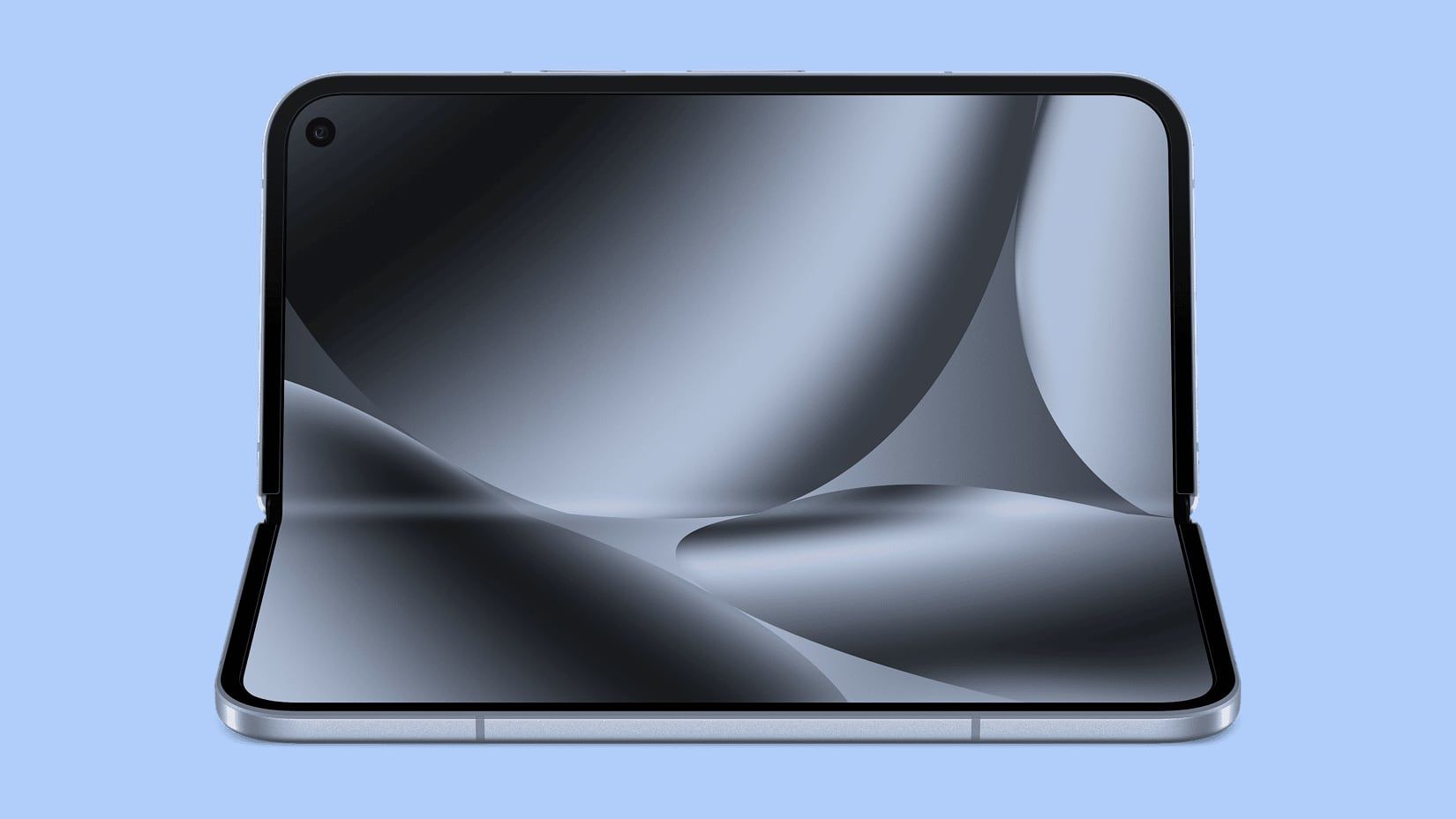

The Pixel 10’s AI Onslaught: Is This the Dawn of Truly Contextual Smartphones?
Did you know that by 2027, the global AI smartphone market is projected to explode past $135 billion? Yet, for all the hype, most “AI features” still feel like party tricks rather than truly intelligent assistants. Google’s newly launched Pixel 10 shatters this perception, placing cutting-edge AI squarely at the center of the user experience. While boasting hardware refinements, Google’s relentless focus during the reveal was on Pixel 10 AI features – over a dozen new or significantly upgraded capabilities powered by the Titan Tensor G5 chip and Gemini Nano AI. This suite promises a shift from reactive tools to proactive, context-aware intelligence, potentially widening the gap with competitors like Apple, whose upcoming Siri revamp isn’t expected until 2026. The Pixel 10 lineup isn’t just an upgrade; it’s a statement about the future of mobile computing.
H2: Anchoring the Experience: The Tensor G5 and Gemini Nano Foundation
The foundation of the Pixel 10’s prowess lies in its silicon and AI model. The custom-designed Tensor G5 system-on-chip represents a leap in on-device processing power and efficiency. Crucially, it runs the latest iteration of Gemini Nano, Google’s most efficient large language model (LLM) designed specifically for mobile devices. Unlike processing tasks in the cloud (privacy concerns, latency issues), on-device AI offers significant advantages:
- Enhanced Privacy: Sensitive data (conversations, photos) stays on the phone.
- Speed & Reliability: Features work instantly without internet dependence.
- Resource Efficiency: Reduces battery drain and data usage. Research from institutions like MIT emphasizes the critical role of on-device processing for truly responsive and private AI (MIT CSAIL: On-Device AI Research).
The integration of Gemini Nano on the Tensor G5 transforms the Pixel 10 from a passive tool into an active, intelligent co-pilot.
H3: Redefining Proactivity: Magic Cue and Daily Hub
Move over, simple notifications. The Pixel 10 introduces a new level of contextual awareness:
- Magic Cue: This isn’t just pulling up your boarding pass when you arrive at the airport. It anticipates needs. Call an airline? Flight details instantly surface. A friend texts asking for that beach photo from last month? Magic Cue intelligently surfaces relevant images before you even search. It embodies the long-promised (but often undelivered) vision of personalized AI assistants – reminiscent of early Apple Siri aspirations, but demonstrably realized here.
- Daily Hub: Building on Magic Cue, the Daily Hub acts as a personalized command center. Surfacing your schedule, suggesting articles on topics you’re researching, recommending playlists based on your mood or workout routine, it consolidates disparate streams of information into a coherent, proactive morning or evening digest. It learns routines to become more relevant over time.
H3: Transforming Communication: Call Transcripts & Voice Translate Breakthroughs
Pixel 10 aims to eliminate communication friction like never before:
- Call Transcripts: Taking “Take a Message” significantly further, it provides real-time transcripts for any missed or declined call, not just voicemails. Imagine seeing the transcript of an urgent work call you had to ignore instantly, allowing immediate contextual understanding and faster follow-up (Apple offers similar for voicemails).
- Voice Translate: This moves beyond simple text conversion. It offers real-time voice call translation, preserving the speaker’s natural vocal characteristics (intonation, rhythm) – a significant leap. Available in multiple languages (Spanish, German, French, Japanese, Hindi, Italian, Portuguese, Swedish, Russian, Indonesian) when translating to/from English, it promises more authentic cross-language conversations. Apple’s Live Translation functions well but remains robotic.
H3: AI-Powered Visual Storytelling: Camera & Creative Tools
Google elevates computational photography and creative expression:
| Feature | Functionality | Advancement vs. Previous/Competitors |
|---|---|---|
| Camera Coach | Real-time AI guidance during capture: lighting, composition tips | Proactive assistant for novice photographers |
| Auto Best Take | Instantly analyzes 150 frames to merge the best group shot | Solves the perennial “someone blinked” problem |
| Add Me | Uses generative AI to seamlessly add photographer into group shot | Improved accuracy & handles larger groups |
| AI Video | Generates video sequences based on brief text descriptions | Pure generative creation tool (niche, innovative) |
| Photo Editing | Conversation-based editing in Google Photos | Natural language control over complex edits |
The Camera Coach democratizes high-quality photography. Auto Best Take and the enhanced Add Me solve practical photo frustrations with computationally intensive analysis powered by the Tensor G5. The AI Video feature, while nascent, hints at a future of AI-generated multimedia creation directly from our pockets. Conversation-Based Photo Editing (“make the sky more dramatic, remove that photobomber”) represents a shift towards intuitive, natural interaction for complex tasks.
H3: The Gemini Live Experience: More Human, More Helpful
Gemini, Google’s conversational AI, becomes significantly more immersive:
- Visual Guidance: During
Gemini Liveconversations (using camera/screen sharing), the AI now highlights relevant parts of the visual feed as it explains them. Point your camera at a complex gadget? Gemini can circle components and describe them in context. - More Natural Speech: Major upgrades in speech synthesis: realistic intonation, rhythm, pitch, and even accents. Users can ask it to speak slower or faster on-the-fly. This moves
Gemini Liveinteractions away from stilted exchanges towards fluid, human-like dialogue, crucial for wider adoption. Apple currently lacks a dedicated on-device LLM powering Siri to this extent.
H3: Productivity Gets an AI Boost: Writing, Research & Notes
AI permeates daily work and organizational tasks:
- Gboard Writing Tools: Beyond spellcheck, it actively rewrites text in different styles (formal, casual, concise, elaborate) – mirroring a feature seen on recent iPhones but benefiting from Google’s vast language expertise. Need to rephrase an awkward email? Gboard handles it instantly.
- Pixel Journal: Builds on Google’s journaling ambitions. It doesn’t just log entries; it uses AI writing prompts to encourage deeper reflection and offers insights into emotional patterns or progress towards goals over time, similar to Apple’s Journal app’s suggestion engine.
- NotebookLM Integration: Tight integration with Google’s research-focused AI transforms how you capture and use information. Pixel Screenshots will
suggest adding relevant screenshotsto a NotebookLM notebook. Recorder apptranscripts are one-click additions. This creates a powerful, AI-augmented research flow directly linked to actions on your phone (NotebookLM Overview).
H2: The Competitive Landscape: Pixel 10 vs. iPhone – The AI Chasm
Apple’s position, as reported in the source content, highlights a significant divergence:
- Current State: The iPhone currently matches some features (Call Transcripts for voicemails, basic Writing Tools, journal suggestions) but lags notably in generative AI (Pixel’s AI Videos), advanced image manipulation (Add Me), voice mimicry translation, the proactivity of Magic Cue/Daily Hub, and the depth of integration seen with
Gemini Liveand NotebookLM. - Future Catch-Up: Apple is reportedly aiming to close this gap with a major Siri/AI overhaul utilizing generative models. However, this is slated for 2026. Crucially, the source indicates Apple lacks a comparable dedicated, on-device LLM architecture like Gemini Nano at this moment.
- Availability: The Pixel 10 arrives imminently (pre-orders open, launch this month). Apple’s hardware response, the iPhone 17, lands in September, but without the core AI infrastructure showcased by Google now. The “Charismatic” OS and home robots mentioned peripherally suggest Apple’s AI focus might be diversifying away from pure smartphone dominance.
Key Takeaway: Google has leveraged its deep AI expertise to launch a comprehensive, deeply integrated suite of AI features available now, while Apple is playing catch-up for at least the next year.
Conclusion
The Google Pixel 10 launch isn’t merely about a faster chip or a better camera sensor; it’s a definitive statement about Google’s vision for the smartphone’s future – an AI-first device. Features like Magic Cue, Voice Translate with voice cloning, and Gemini Live’s contextual awareness showcase a shift towards anticipatory, contextual, and human-like interaction. While Apple offers polish and ecosystem strengths, its current AI capabilities appear fragmented in comparison, setting the stage for a fascinating rivalry. The Pixel 10, available now, offers a tangible glimpse into this AI-driven future, forcing the industry to accelerate.
Is proactive AI the killer app we’ve been waiting for, or do concerns about over-reliance and privacy loom large? Does Google finally hold a decisive edge, or will Apple’s 2026 counterstrike change the game? Share your thoughts on the Pixel 10’s AI revolution below!
Sources & Further Reading:
Original article at www.macrumors.com


