
Beyond the Launch Pad: How Rocket Lab’s Strategic Pivot is Redefining Space Dominance
Is Rocket Lab evolving beyond its rocket roots to become the indispensable partner for the new space economy and global defense? Recent financial results scream a resounding “yes.” Rocket Lab’s impressive second-quarter 2024 report showcases a company fundamentally transforming, strategically diversifying far beyond simply lofting satellites. With space systems now decisively driving revenue over its core launch business, and aggressive moves into high-tech defense applications, Rocket Lab is signaling a potent evolution. This pivot, leveraging targeted acquisitions and advanced manufacturing, positions the company to capture lucrative government contracts and become a vertically integrated powerhouse in the rapidly expanding space domain. Understanding this shift isn’t just about quarterly numbers; it’s about decoding the future trajectory of a key player in the high-stakes arena of space infrastructure and security.
Space Systems: The Undisputed Revenue Powerhouse
Rocket Lab’s Q2 results delivered a landmark achievement: record quarterly revenue of $144.5 million, marking a robust 36% year-over-year increase. However, the most telling figure is the dominant contribution of the space systems segment. This division, encompassing satellite components, spacecraft manufacturing, and mission operations, generated $97.9 million – accounting for a commanding 68% of total revenue. This trend isn’t fleeting; it underscores a fundamental strategic shift.
- Building the Backbone of Constellations: Rocket Lab excels in manufacturing high-reliability satellite buses, solar panels, star trackers, flight software, and mission operations. Customers, ranging from commercial entities to government agencies, increasingly rely on them as a one-stop shop.
- The Advantage of Integration: By offering both launch and satellite solutions, Rocket Lab provides unmatched integration and schedule certainty – a critical factor for constellation operators. This vertical integration is a key differentiator against pure-play launch providers.
- Recurring Revenue Streams: Unlike the often episodic nature of launch contracts, space systems contracts frequently involve long-term manufacturing agreements and recurring operations & support services, providing greater revenue stability.
Quarterly Revenue Breakdown (Q2 2024)
| Segment | Revenue ($ Millions) | % of Total Revenue | YoY Growth Insight |
|---|---|---|---|
| Space Systems | $97.9 | 68% | Core Driver, Strategic Focus |
| Launch Services | $46.6 (Estimated *) | 32% | Expected growth with Neutron |
| Total Revenue | $144.5 | 100% | Record High (+36% YoY) |
Official breakout not provided beyond Space Systems figure. Total Launch segment revenue is estimated based on full revenue minus Space Systems.
The Geost Acquisition: A Masterstroke for Defense Ambitions
Rocket Lab’s Q2 wasn’t just about financials; it was defined by strategic capital allocation, particularly the near-finalization of its $275 million cash and equity acquisition of GEOST. This move isn’t peripheral; it’s central to a meticulously crafted plan targeting the immensely lucrative defense and intelligence market.
- Opening “Optical Systems”: The acquisition directly establishes Rocket Lab’s new Optical Systems business unit. Its purpose? To rapidly scale the manufacturing of cutting-edge electro-optical and infrared (EO/IR) sensors.
- Mission-Critical Applications: Geost’s expertise lies in sophisticated optical payloads vital for:
- Missile Warning and Tracking (MW/T): Detecting and tracking hypersonic and ballistic missile threats. (Relevance: Missile Defense Agency)
- Space Domain Awareness (SDA): Monitoring objects in Earth orbit to prevent collisions and ensure safe operations. (Relevance: U.S. Space Force)
- Competitive Edge for Megaprojects: CEO Peter Beck explicitly tied this acquisition to major Department of Defense (DOD) initiatives, none more significant than Project Golden Dome. This next-generation program envisions a multi-layer satellite constellation for missile tracking in geosynchronous orbit (GEO), potentially worth tens of billions over its lifetime. Geost’s IP is crucial for Rocket Lab to credibly bid and win prime contracts on such programs. (Concept Background: CSIS – Project Golden Dome).
Cashing In on Defense: The $515 Million SDA Win
Rocket Lab isn’t just positioning for future wins; it’s already securing major defense contracts today. The poster child for their defense strategy execution is the landmark $515 million contract awarded by the Space Development Agency (SDA) to build 18 missile-tracking satellites. This contract for the “Fire-control On orbit-support-to-the-war fighter” program is foundational for the SDA’s ambitious Proliferated Warfighter Space Architecture (PWSA) Tranche 2 Tracking Layer.
- Leading with Space Systems Expertise: This win was secured primarily based on Rocket Lab’s proven space systems manufacturing prowess, not its launch capability. The satellites leverage the company’s deep experience in designing and producing reliable spacecraft.
- Progress Proof: Rocket Lab reported successfully passing Critical Design Review (CDR) and NASA Goddard’s Mission Requirements Review (MRR). This essential DOD validation means designs meet stringent mission specs and significant components are actively moving into production. (SDA Tranche 2 Tracking Layer Info)
- Demonstrating the Integrated Model: This contract exemplifies Rocket Lab’s powerful synergy: using its space systems division to win prime satellite contracts, potentially launching them on Electron (for smaller sats) or Neutron, and supporting them via mission operations. Integration is the competitive moat.
Neutron: The Heavyweight Contender on the Horizon
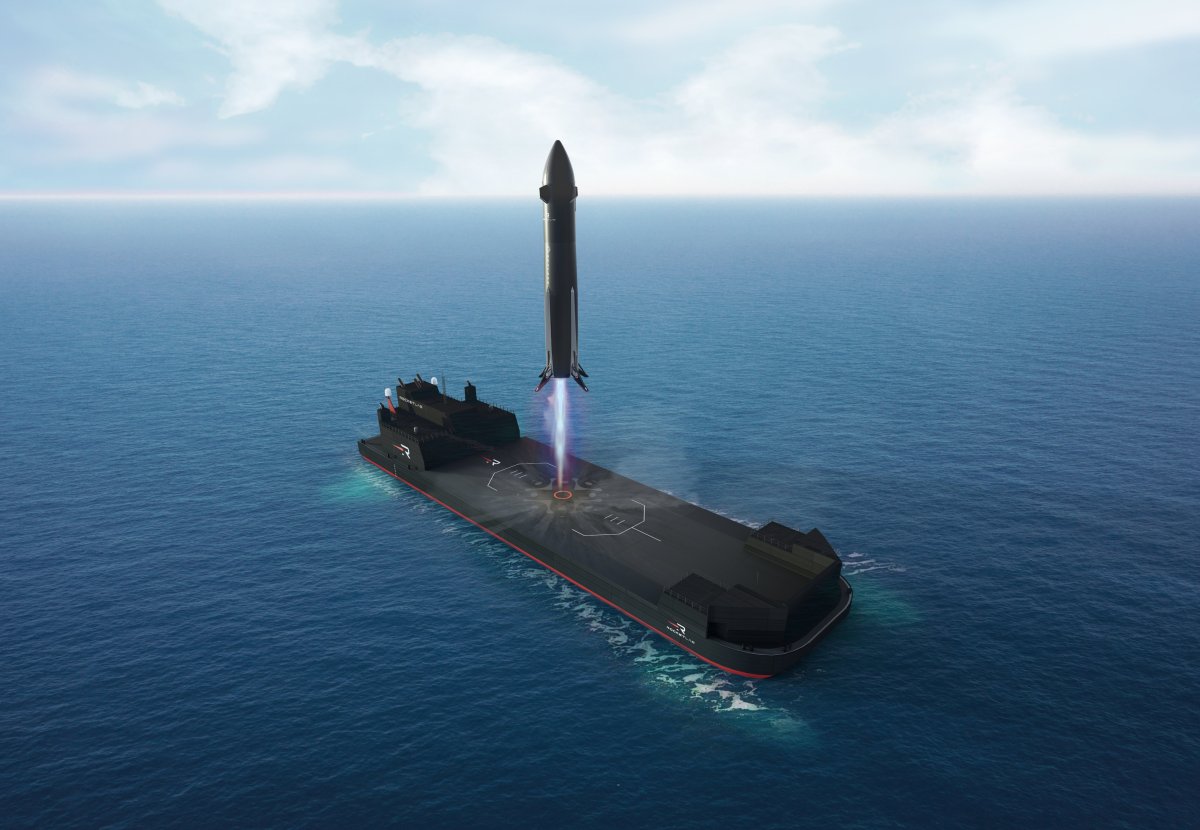
While space systems and defense drive today’s revenue and immediate growth, Rocket Lab hasn’t taken its eye off the future of launch. Development of the Neutron rocket, its medium-to-heavy lift reusable vehicle, is advancing steadily. This rocket is crucial for expanding launch capacity, competing for larger commercial and government satellite launches, and enabling mega-constellations.
- Infrastructure Investment: Construction of the dedicated Neutron launch complex at Wallops Island, Virginia, is on track for completion in Q3 2024. This modern facility is purpose-built for rapid Neutron turnaround and integration.
- Engine Fire: Archimedes Powers Up: The new in-house developed Archimedes rocket engine, utilizing oxygen-rich staged combustion (a complex, high-performance cycle also employed by SpaceX’s Raptor and Blue Origin’s BE-4), is undergoing intensive testing. Beck emphasized “multiple tests per day,” a critical pace for achieving flight readiness. (Engine cycle context: Wikipedia – Staged Combustion Cycle).
- The 2025 Target: While no specific date is committed, Rocket Lab management stated an unambiguous goal: an “all-out effort to get Neutron to the launch pad before the end of 2025.” This tempered realism reflects the inherent difficulties of rocket development while maintaining a clear target. Achievement is vital to capture market share from established players like SpaceX and emerging competitors.
Financial Fortitude: Fueling the Dual-Track Strategy
Executing this ambitious dual-track strategy – scaling a dominant space systems/defense business while simultaneously developing a new flagship rocket – requires significant capital.
- Cash Position: Rocket Lab ended Q2 with a robust $564 million in cash and cash equivalents. This strong liquidity position provides crucial runway for Neutron development costs, integration of the Geost acquisition, and ongoing operational expenses.
- Profitability Challenge: The company’s net loss widened to $66.4 million for the quarter, reflecting the heavy investments in Neutron R&D, volume production for space systems contracts (highest quarterly revenue implies scaling costs), and acquisition-related expenses. Investors are clearly investing in future growth potential over current profitability.
- Near-Term Outlook: Guidance for Q3 revenue remains healthy, projected between $145 million to $155 million, suggesting continued strength in the space systems segment. Key investor focus will remain on Neutron milestones and the pace of military contract wins leveraging the Geost capabilities.
The Future is Vertically Integrated
Rocket Lab’s Q2 performance and strategic moves paint a picture of a company executing a deliberate transformation. Moving beyond its “rocket company” origins, it is rapidly establishing itself as a vertically integrated aerospace and defense leader:
- Component Manufacturing: From solar cells to sensors (post-Geost).
- Satellite Buses & Integration: Building bespoke and constellation satellites.
- Launch Services: Offering mid-market (Neutron) and smallsat (Electron) access to orbit.
- Mission Operations: Managing satellite fleets on orbit.
- Defense Prime Capability: Leading complex government programs.
This integrated stack provides unparalleled value for customers needing end-to-end space solutions, especially within the high-value, long-term government contracts Rocket Lab is aggressively pursuing. The Geost acquisition supercharges this strategy in the critical defense sector.
Conclusion: More Than Metal, Master of the Orbital Ecosystem
Rocket Lab isn’t abandoning launch; it’s strategically enveloping it within a far broader and more resilient ecosystem. By decisively shifting its revenue engine to space systems and aggressively pursuing diversification through acquisition (Geost being the prime example), the company is building a moat against launch market volatility. Its pursuit of lucrative government contracts, cemented by significant wins like the SDA’s $515 million satellite build, demonstrates its ambition to be a major defense prime contractor. While the “all-out effort” to achieve the Neutron launch in 2025 remains a monumental challenge, Rocket Lab’s strong cash position funds this critical path. The evolving narrative is clear: Rocket Lab aims to be the indispensable infrastructure provider and mission enabler across the entire spectrum of space activities, from commercial constellations to national security. Its future lies in being the vertically integrated powerhouse, not just the taxi service to orbit. Is Rocket Lab’s pivot the blueprint for survival and dominance in the New Space era? Share your insights below!
Sources & Further Reading:
Original article at techcrunch.com


