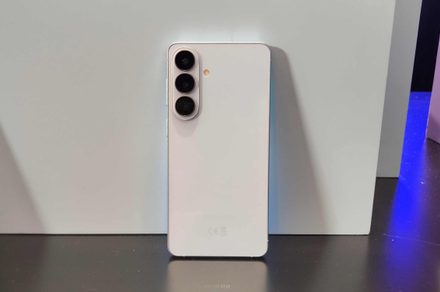

For years, Samsung has played a risky game of “chip roulette,” splitting its flagship Galaxy S series between its own in-house Exynos processors and Qualcomm’s Snapdragon silicon. While this strategy helps Samsung diversify its supply chain, the end user is often the one paying the price. Recent testing on the Galaxy S26 suggests that the gap in efficiency is wider than ever.
A comprehensive battery stress test conducted by *Android Addicts* put two identical Galaxy S26 handsets head-to-head. The only variable? The brain under the hood. One unit featured the Snapdragon 8 Elite Gen 5 (common in the US), while the other ran the Exynos 2600 (found in various international markets).
The results were a wake-up call for anyone eyeing the Exynos model. To ensure a fair fight, both devices performed identical tasks—including 4K video recording, gaming benchmarks, GPS navigation, and social media scrolling—all while locked onto 5G to simulate real-world mobility.
The Snapdragon variant cruised through the gauntlet, clocking in at 9 hours and 26 minutes of screen-on time. The Exynos version, however, tapped out at just 6 hours and 48 minutes. That is a staggering 28% difference in endurance, equating to nearly three hours of lost usability. The disparity was so severe that the Exynos phone died before it could even begin the Instagram and Amazon Prime Video portions of the test, while the Snapdragon model kept rolling.
So, why is the Exynos 2600 struggling? It comes down to thermal management and power draw. Under heavy workloads, the Exynos chip reportedly pulls significantly more wattage than its Qualcomm counterpart, leading to excess heat and rapid battery depletion.
Despite the ambition behind the Exynos 2600—including its status as a 2nm pioneer—it seems that raw manufacturing specs can’t overcome poor optimization. For consumers, the lesson is clear: if you have a choice in which region you buy your S26 from, go for the Snapdragon.


