
Stress tracking on wearables admire the Fitbit Sense recurrently relies on electrodermal project, or EDA. The trend measures changes in skin conductance attributable to sweat glands, nonetheless it wishes electrodes to protect in staunch contact with your skin. But there are a few drawbacks to this style. Or now not it is a ways major to space your give up the wearable to enable skin contact, and retain it that formula for a short time. That also formula at any time whenever it is most practical to take a look at stress ranges, you have to to maybe well have to rob a spoil and impact the sensing exercise as a result of it doesn’t impact continuous stress monitoring.
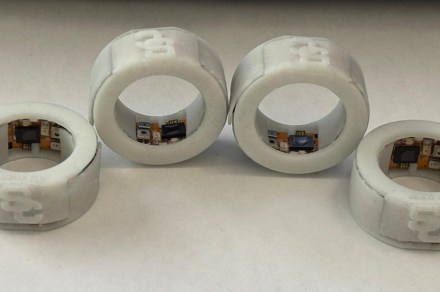
We might maybe maybe well maybe at final private a totally novel technique to emphasise-sensing that uses light-based prognosis for a extra appropriate prognosis, and something with a framework so frugal that the total chore can speed entirely on the ring itself. Plus, it’s continuous stress degree monitoring, simply admire heart payment sensing, that formula you don’t have to strike a pose or rob any additional effort varied than simply carrying a ring. A University of Southern California crew led by assistant professor Yasser Khan and his PhD pupil Farhad Hassan built an AI-powered ring that uses attain-infrared light to trace sweat project below the skin. Their findings were published in Science Advances.
Two beams of sunshine address the sweat sensing

Stress prompts your sweat glands and causes subtle changes below the skin sooner than visible sweat appears to be. “Our notion is extremely easy. We wish to peek at this miniature sweat below the skin with light,” Khan talked about. The ring uses two attain-infrared LEDs to space these changes. One shines at 960 nanometers and reacts to shifts in water reveal linked to sweat. The numerous works at 1,250 nanometers and acts as a stable reference. The researchers name this style optodermal project, or ODA.
“Right here’s the first time that somebody is showing that stress will more than likely be measured with light,” Khan talked about. In experiments with four participants, the optical signals confirmed an practical 86 percent settlement over time with a business gel-based EDA sensor. The identical optical map also captures heart payment and heart payment variability. A temperature sensor and accelerometer wait on the ring present an explanation for psychological stress rather than traipse or warmth-prompted sweating.
The ring held up better than gel sensors over 12 hours

In non permanent tests with six participants, the ring accepted stress from relaxation 92.3 percent of the time, when put next with 77.95 percent for the gel-based EDA sensor. When the test expanded to four stipulations of stress (relaxation, physical traipse, and warmth-prompted sweating), the ring reached 100% accuracy when put next with 74.58 percent for EDA. After 12 hours of damage examined with two participants, the gel-based sensor’s accuracy in distinguishing stress from relaxation fell to 57.35 percent, while the ODA ring held at seventy 9.55 percent.
The machine-finding out mannequin also runs on the ring itself, so raw biometric info does now not have to lag to an outside server. This cuts delays and keeps sensitive private info on the ring, in accordance to the USC announcement. Khan plans a yearlong apply-up with 40 participants in an space of business setting. The researchers are also working to attenuate interference from heavy ground sweat and to test a broader combine of cognitive and psychosocial stressors. The technology is in the patent direction of and must restful later be supplied for business licensing via USC’s Stevens Heart for Innovation.
A shining outlook for the future

The most promising ingredient referring to the ring is that it uses off-the-shelf parts that are with out problems on hand. Moreover, loads of the sensors old in the conducting, such as a temperature sensor and an accelerometer, are already extensively deployed on mainstream devices such as the RingConn Gen 3 tidy ring. The standout hardware ingredient is the light source, which targets varied wavelengths when put next with the identical old LED array on a commercially on hand tidy ring.
Particularly, the crew geared up the ODA ring with a 960-nm stress-sensing and a 1250-nm baseline-sensing light-emitting diode (LED), paired with twin photodiodes. Other than tracking sweat gland project, the identical optical setup also permits the ring to capture biomarkers such as pulse amplitude (PA), heart payment (HR), and their variabilities (PAV and HRV). Heart payment and HRV, specifically, are also tracked by mainstream wearables for monitoring heart project and stress.
The crew notes that the trend isn’t restricted to rings. On the opposite (and fortuitously), it will be scaled to varied wearable fabricate components as smartly. “The optical sensing demonstrated right here is scalable and applicable to noninvasive wearables in ring, look, and patch fabricate components,” the crew writes in their paper published in the Science Advances journal. Beyond the raw hardware capabilities, the crew also confirmed that the algorithm powering the sweat-based biosensing map is barely modest in its necessities.
“The quantized INT8 mannequin occupied 27.65 kB. Simultaneous sensing and inference implementation required 174.47 kB of program flash and 27.63 kB of static RAM,” writes the crew. In varied words, the AI mannequin is sufficiently miniature to speed entirely on the ring’s have microcontroller. That’s what edge AI formula right here. As an replacement of streaming raw sensor info to a phone or a cloud server for prognosis, the ring processes it in the neighborhood and only sends the closing verdict, such as burdened out or relaxed, to the paired phone.

In keeping with the paper, this style minimize the put up-sensing prolong by roughly 300 instances, from 9.9 seconds to send raw info over Bluetooth down to about 33 milliseconds for on-map inference. It also stretched continuous battery lifestyles from about 4.2 hours to 6 hours. Correct as importantly, sensitive physiological info by no formula has to budge away the ring, which is an good privacy accumulate at a time when smartly being info is extra and extra being sent to the cloud.
Moreover, even though a extra evolved model were to offload processing to a phone, a mannequin this miniature would barely register on stylish hardware. Right this moment’s flagship smartphones can already speed AI fashions with a few billion parameters in the neighborhood, so a stress-sensing mannequin that wishes smartly below 1MB of reminiscence might maybe maybe well maybe be trivial for them to address. Total, right here’s one in every of the extra scientifically light and educated methods of wearable-based sensing than making approximations utilizing HRV readings.
RELATED COVERAGE:
- Alloop’s tidy ring turns right into a smartly being band, nonetheless its AI trick is even cooler
- Learn links miserable sleep schedules with despair and terror. Your wearable might maybe maybe well maybe wait on fix it.
- Didn’t find ample sleep? This novel feature in One UI 9.5 might maybe maybe well maybe discontinue a automotive atomize


