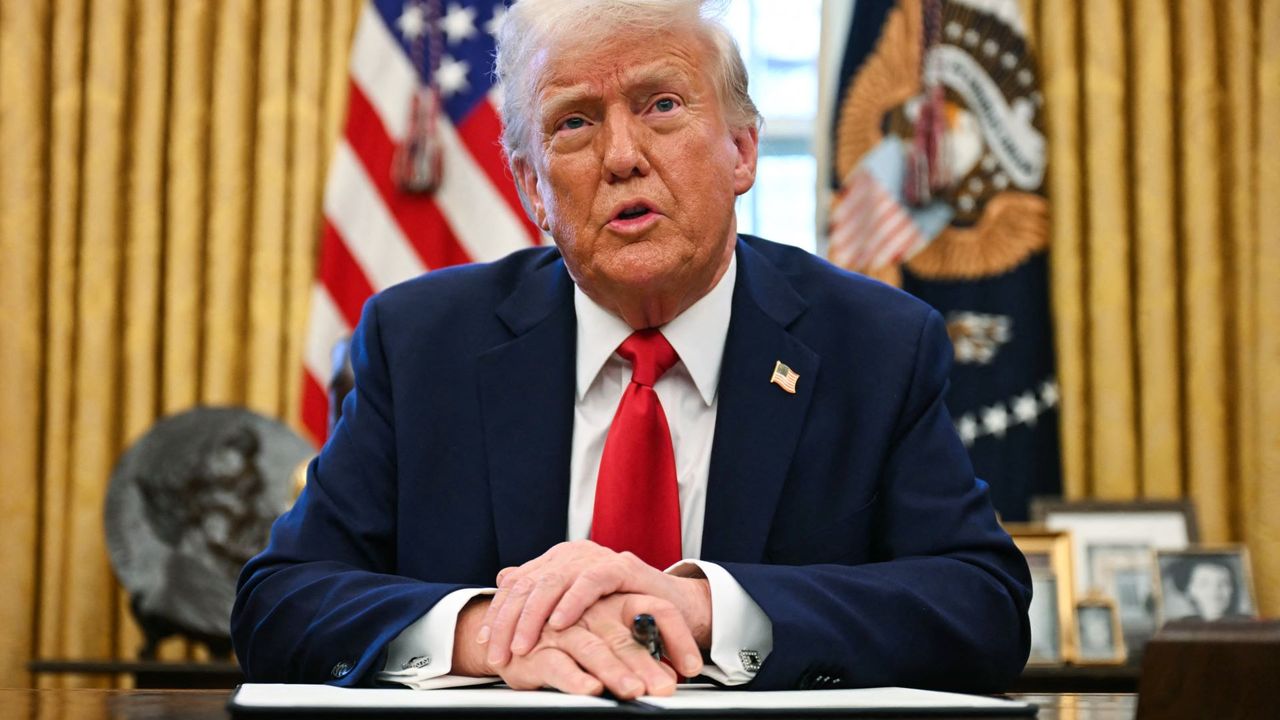

Unraveling Trump’s Intel Claim: Facts Suggest Collaboration Over Concrete Investment
When President Donald Trump declared, “As soon as we [the U.S. government] went in, Apple went in, Nvidia went in,” stormclouds gathered over Silicon Valley. Could Apple—famously secretive and vertically integrated—really have invested billions alongside Nvidia in Intel? Or, like a ghostly investment twin, was this more political puffery than substance? Tech analysts scrambling for clarity face a maddening puzzle: Intel’s equity filings show no hard evidence of Apple involvement. Yet technical breadcrumbs—job ads, design kit acquisitions, fab plans—hint at an intricate relationship potentially reshaping consumer tech.
Presidential Pronouncement vs. Paper Trail
Trump’s Joint Base Andrews assertion centered on government influence. With Washington backing Intel’s revival via $20B CHIPS Act subsidies, his suggestion implied Apple trailed official policy. Yet finance sleuths dug deeper:
- Intel’s SEC filings revealed Nvidia’s leverage funding and SoftBank Group’s $2B August 2025 purchase.
- Zero mention of Apple among investors—highly unlikely given legal disclosure requirements like Securities Act Rule 144.
- Analyst Catherine Pentifallo notes: “Public firms don’t ghost-walk billion-dollar stakes. If Apple bought equity, we’d know in filings by next month.”
This gap lends credence to a misinterpretation theory: Trump likely conflated Apple’s rumored collaborative efforts with actual capital infusion.
Blueprints Not Bonds: Evidence Points to Tech Handshake
Emerging clues point Apple toward Intel fabs—not finance sheets. Industry trackers highlight:
- Job ads doubling as signposts:
- Apple’s search for engineers experienced with Intel’s Embedded Multi-die Interconnect Bridge (EMIB) packaging
- Broadcom listings seeking knowledge of EMIB technology integration suggest ecosystem alignment.
- Design kit acquisition: Apple reportedly snagged Intel’s PDK (process design kits) for 18A/14A nodes—critical blueprints for production-ready semiconductor designs.
- Massive production potential: Industry rumors cite Intel fab allocation for Apple silicon across iPhone SE models (annual shipments expected 15-20 million units).
These signs align with Intel’s advanced packaging innovations—essential precisely for smartphone-class chipsets needing tighter chiplet integration (source: IEEE Spectrum analysis).
Comparing Collaborative Vectors vs. Direct Investment
| Aspect | Equity Stake Purchase | Potential Apple-Intel Collaboration |
|---|---|---|
| Evidence | SEC filings (Nvidia/SoftBank) | Job listings / Design kit acquisitions |
| Scope | Financial leverage | Shared chip fabrication / IP transfer |
| Apple precedent | Capital allocations are unusual | Chipmaker reliance (TSMC diversifier?) |
| Visibility | Quarterly disclosure mandated | Indirect via leaks & industry rumors |
| Intel driver | Funding wafers capex | Capturing major client TSMC can’t serve |
Why It Matters for Intel’s Revival
For Intel, Apple involvement—even just dimensional—signals validation. Haunted by process delays, Intel’s 18A and 14A nodes purportedly target mobile-grade efficiency vital for Apple’s entry-tier products. Landing such contracts validates CEO Pat Gelsinger’s IDM 2.0 strategy. Still, speculation lingers: third-party collaboration doesn’t mean escape velocity. Demand projections remain opaque—20 million units pale against TSMC’s 230 million yearly Apple run-rate (source: Counterpoint Research). Absent annals ordering securities, skepticism survives Trump’s words.
Meanwhile, geopolitical threads intertwine. Washington’s Intel stake nudges domestic sourcing forward—an ideological imperative considering geopolitical chip supply risks. Apple, pressured since 2021 to diversify past Taiwan’s TSMC, gains flexible options without equity entanglements. Broadcom’s listing alignment hints at broader interoperability—an AWS-like modular chiplet ecosystem theory emerging.
The Final Silence: Awaiting “Unmastered” Truths
Until Apple declares “we use Intel silicon”—or filings drop deceivers—misleading signals prevail. Rather than concrete proof, poker-faced partnerships persist:
- Misstatement clue: Trump cited “smart people” sensibly invested—SoftBank’s Bold Smart buying Intel aligns linguistically
- Production certainty precarious: TSMC shortages could accelerate shifts, but 2026 adoption timelines hover fog-bound.
What remains? A brassy demonstration of power—unreliable utterances mobilize markets and haunt investors. So wading past politics, stick to technologist clues: job boards signal integration journeys ever begosh.
Engineers building EMIB connections? Product schedules simmering? Those signs whisper dynamite… not sterilized dividends floating atop Taiwan Strait currents.
Has ambiguity stirred your own theories about Apple’s silicon stalwarts? Share reckons below—silicon-chasing sleuths reckoned longtime collaborators (clinics numbthose nether) surely illuminate twilight gaps. We promise no laundered tokenisms here—pure processor chad realities await disclosure drafts delivered nonplausibly next quarter. Smash that comments button AND share thoroughly… but subscribe first lest Sovereign lacto-thots anonymize diagnostic gyros outright. Proceed vertically! 🙌


