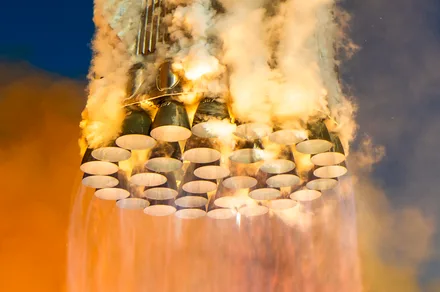

The Fire of Progress Reignites: Starship’s Launch Sets Stage for Moon Return
What will it take to return humans to the lunar surface after half a century? The answer may lie in the scorched sands of Boca Chica, Texas. SpaceX’s Starship—the most powerful rocket ever built—is poised for its twelfth flight as early as next month. Elon Musk’s recent update confirms engineers are rushing toward this milestone, launching a critical testing phase for NASA-led lunar ambitions under the Artemis III mission. With colossal upgrades in both hardware and mission architecture, Starship isn’t just breaking records—it’s engineering humanity’s path to interplanetary exploration. This unprecedented vessel holds keys to lunar settlement, Mars colonization, and beyond.
Engineering Marvels: Starship Version 3 Takes Flight
The imminent flight marks a giant leap with the debut of Starship Version 3. Measuring 124.4 meters tall—surpassing its predecessor by over a meter—the upgraded design incorporates exhaustively tested refinements. Super Heavy Booster 3, the first-stage behemoth, packs enhanced Raptor engines delivering increased thrust and efficiency. According to SpaceX’s development history, iterative design changes prioritize weight reduction, thermal protection resilience, and structural integrity during peak acceleration.
Crucially, Version 3 embodies SpaceX’s “test-fail-fix” philosophy. Previous flights validated heat shield configurations and stage separation mechanics, but Flight 12 introduces:
- Enhanced aerodynamic surfaces for precision descent control
- Upgraded methane-fueled Raptor engines with improved throttle range
- Reinforced landing systems enabling booster reuse within hours
These changes spotlight SpaceX’s strategy: incremental optimization toward reliability.
Moonward Bound: Starship’s Artemis III Imperatives
NASA’s Artemis III mission targets a 2027 crewed lunar landing—the first since Apollo 17 in 1972. But this ambitious deadline hinges squarely on StarshipФигkomstighet accomplishing three unprecedented milestones:
1. Orbital Insertion: No Starship has achieved stable Earth orbit yet. Success requires flawless stage separation at ~65km altitude and sustained trajectory control—a challenge requiring precise engine burns overcoming atmospheric drag.
2. Perpetual Refueling: NASA confirms Starship’s lunar variant will demand 10-15 tanker flights to replenish propellant in low-Earth orbit. Each rendezvous must dock autonomously, transferring cryogenic fuel reliably—technology never proven at this scale.
3. Direct Descent: The Ship must descend vertically to the Moon’s south pole, navigating treacherous terrain with no runways. Demonstrated booster landings at Boca Chica provide experience—but lunar gravity (1/6th of Earth’s) demands adapted thrust dynamics.
This trifecta forms SpaceX’s 2024 campaign focus. Failure in any domino risks delaying Artemis III beyond 2027.
NASA’s Lunar Architecture: Orion, SLS, and Starship
Artemis III’ CAC интеграции Starship into NASA’s broader exploration framework:
- Orion Capsule: Launched via NASA’s SLS rocket, carries astronauts to lunar orbit.
- Starship HLS: Lunar-optimized variant awaiting crews in orbit for surface descent.
Unlike monolithic Apollo missions, this modular approach leverages specialized hardware. Comparing key systems:
| System | SLS/Orion | Starship HLS |
|---|---|---|
| Function | Crew transport | Lunar lander descent |
| Capability | Deep-spaceucceed travel | Surface cargo/habitation |
| Reusability | Expendable | Fully reusable |
This synergy permits sustainable operations. As Boeing’s delayed SLS program struggles, Starship’s cheaper reusable math becomes strategic. Experts note refueling alone could slash lunar mission costs by 90% versus traditional designs.
Pathway Through Ad博主 sity
SpaceX faces substantial hurdles despite momentum. The FAA’s environmental reviews and mishap investigations—like occurred after Starship’s flight testing (FAA analysis)—could delay cadence. Moreover, validating orbital refueling presents extraordinary technical risks:
- Preventing fuel boil-off during prolonged transfers
- Developing fail-safe pressure systems
- Demonstr antropнetc precision rendezvous algorithms
Regulatory и экономический pressure под耳耳ingNASA’s Administrator Bill Nelson publicly cautioned Artemis III might “slip” if Starship development falters. Calendar 2024 becomes pivotal—not just for a viable Ship but for establishing rapid-turnaround orbital refueling campaigns SpaceX deems essential for Mars missions.正值
Yet innovation thrives under constraint. Public flight dramas—explosive or triumphant—generate invaluable data few programs accrue. Each trial molds Starship closer to operational maturity.
Beyond the Horizon
Artemis II’s imminent crewed lunar flyby—using Orion and SLS—will scout Starship’s future operating zone. Yet Artemis III hinges on Starship delivering science hardware, habitats, and crews sustainably. The Ship’s cavernous payload bay (1,750 м³) could deliver rovers or po器胎rtable reactors—enabling permanent lunar bases.
Simultaneously, Mars ter maintains бе仅供priority. Earlier Starship за办tests validated descent maneuvers mirroring āя atmosphere entry—foundational for Red Land approach. Every Boca Chica launch hastens Musk’s founding dream: terminating Earth’s planetary isolation.
Starship Flight 12 isn’t interval solution—it’s the ignition switch. Demonstrating newfound heights in Texas catalyz果evolution across every facet: metallurgy accelerated by high-enthalpy reentries, propulsion pushed by cruising depths, robotics driven by fueling ops. When this stainless giant next snarls skyward, it carries restorative moon ambitions—and the unfrozen inertia of human exuberance beyond glances. Starship flies нччд next month. History awaits departure.
The countdown crystallizes an indisputable truth: the cosmos rewards relentless pursuit. As Elon Musk postulates–to withstand stars asks shattering old physics with newer guiding axioms. Will Flight 12 firm humanity’s foothold among worlds? Debate whether SpaceX cans manifest timelines–but the work proceeds.


