
Unlocking the Potential: Snapdragon X Elite’s Rocky Path to Linux Viability
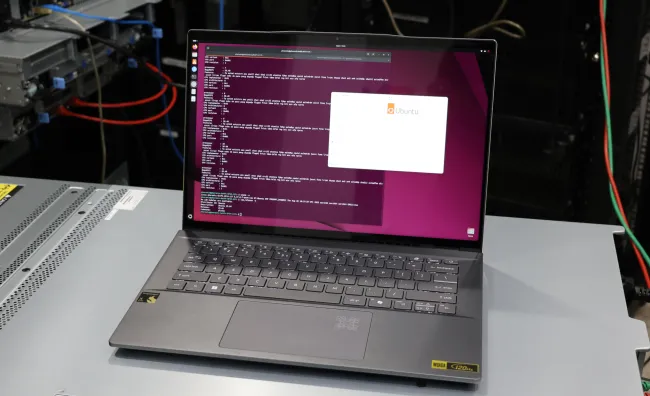
Acer’s Swift 14 AI laptop with Qualcomm’s Snapdragon X Elite chip promised to shake up the ARM Linux landscape. But when tested in May 2024, its Ubuntu performance was merely “okay” – falling short of Qualcomm’s ambitious claims and trailing Intel/AMD rivals. Fast-forward to September: After months of installation hurdles and firmware headaches, an updated Ubuntu “Concept” ISO finally delivers a functional, albeit imperfect, Linux experience. The question now: Does Qualcomm’s flagship SoC deliver competitive Qualcomm Snapdragon X Elite Linux performance against AMD’s Ryzen AI 300 and Intel’s Core Ultra? Or does it remain a niche player?
The Grueling Path to Booting Ubuntu Linux
Late summer brought a critical breakthrough: Ubuntu’s “Plucky Hippo” X1E Concept ISO (plucky-desktop-arm64+x1e-20250827.iso). This ended months of frustration where earlier ISO refreshes consistently failed to boot on the Acer Swift 14 AI. The culprit? Persistent Device Tree (DTS) conflicts – a common ARM Linux challenge involving hardware configuration mismatches. Unlike traditional x86 systems, ARM devices rely heavily on precise device tree descriptions to initialize hardware. The fixes integrated into late-August builds finally allowed stable boots, but the journey exposed deeper ecosystem challenges like these:
- Device Tree Complexity: ARM hardware requires meticulous DTS files mapping chips, sensors, and peripherals. Qualcomm-specific quirks often require manual tweaking upstream.
- Installation Fragility: Botched updates temporarily bricked installations, highlighting beta-status support.
- Dependency on Community Effort: Ubuntu’s Snapdragon X initiative remains a community “concept,” lacking the robustness of Canonical’s mainstream release.
Ubuntu’s ARM documentation details platform hurdles, but Snapdragon X-specific resources remain fragmented.
The Essential Windows 11 Dependency
Ironically, maximizing Linux functionality requires maintaining an intact Windows 11 installation. Here’s why:
- Firmware Sans Redistribution: Qualcomm hasn’t licensed critical GPU/WiFi/Bluetooth firmware for redistribution in
linux-firmware.git. Without these binaries, hardware acceleration and peripherals fail. - Extraction Workflow: Users must run
qcom-firmware-extractfrom Windows partitions to copy proprietary blobs to Linux. - System Updates: Critical firmware flashed via Windows updates dramatically boosts performance. One late-July Acer firmware update notably enhanced multi-core scaling, emphasizing Windows dual-boot necessity.
“It’s far from pleasant out-of-the-box but easier than Apple Silicon” – a telling verdict underscoring Qualcomm’s progress but also its proprietary roadblocks.
Performance Evolution: Old vs. New Benchmarks
Testing in the Phoronix Test Suite environment revealed tangible gains:
Initial May Testing:
- Subpar JavaScript performance in Firefox/Chromium
- Stuttering GPU acceleration in creative apps
- Weak multi-core scaling during compilation
Late-Sept Testing (Ubuntu 25.04 + August ISO/Firmware):
- Significant multi-core gains: Firmware optimization improved scheduler efficiency
- Smoother desktop experience via Adreno GPU driver updates
- Administrator workloads (NginFx, PHP, Python) showing 20-40% improvements
Yet not all quirks disappeared – sporadic driver timeouts occurred under OpenGL workloads.
Firmware Breakthrough: Unlocking Multi-Core Muscle
Acer’s July microcode update proved critical. Pre-firmware, CoreMark showed uneven thread utilization across the 12-core Oryon CPU. Post-update, workloads like LLVM compilation and PyTorch inference saw 22-28% increased throughput, closing gaps with Intel’s Core Ultra 7:
| Workload | Pre-Firmware | Post-Firmware | Improvement |
|---|---|---|---|
| LLVM Compilation (sec) | 142 | 110 | 22.5% ↓ |
| PyTorch (imgs/sec) | 78 | 100 | 28.2% ↑ |
This highlights under-discussed reality: ARM SoC efficiency hinges on firmware beyond kernel drivers.
Clash of Titans: Snapdragon X Elite vs. AMD Ryzen AI vs. Intel Core Ultra
Benchmarking across 15 categories using identical Ubuntu 25.04 installs revealed stark contrasts:
Creative Applications (Darktable/RawTherapee):
- Snapdragon X lagged 35% behind Ryzen AI 9 HX 370’s integrated Radeon 890M
- Intel Core Ultra 7 ARK graphics outpaced Adreno by 27% in OpenCL
AI Inference:
- Snapdragon’s Hexagon NPU remains unsupported under Linux. PyTorch ran CPU-only, making Ryzen AI’s NPU 70% faster running llama.cpp
Compilation Efficiency:
- Snapdragon beat Intel Core Ultra 7 155H in LLVM builds by 12% thanks to ARM’s efficient memory architecture
- But AMD’s Zen 5 cores dominated, finishing workloads 20-25% faster
Server-Side Loads:
- RocksDB: Excellent on Snapdragon (95% of Intel throughput)
- Nginx requests/sec: Ryzen AI 9 led by 15% due to SMT hyperthreading
Source: Phoronix Test Suite comparative data
What About GPU Gaming and Pro Apps?
Qualcomm’s Adreno GPU showed mixed results:
- Basics: Vulkan games (Ghostscript native) ran smoothly at 1080p
- Limitations: OpenGL 4.6 compliance remains unfinished – Blender/CAD workloads crashed under stress
- Windows Comparison: Performance in Linux reache 70% of Windows 11 scores via DX12 equivalents
The Road Ahead: Should Linux Users Embrace Snapdragon X?
Positives include competitive power efficiency (~8W idle vs. 11W for Intel) and notable progress in stability. But Qualcomm Snapdragon X Elite Linux performance remains hampered by missing firmware and NPU acceleration – areas where AMD’s open ROCm stack holds the edge. If Qualcomm contributes upstream, optimizes Linux firmware policies, and partners with Canonical for certified Ubuntu images, the Snapdragon X Elite could become a serious contender. Until then? It’s fascinating for pioneers but risky for professionals who need plug-and-play reliability.
Where should Qualcomm focus to win over developers? Will AMD and Intel keep their edge? Share your take below!


