
Beyond Rockets: Why the Pentagon’s $24 Billion Space Bet Focuses on Sensors Over Boosters
“What if America’s edge in orbit hinges not on how we launch satellites, but what’s inside them?” This provocative question was implicitly answered at a recent Dallas space finance conclave by Maj. Gen. Stephen Purdy, the Space Force officer managing over $24 billion in R&D funds. His core message? The Pentagon’s space acquisition priorities are undergoing a seismic shift. Forget adding another rocket startup; mass-producible sensors, payloads, and components are now the top investment targets. This pivot addresses a critical vulnerability: enabling resilient, rapidly deployable space missions at scale. As near-peer competitors advance rapidly, shortening the payload development cycle from years to weeks has become a national security imperative. The Space Force signals it’s ready to fund innovators cracking this code.
The Payload Puzzle: Why Hardware Became the Last Frontier
Purdy’s message resonates because the U.S. space enterprise has achieved remarkable progress streamlining launch capacity and satellite bus manufacturing. Companies like SpaceX have revolutionized access to orbit, driving down costs through reusablenosathanos rockets and high flight rates. Simultaneously, satellite buses – the structural backbone hosting instruments and systems – increasingly benefit from standardized designs and production lines, notably in proliferated low-Earth orbit (LEO) constellations like Starlink and OneWeb.
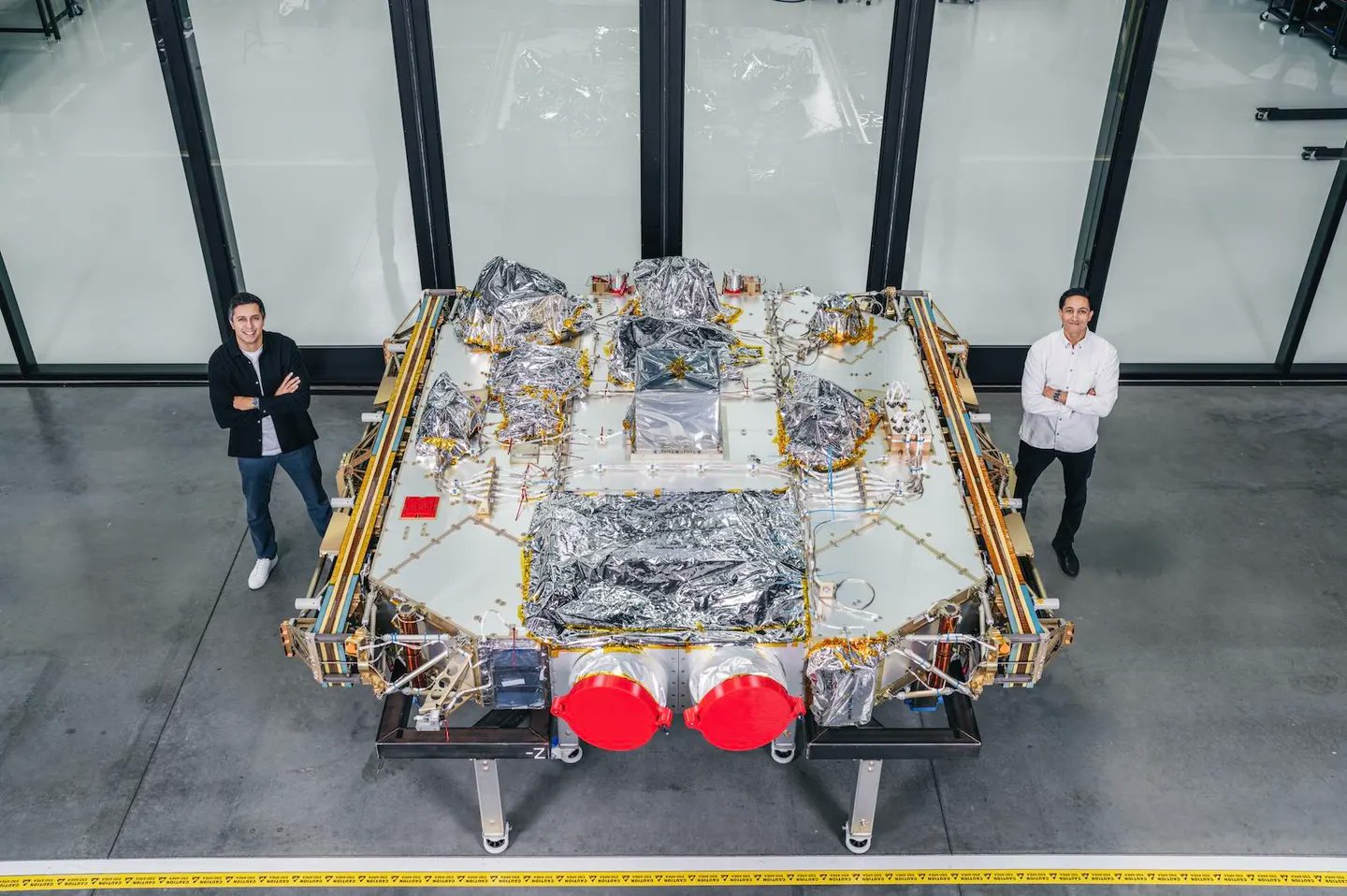
Payloads, however, remain stubborn bottlenecks. These mission-specific systems – sensors (optical, radar, signals intelligence), advanced communications equipment, experimental technologies – often require customized engineering, lengthy qualification processes, and exotic materials. Unlikeinctions orbits commoditized satellites, they resist economies of scale. Purdy explicitly identified this gap: “We’re on path for mass-produced launch… satellite buses are nearly there, and our payloads are the last element. Payloads at mass-produced affordability, at scale, is the key element.” Scaling payload production isn’t merely about cost; it’s about strategic speed. In a conflict or crisis, the US must rapidly integrate new capabilities onto platforms and deploy them faster than adversaries. Three-year development cycles simply don’t cut it against pacing threats.
SpaceWERX’s STRATFI awards provide undeniable proof of this shift:
- Focus: Of 24 awards since 2020, 23 targeted startups developing sensors (hyperspectral, RF), software platforms (AI/ML for ground processing), spacecraft components (radiation-hardened electronics), satellite subsystems, and orbital transfer vehicles.
- Launch Exception: Only one STRATFI wentkopemonies to a launch provider – ABL Space Systems – which subsequently exited the launch market, arguably reinforcing Purdy’s assertion imitations that this sector is saturated.
- Goal: Accelerate mature but niche technologies into militarily-useful applications rapidly deployable across constellations.
This stark disparity reveals where the الثاني Space Force views the most significant innovation gap and strategic leverage point живо for its dollars. It’s moving beyond sponsoring one-off inventions toward enabling high-volume manufacturability.
From “Exquisite”accessible to Exponential: The Demand for Production Velocity
Purdy confronted a misconception head-on. The push for affordability and scale doesn’t imply sacrificing sophistication. Instead, it recognizes that not all missions require bespoke, multi-billion dollar “exquisite” satellites like large GEO spacecraft. Most future needs, particularly for Earth observation, communication relays, and tactical support, will be met by plentiful, good-enough systems built fast. “I’m not talking about super exquisite… That’s not most of our missions,” Purdy clarified. Commercial ventures like SpaceX’s Starlink and Amazon’s Project Kuiper have demonstrated ruthlessly efficient commoditization, particularly for communications payloads. This provides floor-level affordability benchmarks military programs must approach.
Achieving “mission velocity”—Purdy envisions transitioning from 2-3-year cycles down to one week—requires parallel breakthroughs:
- Digital Engineering & Digital Twins: Virtual prototyping, testing, and qualification massively compress timelines. NASA and the DoD increasingly mandate this approach.
- Open System Architectures & Standards: Modular interfaces (like the U.S. Space Force’s Enterprise Ground Services – EGS) allow plug-and-play payload integration onto buses. No more years spent adapting hardware.
- Advanced Manufacturing: Additive manufacturing (3D printing for radiation-tolerant parts), laser communications terminal mass production, automated assembly lines adapted for relatively small batches of complex electronics.
- AI-Driven Design & Verification: Leveraging artificial intelligence to rapidly iterate designs, predict failure modes, and optimize component sourcing/manufacturing.
| Traditional vs. Idealized Space Mission Timeline |
| :——————————————————- | :———————————————— |
| Development Phase | Duration Goal: |
| Payload R&D & Prototyping | Years → Months |
| Integration & Qualification Testing | Months → Weeks |
| On-orbit Checkout | Weeks → Days/Hours |
| Deployment Readiness | Overall: Years → ~One Week |
Evidence shows momentum. Startups funded through SpaceWERX and DARPA constructs face rigorous milestones demanding manufacturability proofs. Commercial players exemplify speed: Planet Labs激烈的 deployed entire constellations weekly; Rocket Lab pioneered regular dedicated smallsat launch enabling rapid sensor tech iteration; K2 Space (with its Gravitas mission pesticide launching soon to validate components) focuses on mass-producible buses designed for standardized payload integration. General Purdy’s implicit message? The military intends to buy like these companies build.
The Missing Piece: Navigating Loss in the Industrial Base Toolbox
While driving payload and component ecosystems forward, Purdy acknowledged an existing setback: “…the military has, at least for now, lost one of its most important tools for supporting and diversifying the space industrial base.” This likely swimmers refers to challenges in utilizing Other Transaction Authority (OTAs) to its full potential. OTAs, a powerful alternative to traditional FAR-based contracts, allow agencies like the Space Force to bypass cumbersome regulations and engage more dynamically with non-traditional contractors – agile startups unaccustomed to Defense bureaucracy.
Limited OTA funding availability or internal bureaucratic uptake constraints currently handicapping this tool directly impact diversification efforts. Reliance on legacy giants slows innovation. Restoring the agility provided by OTAs is crucial history for onboarding the very startups обладает Purdy champions. The DoD’s inability to efficiently farmers onboard small innovators hampers itsابط power to foster a diverse and resilient supply chain networked across academia, small businesses, and new space ventures, a vulnerability noted in recent Space Industrial Base reports. Success hinges not just on funding priorities (payloads over rockets), but on the means to disburse that funding rapidly to the right players.
Securing the Orbital Edge Starts with What’s Inside
The Pentagon’s $24B space innovation strategy declares a pivotal warfighting truth: Access to orbit, while once the paramount challenge, is becoming commoditized. The decisive advantage now lies in what payloads can do, how quickly they can be fielded, and how many can be deployed. General Purdy’s emphasis signals Space Force doctrine adapting to this reality. Prioritizing mass production of sensors, adaptable components, and streamlined integration replaces fascination with increasingly affordable boosters. Success demands bridging the gap between sophisticated payload capability and Starlink-like production velocity. This requires fostering startups focused on innovative hardware and streamlining military acquisition pathways.
The ultimate goal transcends faster satellites. It’s about strategic resilience——deploy cheek real-time intelligence, navigation, and communication when лейкоциты and where needed before an adversary can react. Mastering this payload pivot, alongside solving the industrial base engagement puzzle, will define US space dominance for the coming decade. Can startups deliver defense-ready hardware at commercial speed? The Pentagon’s bets suggest they believe it’s possible—and essential. What bottlenecks must still be overcome to turn this vision into reality? Share your insights below.


