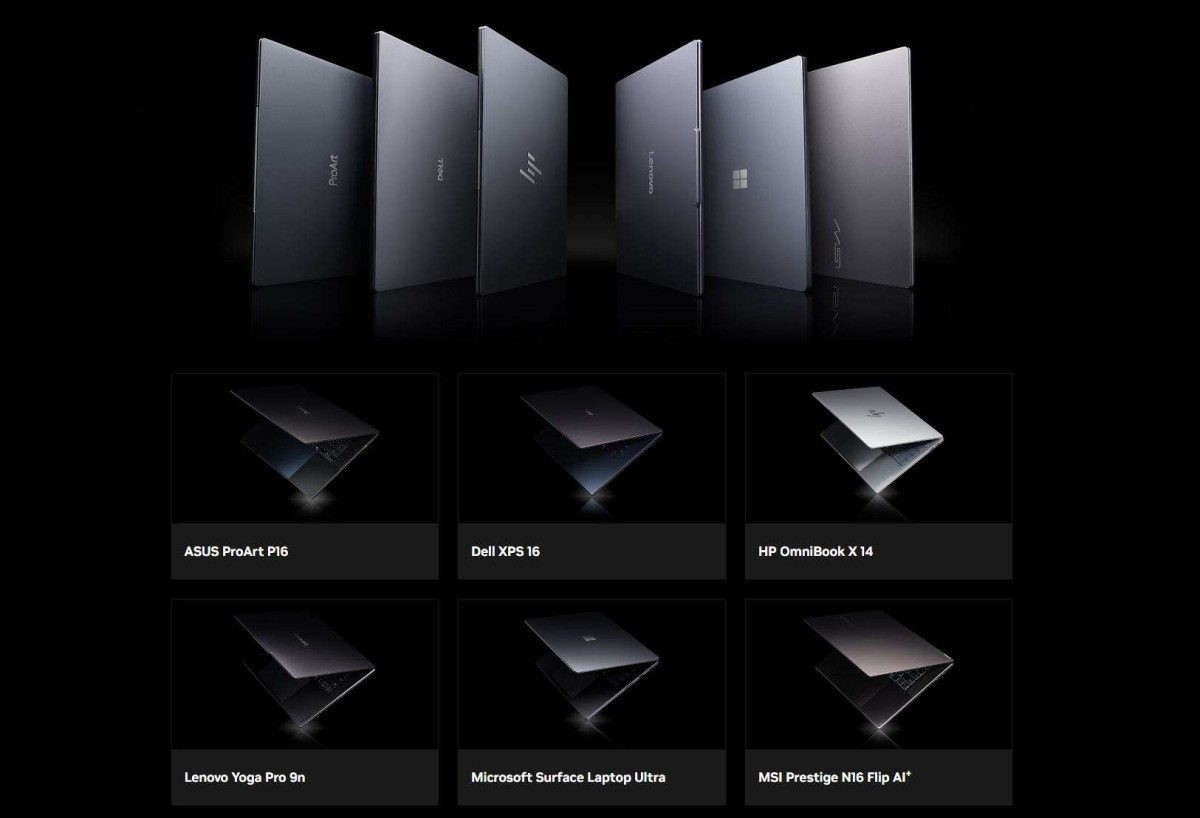

Nvidia took the stage at Computex 2026 for its highly anticipated entry into the consumer chip market — meet the RTX Spark, a chipset that merges a powerful and efficient ARM CPU with an RTX GPU.
The RTX Spark superchip combines an Nvidia Grace CPU with up to 20 cores with an Nvidia Blackwell GPU featuring 6,144 CUDA cores, and up to 128GB of fast LPDDR5X unified memory.
The processor is based on Nvidia’s GB10 chip within the DGX Spark platform, a class of enterprise-oriented mini-PCs running a custom Ubuntu Linux. The GPU is essentially an RTX 5070 (non-Ti), featuring an equivalent number of CUDA cores. The chip is built on TSMC’s 3nm node.
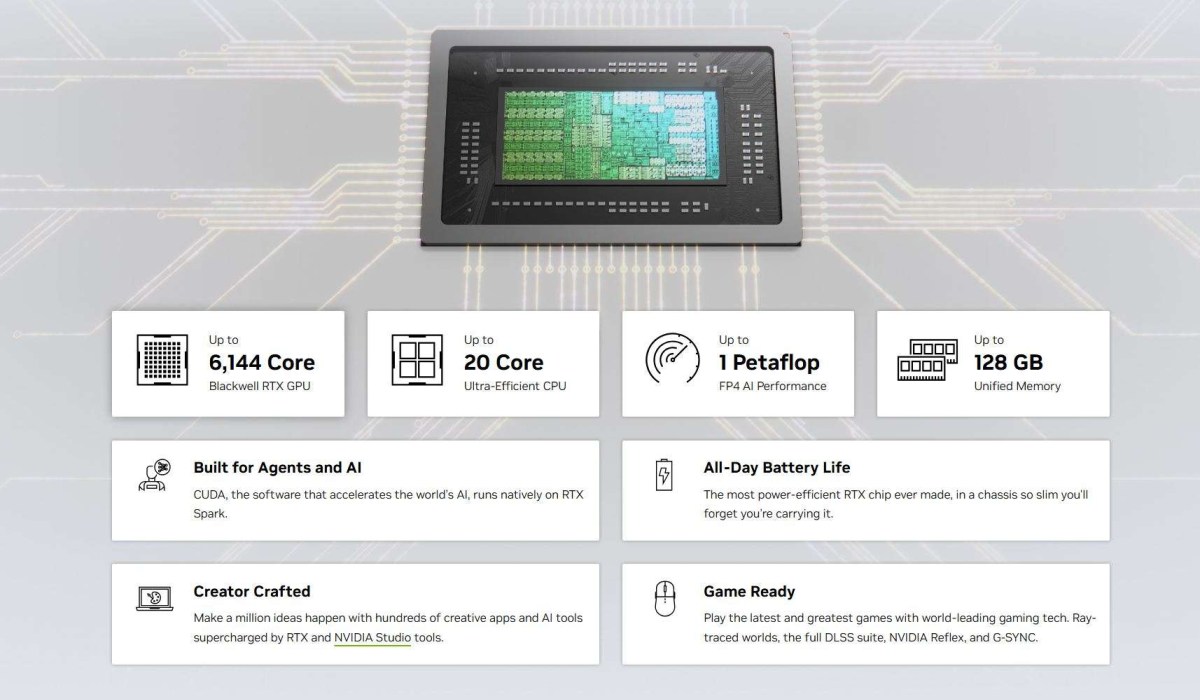
While the RTX Spark is certainly ideal for content creation and gaming computers, Nvidia CEO Jensen Huang noted that the focus is on running AI agents locally on your computer. AI agents are the next step from LLMs (large language models), and can perform complex tasks on demand. They require both significant processing power and plenty of memory, which is where the 128GB of unified memory comes in. Nvidia says the RTX Spark delivers 1 petaflop of AI performance.
The RTX Spark is aimed at slim and powerful laptops arriving this fall. Nvidia has partnered with Acer, Asus, Dell, Gigabyte, HP, Lenovo, MSI, and Microsoft, which will introduce its most powerful Surface yet, the Surface Laptop Ultra, with the SoC.
There’s no word yet on pricing, but this will likely be costly. For context, Nvidia’s DGX Spark costs between $3,500 and $4,700, and can be configured with up to 128GB of RAM. Pair that with a premium laptop with an OLED display, and you’re looking at a jaw-dropping price tag.