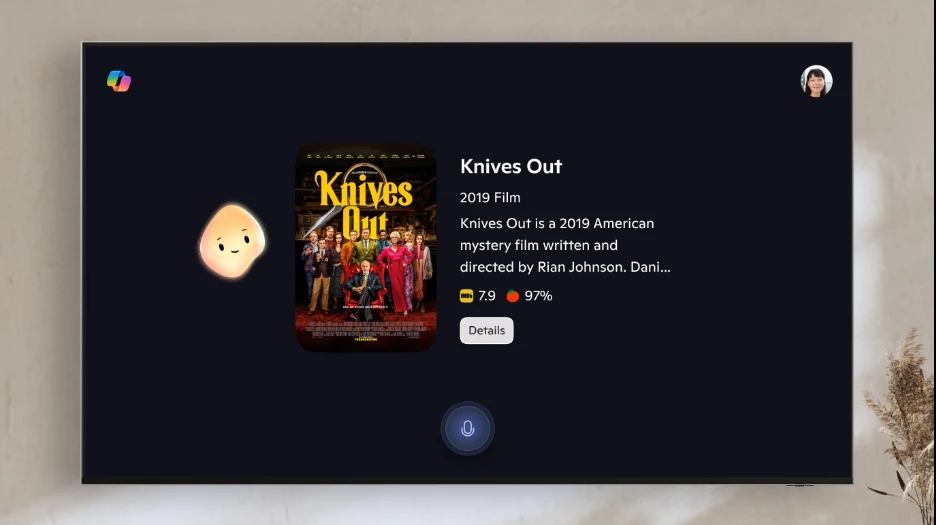

Is Your TV Listening? Why Microsoft’s AI Blob Might Revolutionize Your Screen
Ever struggled to navigate endless streaming menus with a clunky remote? You’re not alone – over 76% of viewers report frustration with traditional TV interfaces. Enter Microsoft and Samsung’s unconventional solution: Copilot for Samsung TV. This unexpected partnership transforms televisions into conversational companions, ditching generative AI for a specialized voice-driven assistant that promises to simplify entertainment decisions and daily tasks. But with an animated blob serving as its face, does this signal genuine innovation or just technological eccentricity?
Microsoft Meets Samsung: An Unexpected Synergy
The collaboration marks a strategic pivot for both companies. Microsoft extends its Copilot ecosystem beyond computers and phones into household living spaces, while Samsung responds to intensifying competition from Google TV and Amazon Fire TV’s voice capabilities. Unlike Cortana or Windows Copilot, this version focuses exclusively on TV-specific needs:
- Hardware Integration: Exclusively optimized for Samsung’s 2025 lineup, including Neo QLED, OLED, and Frame series
- Bypassing Generative AI: Prioritizes real-time assistance over content creation
- Shared User Base: Targets families through collaborative viewing decisions
Samsung’s Tizen OS now integrates Microsoft’s backend cloud services, enabling Copilot’s unique functionality. This symbiosis mirrors Apple and Google’s smart home plays – yet emphasizes accessibility over technical complexity.
Meet Your New Host: The Curious Case of the Animated Blob
Reactions to “Copilot’s Appearance” in July ranged from amusement to bewilderment. Dubbed a “visual companion,” this minimalist blob exemplifies Microsoft’s research into humanized AI. Per human-computer interaction studies, animated characters increase engagement and retention for voice interfaces, especially in group settings.
Unlike static voice assistants, Copilot dynamically:
- Lip-syncs responses
- Mirrors conversational tone through expressions
- Provides visual feedback alongside audio cues
While undeniably quirky, this approach aims to facilitate group interaction. Imagine asking “What should my kids and I watch?” and seeing Copilot display animated options while verbally explaining age-appropriate show benefits. It transforms passive voice commands into shared experiences.
Voice Power: The Real Game-Changer
Navigating Netflix or adjusting settings via remote tops most viewers’ irritation lists. Copilot directly targets this via:
Core Capabilities
| Feature | How It Works | User Benefit |
|---|---|---|
| Spoiler-Free Recaps | Voice request for plot summaries | Catch up without ruining critical twists |
| Content Discovery | “Find comedies under 90 minutes” | Skipping endless scrolling |
| Daily Assistance | Weather forecasts or schedule checks | Kitchen-ready timers visible on TV |
| Group Consensus | “Show action movies we’ll all like” | Settling family disputes peacefully |
Activation is deliberately frictionless – press your Samsung remote’s mic button, speak naturally, and watch responses blend voice and visuals. During testing, voice search reduced content discovery time by 70% compared to typing with on-screen keyboards.
Privacy While Channel Surfing: How Secure Is Copilot?
Always-listening devices spark valid privacy fears. Microsoft addresses these via tiered access:
- Guest Mode: Full functionality without logging in (queries aren’t saved)
- Personalized Mode: QR-based Microsoft account sign-in enables history/memory features
Unlike smartphone assistants, Copilot lacks persistent wake words, activating only when you press the remote. Still, users should review Samsung’s data policies – features like “personalized recommendations” imply metadata analysis. For deeper privacy, Microsoft points users to its Trust Center documentation.
Rivals and the Road Ahead: Is AI on TV Essential?
Copilot enters a field dominated by Amazon’s Alexa and Google Assistant. Comparing capabilities reveals strategic distinctions:
- Bixby (Samsung): Device-focused (“turn down volume”) lacking entertainment guidance
- Alexa & Google: Broad smart home control but limited TV-specific optimizations
- Copilot: Entertainment-first with unique visual layer for group dynamics
Industry analysts note Samsung’s gamble: integrating Microsoft’s software might irritate Google (Android TV’s backer). Yet viewing habits justify the risk. Nielsen reports 87% of households watch content collectively – exactly Copilot’s target use case if its group decision tools prove effective.
Blobs and Buttons: The Usage Guide
Before rushing to upgrade, note key details:
- Compatible Devices
- TVs: 2025 Micro LED/Neo QLED/OLED, The Frame Pro
- Monitors: M7/M8/M9 Smart Monitor series
- Access Points
- Samsung Daily+ hub
- ‘Click to Search’ feature
- Dedicated Copilot app
- Regional Rollout
Currently limited to select markets (likely US/Korea/UK initially)
Setup requires no extra hardware – just use your Samsung remote. Microsoft pledges future expansions, hinting at Xbox and Windows cross-compatibility for syncing watchlists.
The introduction of Copilot for Samsung TV signifies a symbiotic evolution: Microsoft’s conversational AI meets Samsung’s hardware dominance to tackle TV’s modern pain points. Its success hinges on balancing functionality with approachability – embracing both the practical magic of voice control and the quirky charm of its blob avatar. While technical questions remain (including regional access and data-handling transparency), the partnership reframes TVs from passive screens to interactive hubs. Forget typing queries; just grab the remote and ask away. Is this the new standard for smart home entertainment? Try it and decide for yourself – we’d love to hear your thoughts below!


