
When Pixels Had Grain: The Enduring Whisper of Woodblock Wisdom
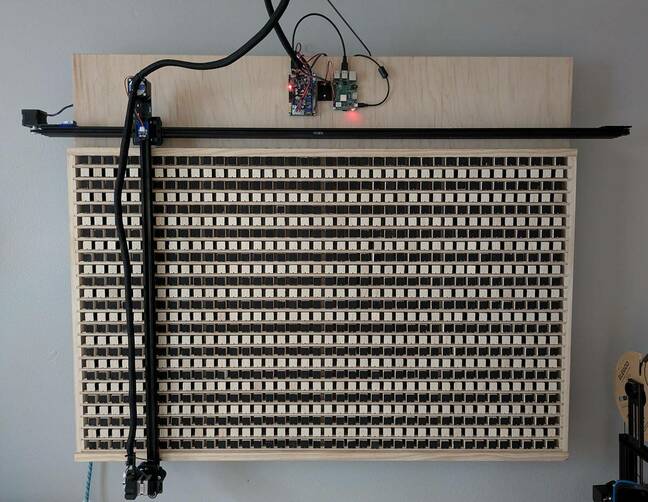
Imagine a screen that sighs when it updates: a gentle ripple of physical blocks turning under robotic touch. What happens when art rejects instant perfection for the tactile labor of wood and mechanics? Ben Holmen’s Kilopixel display, a mesmerizing and monumentally impractical robotic woodblock canvas, recently ceased its 24/7 public display after flipping over 206,204 pixels. Though its constant livestream era is over, this six-year odyssey in tangible, slow-motion creativity leaves a lasting imprint on the digital age. More than just a machine, the Kilopixel became a communal sketchpad and a defiant celebration of materiality in a disposable world.
Mechanical Pixel Masterpiece: The Soul of the Kilopixel
This wasn’t a conventional screen. At its core, the Kilopixel display featured a grid of 10×10 small wooden blocks. Each 19mm square block could be flipped individually by a precisely programmed robot arm – one side pale wood, the other darker, serving as ‘on’ and ‘off’ states for a rudimentary, tactile pixel grid. Creating an image wasn’t a flicker of electrons; it was a deliberate, often lengthy, physical choreography. “It might have taken Holmen six years and quite a bit of experimentation to construct,” notes the source. The challenges were immense:
- Precision Mechanics: Designing a reliable mechanism to flip individual square blocks without jamming required significant engineering.
- Synchronous Control: Coordinating the robot arm’s movements with the display grid demanded robust software integration.
- Material Constraints: Wood responds to humidity and wear, factors alien to silicon, adding an organic unpredictability. The choice of wood juxtaposed ancient material with modern control.
Technical Specifications Snapshot:
| Feature | Kilopixel Display | Typical Digital Display |
| :————- | :———————————– | :———————————- |
| Resolution | ~10×10 pixels (Total ~100 “pixels”) | Up to 8K+ (8,294,400+ pixels) |
| Medium | Physical Wooden Blocks | Liquid Crystal / OLED / LED Panels |
| Refresh Rate| Minutes/Hours per image | 60Hz – 240Hz+ (frames per second) |
| Image Input| Public submissions via web interface | Digital signals (HDMI, DisplayPort) |
| Unique Trait| Tangible, kinetic, tactile input | Purely visual, digital ephemerality |
From Livestream to Lifeline: The Kilopixel as Community Canvas
Initially conceived as a personal maker challenge, the Kilopixel display unexpectedly evolved into a fascinating social experiment during its eleven-day public livestream. For over 200 days straight, the world could queue pixel art submissions, watching Holmen’s robotic sculptor slowly bring their visions to life block by block. Over 421 unique drawings were translated into physical form – a significant number considering the inherent limitations of a 10×10 grid. Holmen noted the phenomenon came free of unsolicited doodles (“no representations of male genitalia…not for lack of trying”), suggesting a surprising collective respect for the platform’s unique nature. This interaction became the project’s heart, showcasing how constraints (like low resolution and slow speed) can foster unique creativity.
Endgame & Evolution: Pausing, Not Stopping
The relentless demands of keeping the livestream operational 24/7 ultimately proved unsustainable. “I knew I’d get tired of babysitting a 24/7 livestream. It’s a hassle!” Holmen stated, pulling the plug after eleven continuous days. Declaring “Season One” complete at 206,204 pixels flipped was a pragmatic pause, not a terminus. The core magic remains:
- Covert Creativity: The machine now “lurk[s] in the background of his webcam,” accessible via a private link for coworkers and colleagues, maintaining its whimsical presence.
- Daily Surprise: A new mode randomly resurrects past submissions: “It’s like surprise art in my office every day!” Holmen explained.
- Future Collaborations: Instead of constant streams, Holmen envisions “a monthly stream” and is actively seeking collaborators: “I’m excited to turn control over to someone with an interesting idea for a game or collaborative project,” he suggested, opening the door for interactive installations or even ultra-slow gameplay concepts.
Beyond the Blocks: The Philosophy of Analog Pixels
The Kilopixel display transcends its technical diagram. It stands as a powerful counterpoint to our digital immediacy. While LCDs flash billions of colors at lightning speed, Holmen’s contraption celebrated the deliberate, the physical, and the imperfect joy of mechanical actuation witnessed over time. It forced a different kind of engagement – watching paint dry, or rather, blocks flip – became meditative. As showcased by enthusiast interactions, the project taps into nostalgic connections: the lo-fi charm of early computer graphics and a tangible link to traditional craft like mosaics or woodblock printing. Reader comments like playing “very slow deathmatch” or noting “DOOM upside down spells ‘WOOD'” highlight this unique intersection of retro tech appreciation and physical materiality. The project resonates with modern movements advocating ‘Slow Technology‘ (Wikipedia), where interaction is reflective and purposeful rather than frantic. It elevates the process of creation itself over the produced image.
The Enduring Grain of Digital Truth
Ben Holmen’s wood-pixel creation hasn’t vanished; it has simply shifted its rhythm. It has moved from a constant, global hum to a personal, intermittent pulse – a secret amusement for colleagues and a daily surprise in its creator’s workspace. It embodies the pure pursuit of making: solving problems for the sheer joy and challenge of overcoming them. Its 206,204 pixel-flips represent thousands of tangible movements, connecting anonymous digital intentions to physical reality through wood and mechanics. This concise grid of wooden blocks, constantly shifting under robotic guidance, serves as a lasting testament that profound fascination resides in art forms requiring patience and existing at the speed of physical matter. What unconventional technology projects have sparked your imagination lately? Share your thoughts on slow tech and tangible interfaces below!


