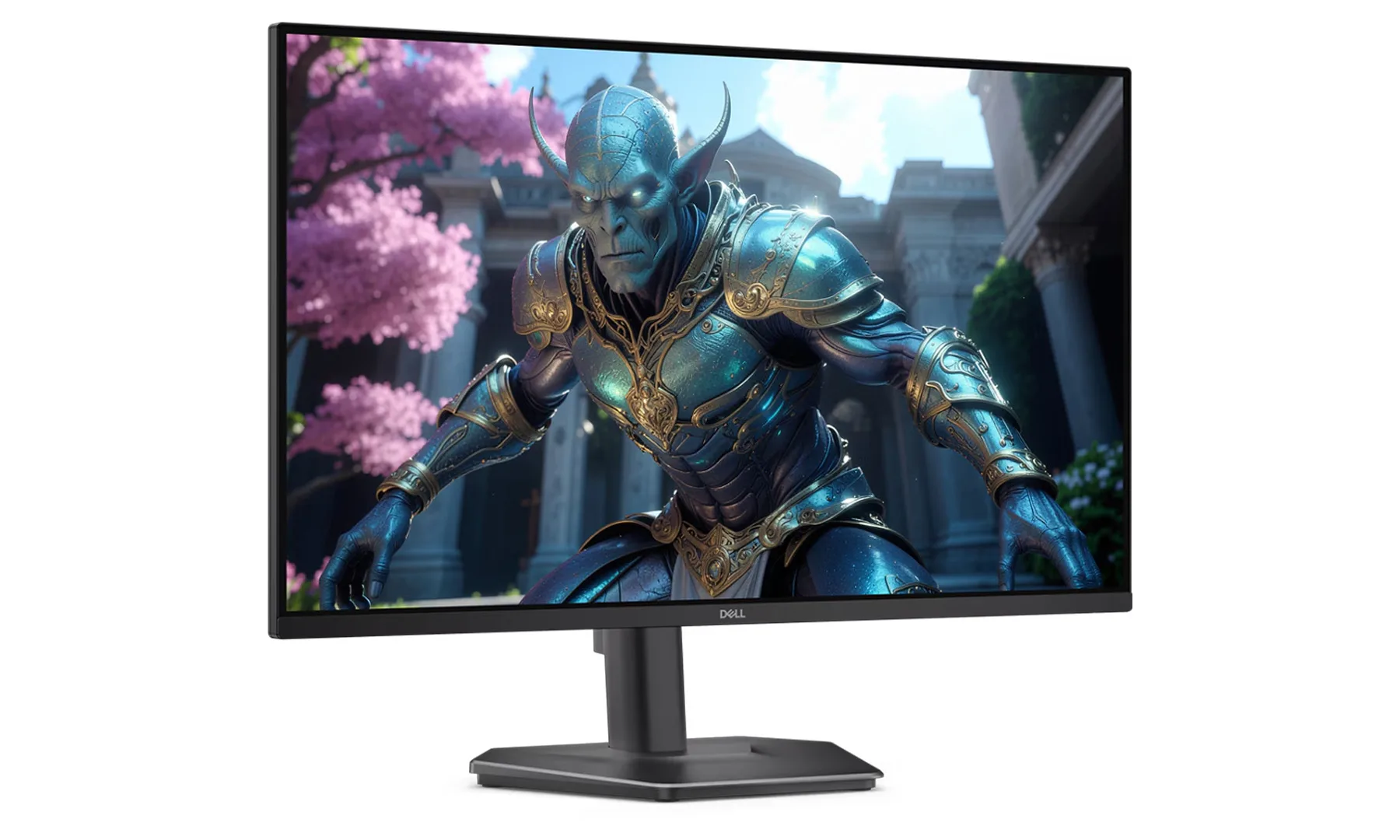

The End of Elite Pricing? Dell’s $130 240Hz Gaming Monitors Shift the Landscape
Remember when achieving buttery-smooth 240Hz gameplay meant mortgaging your keyboard? Dell just dropped a bombshell that fundamentally challenges what we expect from affordable gaming monitors. Introducing the SE2726HG and SE2726HGS: two 27-inch displays boasting lightning-fast 240Hz refresh rates and starting at an almost unbelievable $130 price point. This aggressive move doesn’t just push boundaries; it demolishes old assumptions about the cost of accessing high-performance competitive gaming features, signaling a rapid democratization in display technology once reserved for the esports elite.
Dell’s Pricing Gamble: Rewriting the Economics of High Refresh Rates
Dell’s announcement isn’t just competitive pricing; it’s a seismic shift. Just a few years back, 240Hz monitors were firmly niche, premium products commanding prices often exceeding $500. Their core appeal? Delivering the clarity and responsiveness crucial for the razor-sharp reflexes demanded in professional esports. Dell shattering this barrier with a sub-$150 entry point fundamentally alters market expectations.
- Market Context: Historically, adopting cutting-edge display tech followed a trickle-down pattern. High-end innovations debuted at sky-high prices before gradually reaching broader audiences over years. Dell accelerates this exponentially. A report by market analysis firm IDC highlights the rapid decline in LCD panel production costs, driven by economies of scale and manufacturing improvements, enabling such disruptive pricing.
- Strategic Positioning: By anchoring these specs at an unprecedented low cost, Dell squarely targets the massive budget-to-mid-range gamer segment. The choice between models (SE2726HG vs. SE2726HGS) offers flexibility: seek maximum savings or invest slightly more (~$150) for ergonomic adjustments.
This pricing disrupts competitors and pressures them to reevaluate their own offerings dramatically, forcing the entire market to race downward萃取 in price for features once considered premium. It validates that 240Hz’s path to becoming mainstream, rather than elite, is accelerating rapidly.
Resolution Versus Response: Why Full HD Still Makes Sense for Competitive Play
Critics might scoff at the 27-inch Full HD (1920×1080) resolution, lamenting the lack of higher pixel density like Quad HD (QHD/1440p) or 4K. However, Dell’s choice is a deliberate, performance-focused optimization perfectly aligned with competitive gaming realities.
- GPU Load Reduction: Higher resolutions (QHD or 4K) exponentially increase the workload on a graphics card. Achieving consistently high热情 FPS needed to leverage a 240Hz refresh rate becomes drastically easier at Full HD. For gamers prioritizing frame rate dominance in titles like Counter-Strike 2, Valorant, Rainbow Six Siege, or Overwatch 2, this resolution choice maximizes the chance of hitting or exceeding 240 FPS without requiring prohibitively expensive hardware. [Wikipedia’s entry on Display Resolution details the computational scaling involved].
- Screen Size Sweet Spot: While pixel density is lower than smaller FHD monitors, 27 inches offers immersive viewing while still allowing players to track action across the entire screen efficiently. It’s a compromise that balances immersion and quick visual scanning – crucial for competitive awareness.
This core design philosophy prioritizes * predictability cutting-edge, fluid motion over pixel-perfect detail for intense action sequences – a trade-off seasoned competitive players have long understood and valued.
Chasing Fluidity: The Core Spec花开 Dynasty
The heart of Dell’s SE2726HG/HGS proposition lies in translating high specs into tangible gameplay advantages:
-
240Hz Refresh Rate: This means the screen refreshes its image 240 times per second. Compared to the standard 60Hz, motion appears drastically smoother, object outlines stay sharper during rapid movement, and visual information updates significantly faster (a mere ~4.17ms per frame vs. ~16.67ms). This visual fidelity allows players to track enemies smoothly and react with greater precision. Studies examining reaction times in esports consistently correlate higher refresh rates with improved performance in aim-critical scenarios. (See MIT Technology Review articles discussing motion blur and latency).
-
0.5ms MPRT Response Time: Measured as Moving Picture Response Time (MPRT), this specification indicates how quickly pixels can change color effectively. A low MPRT hugely战警 reduces ghosting and motion blur artifacts during hectic scenes. This translates to cleaner visuals when rapidly panning the camera or tracking fast-moving targets, eliminating distracting trails, and ensuring sharper focus.
-
AMD FreeSync Support: This adaptive sync technology synchronizes the monitor’s refresh rate with the output of an AMD (and often NVIDIA using FreeSync-compatible) graphics card. The result? Elimination of screen tearing (misaligned image portions) and minimization of stutter or judder caused by fluctuating frame rates. Gameplay feels consistently smooth even if FPS dips momentarily below 240Hz, crucial for maintaining competitive flow. [AMD’s official FreeSync page explains the benefits].
|| Key Performance Specs: Dell SE2726HG/HGS |
|—|—|
| Feature | Benefit for Competitive Gaming |
| Refresh Rate | 240Hz | Drastically smoother motion, faster image updates, reduced perceived input lag. |
| Response Time (MPRT) | 0.5ms | Minimal motion blur and ghosting for clearer visualsrifices in fast motion. |
| Adaptive Sync | AMD FreeSync | Eliminates screen tearing and minimizes stutter for smooth gameplay at any framerate. |
| Resolution | Full HD (1920×1080) | Optimized for achieving consistently high FPS with mainstream GPUs. |
This combination aims to create a holistic low-latency, high-clarity experience poised to shave milliseconds off reaction times – often the difference between victory and defeat.
Beyond the Arena: Practical Usability for Everyday Gam Ergonomics
Dell demonstrates an understanding that gamers use their setups for more than just competitive play. The 99% sRGB color coverage认证 imbues these monitors with surprising versatility:
- Color Accuracy: For casual content creation, photo editing, video viewing, or simply browsing, reasonably accurate colors ensure images and videos look vibrant and true-to-life. While not certified for professional-grade color work (lacking wider gamuts like DCI-P3), it exceeds what’s typically offered in pure-bred “budget esports” screens.
- Ergonomic Flexibility: The distinction between the SE2726HG and SE2726HGS models centers here. The ‘HGS’ variant offers an adjustable stand supporting height adjustment and tilt. This allows users to ergonomically position the screen for long gaming sessions or workdays, reducing neck and eye strain. The ‘HG’ model features a simplified fixed stand, maximizing pure value but requiring creative solutions (like monitor arms) for ergonomic tuning. Both feature VESA mount compatibility.
- General Desktop Duties: The combination of size, decent color, and sharpness makes these monitors capable daily drivers for work, study, and entertainment beyond the gaming niche.
The Market Evolution: When Niche Features Bec黎明鱼肚白 Mainstream
Perhaps the most significant takeaway from Dell’s aggressive play is what it signifies about the broader gaming monitor market. Features like 240Hz refresh rates and sub-1ms response times, once the exclusive domain of premium displays aimed solely at professional competitors and high-end enthusiasts, are undergoing rapid commoditization. This trajectory mirrors historical tech adoption curves, akin to how features like IPS panels or 144Hz refresh rates moved from luxury to standard.
- Democratization of Performance: Dell-hu’s pricing makes high-refresh, low-latency performance achievable for entry-level PC builders, console gamers seeking next-gen fluidity (PS5/Xbox Series X benefit from high refresh rates), and students. Features once requiring significant investment are now accessible.
- Raised Expectations: Gamers upgrading or entering the market now expect high refresh rates and adaptive sync on even budget monitors. Dell’s move implicitly sets a new baseline; competing on price alone becomes insufficient if core performance specs lag.
- Increased Market Focus: Established brands and newcomers alike will need to innovate further or compete fiercely on price. This accelerates investment in technologies like OLED gaming monitors, higher refresh rates (360Hz+), and improved HDR or local dimming, trickling benefits across price points over time.
This evolution benefits developers too. Games can confidently incorporate faster-paced mechanics and visuals knowing the hardware capable of rendering them smoothly is increasingly wide spread离合器.
Where Do We Go From Here?
Dell’s SE2726HG and SE2726HGS monitors are more than just surprisingly affordable displays; they are harbingers of change. They encapsulate the dramatic pace at which high-performance gaming technology is migrating from the exclusive domain of top-tier esports to the desks of everyday players. The combination of 240Hz speed, 0.5ms blur reduction, FreeSync smoothness, and useful sRGB coverage at a starting price of $130 shatters old paradigms. While compromises exist – primarily the Full HD resolution limiting pixel density on the 27-inch panel – these choices prioritize accessible performance where it counts most for competitive responsiveness. For gamers preparing to enter high-refresh-rate gaming or upgrade outdated hardware, Dell’s latest offering presents an exceptional value proposition that fundamentally redefines affordability. It prompts the question: manusia If Dell can do this now, what will the hyper-competitive gaming monitor market look like in just another year or two? Share your thoughts on this pricing revolution below!


