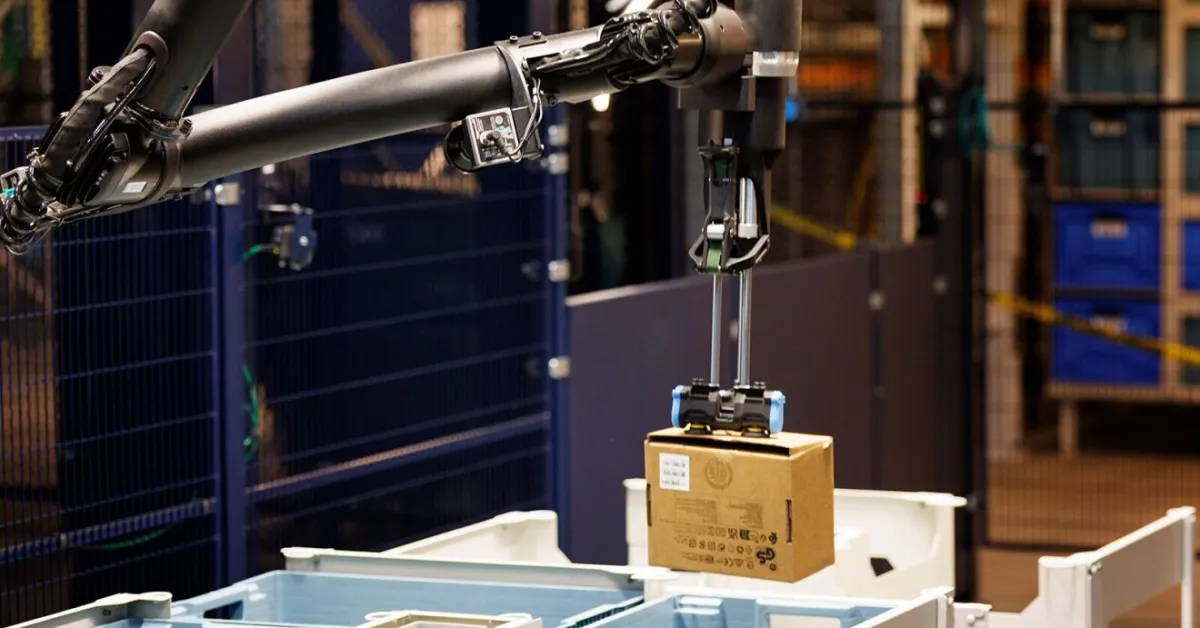

Is Amazon’s relentless push for automation a blueprint for efficiency or a threat to millions of warehouse jobs? As of April 2026, the e-commerce giant’s deployment of robots like Blue Jay and its agentic AI system Project Eluna has transformed fulfillment centers, raising urgent questions about the future of work. Amazon’s automation strategy, which combines robotics and generative AI, aims to slash costs and speed up deliveries, but a recent investigation suggests these technologies may reduce the need for human workers even as Amazon touts job creation. This article explores Amazon’s latest robotic innovations, their impact on the workforce, and what it means for the logistics industry in 2026.
Blue Jay: Amazon’s New ‘Extra Set of Hands’
In a recent blog post, Amazon highlighted Blue Jay, a robot designed to assist employees with tasks involving reaching and lifting. According to the company, Blue Jay can move 75 percent of the types of items stored in Amazon warehouses, making it a versatile addition to the fulfillment floor. The robot is part of a broader system that includes Project Eluna, an agentic AI that optimizes sorting and reduces cognitive load for workers. Amazon claims it developed Blue Jay in just over a year using AI, digital twins, and data from existing robots, creating a system that “coordinates multiple robotic arms to perform many tasks at once, collapsing what used to be three separate robotic stations into one streamlined workspace.”
Blue Jay is expected to become a “core technology” powering Amazon’s Same-Day delivery sites, which are critical for meeting customer expectations in 2026. However, the rapid development and deployment of such robots highlight Amazon’s commitment to automation as a cost-cutting measure.
Project Eluna: Agentic AI in the Warehouse
Project Eluna is an agentic AI system that acts like an “extra teammate,” helping employees by reducing cognitive load and optimizing sorting processes to eliminate bottlenecks. Unlike traditional automation, which follows pre-programmed instructions, agentic AI can make decisions and adapt in real-time, improving efficiency. Amazon’s integration of AI into its robotics ecosystem allows for smarter coordination between machines and humans, but it also raises concerns about job displacement. As AI takes over more complex decision-making tasks, the role of human workers may shift from operators to overseers.
Amazon’s Job Creation Claims vs. Reality
Amazon Robotics chief technologist Tye Brady stated in a company post, “The real headline isn’t about robots. It’s about people—and the future of work we’re building together.” The company has repeatedly emphasized that it creates more jobs than any other U.S. company, noting plans to fill 250,000 seasonal positions for the 2025 holiday season. However, a recent New York Times report suggests that Amazon’s warehouse overhauls are creating facilities that process more items with fewer employees, who increasingly focus on maintaining robots rather than performing manual labor.
CEO Andy Jassy’s June 2025 letter to employees was more candid: “We will need fewer people doing some of the jobs that are being done today, and more people doing other types of jobs. It’s hard to know exactly where this nets out over time, but in the next few years, we expect that this will reduce our total corporate workforce as we get efficiency gains from using AI extensively across the company.” This statement underscores the tension between Amazon’s public messaging and its internal strategy.
Automation and Cost-Cutting: The Bottom Line
Amazon’s push for automation is driven by a desire to cut e-commerce costs, which have risen due to inflation and increased competition. By deploying robots like Blue Jay and AI systems like Project Eluna, Amazon aims to reduce labor costs and improve throughput. According to industry analysts, automated warehouses can process up to 30% more orders per hour than traditional ones, with fewer errors. However, the initial investment in robotics is substantial, and the long-term savings depend on scaling these technologies across Amazon’s global network.
In 2026, Amazon’s automated facilities are becoming more common, with some warehouses operating with nearly 50% fewer human workers than a decade ago. This shift has sparked debates about the social and economic implications of widespread automation, particularly for low-skilled workers.
The Future of Work: What Amazon’s Automation Means for Employees
As Amazon automates more tasks, the nature of warehouse jobs is changing. Employees are increasingly required to monitor and maintain robots, troubleshoot AI systems, and handle exceptions that machines cannot manage. This transition demands new skills, such as basic programming and data analysis, which may not be accessible to all workers. Amazon has launched retraining programs, but critics argue that these efforts are insufficient given the scale of potential job losses.
In a 2026 survey by the Economic Policy Institute, 60% of warehouse workers expressed concern about being replaced by automation, while only 25% believed they had access to adequate training for new roles. Amazon’s response has been to emphasize its commitment to upskilling, but the company’s own projections suggest a net reduction in warehouse headcount over time.
Comparison: Amazon’s Robots vs. Industry Standards
To understand Amazon’s automation strategy, it’s useful to compare its robots with those used by competitors like Walmart and Alibaba.
- Amazon Blue Jay: Designed for picking, stowing, and consolidating items. Handles 75% of inventory types. Integrated with AI for real-time optimization.
- Walmart Alphabot: Automated system for online grocery orders. Uses autonomous carts to retrieve items. Less flexible but highly efficient for specific tasks.
- Alibaba’s ET Brain: AI-driven logistics system that optimizes routing and inventory management. Less focus on physical robots, more on software.
Amazon’s approach is more comprehensive, combining hardware and software to automate entire workflows. However, this also makes its system more complex and costly to implement.
Public Reaction and Regulatory Scrutiny
Amazon’s automation efforts have drawn criticism from labor unions and policymakers. In early 2026, the U.S. Senate held hearings on the impact of automation on the workforce, with Amazon’s practices under scrutiny. Some lawmakers have proposed legislation requiring companies to provide retraining funds and severance packages for workers displaced by automation. Meanwhile, public sentiment is mixed: while many consumers appreciate faster deliveries, others are concerned about job losses and the ethical implications of AI-driven decision-making.
Conclusion: A Balancing Act
Amazon’s Blue Jay robot and Project Eluna AI represent significant advances in warehouse automation, promising greater efficiency and lower costs. However, the company’s own admissions and external reports suggest that these technologies will reduce the need for human workers in the long run. As of April 2026, Amazon continues to hire for seasonal roles, but the trend toward automation is unmistakable. The challenge for Amazon—and society—is to balance technological progress with the well-being of workers. What do you think? Is Amazon’s automation a necessary evolution or a threat to jobs? Share your thoughts in the comments below.


