
The Cable Conundrum: Are Apple’s AirPods Pro 3 Truly Worth the (Missing) Cord?
Imagine unboxing the cutting-edge Apple AirPods Pro 3 – touted as a massive leap over its predecessor – only to find a crucial component missing. Apple’s latest premium earbuds arrive boasting significant advancements in sound quality, active noise cancellation (ANC), and wearer comfort. Yet, they arrive without the essential USB-C charging cable included in the box. Is this a bold step towards environmental sustainability or simply a cost-cutting measure that inconveniences consumers? This decision, echoing Apple’s earlier removal of power adapters, underscores a growing industry trend and forces buyers to confront an evolving reality where the contents of a premium tech purchase increasingly require assembly. The AirPods Pro 3 represent this complex intersection of innovation and frugality.
Sonic Supremacy: Dissecting the AirPods Pro 3’s Audio Advancements
Apple positions the third-generation AirPods Pro as a “huge jump” from the Pro 2 model, primarily driven by substantial enhancements in active noise cancellation.
- Next-Generation Active Noise Cancellation (ANC): Reports suggest Apple has significantly refined its ANC algorithms and potentially the hardware driving them. The result is a claimed substantial reduction in ambient noise. Think roaring airplane cabins, noisy commutes, or bustling coffee shops fading further into the background. This upgrade is critical, as superior noise cancellation has become a primary battleground for premium wireless earbuds. Comparisons to leaders like Bose and Sony will be inevitable.
- Comfort Reimagined: Gone are the days of stiff silicone tips that might wear out feel over time. Apple has transitioned to new foam tips. This material offers a distinct advantage: improved passive isolation and a more adaptive fit. Silicone tips rely on creating a seal, but foam conforms gently to the unique shape of your ear canal, potentially boosting comfort during extended listening sessions and enhancing base-level noise blocking even before ANC kicks in.
- The Live Language Translation Wildcard: While less discussed in terms of technical specs, the reference to ‘live language translations’ hints at leveraging Apple’s H2 chip and on-device processing for potentially groundbreaking real-time translation features. While not fully detailed, this could position the Pro 3 as more than just headphones, potentially offering utility akin to standalone translation devices. The precision and real-world functionality of this feature remain to be thoroughly tested, but its inclusion signals Apple’s ambition to broaden the AirPods’ use cases significantly.
Combined with expected improvements in spatial audio fidelity (Apple’s immersive sound feature) and potentially longer battery life for call time (listed as up to 8 hours total use), the core audio and user experience proposition undoubtedly moves forward.
The Missing Cable: A Strategic Omission or Environmental Stewardship?
The most controversial aspect of the AirPods Pro 3 launch isn’t a feature addition, but a subtraction: the absence of the USB-C charging cable in the box. Here’s the breakdown:
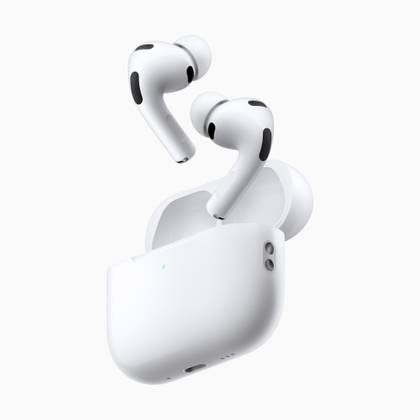
- What You Get (and Don’t Get): Opening the box reveals the charging case itself (more on its features next), the AirPods Pro 3 earbuds, and silicone ear tips in four sizes (including the likely foam-filled options for improved comfort). Noticeably absent? The charging cable. Apple explicitly states it’s a separate $19 purchase for their official braided cable.
- Echoes of the iPhone Strategy: This move is a direct parallel to Apple’s 2020 decision to remove the power adapter from iPhone boxes. The core justification remains the same: Environmental Sustainability.
- Reduced e-Waste: Apple argues (and data generally supports [EPA e-Waste Statistics]) that billions of unused chargers and cables end up in landfills annually. Omitting the cable reduces potential waste for users who already own multiple.
- Smaller Packaging & Carbon Footprint: Removing accessories allows for significantly smaller boxes, meaning more units fit on pallets and in shipping containers. This reduces transportation emissions [Carbon Trust Footprinting] – a tangible environmental benefit.
- The Ubiquity Argument: Apple’s primary defense rests on the near-universal adoption of USB-C. With USB-C powering MacBooks, iPads, the latest iPhones (15 series onward), Android devices for years, cameras, controllers, and countless other gadgets, the likelihood a buyer lacks any USB-C cable is deemed low. It’s a standard Apple themselves have finally wholeheartedly embraced.
- Consumer Frustration vs. Industry Norm: Despite the reasoning, the omission undeniably frustrates some consumers. Paying a premium price (undisclosed but likely high) and finding an essential accessory missing feels jarring. However, Apple is far from alone. Competitors like Samsung and Google often exclude charging bricks, and some now omit cables too. It’s rapidly becoming the new normal for accessories.
Battery Life Snapshot: AirPods Pro Generational Comparison
| Feature | AirPods Pro 2 (Approx.) | AirPods Pro 3 (Reported) | Notes |
|---|---|---|---|
| Listening Time (ANC On) | 6 hours | Up to 6 hours? | Official Pro 3 rating pending detailed release |
| Total Listening Time (Case) | 30 hours | 30 hours+? | Expected similar or slightly improved |
| Call Time (ANC On) | Up to 4.5 hours | Up to 8 hours | Significant improvement highlighted |
| MagSafe/Wireless Charging | Yes | Yes | Standard feature remains |
Beyond the Cord: The Versatility of the New Charging Case
While the cable is absent, Apple has ensured the AirPods Pro 3 charging case itself offers exceptional flexibility. This mitigates the cable omission if you have the requisite charging accessories.
- USB-C Port Rule Change: The key difference from older AirPods cases? Any standard USB-C cable will work. You are not locked into Apple’s proprietary Lightning port or forced to buy their USB-C cable (though they’ll gladly sell you one for $19). This universality is a major consumer benefit stemming from global regulatory pressure and Apple finally acquiescing to the USB-C standard.
- Wireless Charging Champion: The case remains a power hub for multiple wireless standards:
- MagSafe: Snap it onto Apple’s MagSafe charger or MagSafe-compatible power banks/stands for effortless power.
- Qi Wireless: Place it on any standard Qi charging pad, common in homes, cars, and public spaces.
- Apple Watch Charger: Uniquely, you can even plop the case onto the magnetic puck charger for your Apple Watch. This offers surprising convenience, especially while traveling or at a workspace.
- Function Over Proprietary Restrictions: The combination of a universal USB-C port supporting any cable and compatibility with the three dominant wireless charging standards available to Apple users makes the case itself incredibly versatile. Charging convenience is maximized, even if an Apple cable isn’t instantly available upon unboxing.
The Tangled Web of Choice and Consequence
Apple’s logic regarding the missing cable is arguably more sound for the AirPods Pro 3 than it was for Lightning-based devices. Moving to the universal USB-C standard means most users will possess compatible cables. However, the decision remains fraught:
- Environmental Win (Mostly): Reducing duplicate accessory production and shipping emissions is objectively positive. The collective impact across millions of units is not trivial.
- Consumer Cost Shifting: While saving some buyers from an unwanted extra cable, it undeniably passes a small ($19) cost onto those who don’t already have an appropriate cable or desire the specific Apple braided option. This is a clear, if minor, financial benefit for Apple on the accessory front.
- Principle vs. Practicality: Philosophically, the removal can feel like delivering an incomplete product at a premium price. Realistically, for the target tech-savvy audience Apple attracts, the lack of a cable is likely a minor, temporary inconvenience at worst. The crisis would have been exponentially larger had the case retained a Lightning port.
- The “Apple Tax” Perception: Offering the cable separately feeds directly into the long-standing critique of Apple’s “tax” on accessories – significant markups for items like cables and chargers. While any USB-C cable works, Apple still profits significantly from those who prefer or feel obligated to buy their branded version.
The AirPods Pro 3 are unmistakably an upgrade – enhanced ANC for deeper immersion, innovative foam tips for sustained comfort, potential translation breakthroughs, and a charging case defined by unprecedented versatility. However, their introduction is inextricably linked to the growing trend of “cord-cutting” within premium electronics packaging. While justified environmentally and made less painful by universal USB-C, the decision undeniably alters expectations and adds a minor friction point to the unboxing experience. As consumers, we must ask, is the tangible leap in performance worth the minor inconvenience of potentially grabbing our own cable? And should major manufacturers balance sustainability efforts by lowering the retail price proportionally to the removed accessory? Tell us your thoughts on the balance of innovation, environmental responsibility, and consumer experience in the comments!


