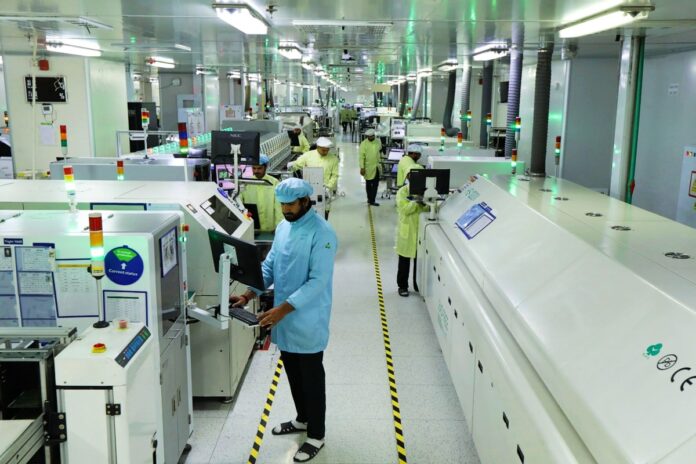

India on Thursday approved a manufacturing joint venture between China’s Vivo and local producer Dixon Technologies, a move that could mark the next phase of the nation’s smartphone manufacturing growth after Apple helped turn India into a global smartphone production hub.
The approval allows Vivo to proceed with a long-delayed manufacturing partnership first announced in December 2024, after New Delhi cleared the investment under rules introduced in 2020 that require extra government scrutiny of investment from nations sharing a land border with India — a category that includes China. The joint venture will transfer certain manufacturing assets from Vivo, form part of the company’s smartphone orders in India, and can also assemble electronic products for other brands, according to a stock exchange filing by Noida-based Dixon.
The 51/49 venture — majority-owned by Dixon, with Vivo holding the remaining stake — reflects a broader shift in how Chinese smartphone brands are expanding manufacturing in India through local partnerships. For an industry watching how governments referee the relationship between Chinese capital and domestic manufacturing, the development, analysts say, could become a template for similar arrangements across the industry, helping boost India’s smartphone manufacturing story beyond Apple.
Over the past few years, India has emerged as a top global smartphone manufacturing hub as Apple and its suppliers expanded iPhone production in the country while diversifying supply chains away from China. Government incentives have also helped attract global electronics manufacturers, boosting the nation’s role in global smartphone production.
Apple spent years building its manufacturing footprint in India and today accounts for 57% of the nation’s smartphone exports by volume, according to Counterpoint Research data shared with TechCrunch. Chinese brands, on the other hand, dominate India’s smartphone market sales with 72% of the market, but contribute less than 10% of exports, a situation that reveals how much upside is still on the table if they start exporting from India the way Apple does.
Apple’s India manufacturing expansion has largely been driven by suppliers such as Foxconn and Tata. Chinese smartphone brands, meanwhile, are increasingly exploring partnerships with Indian companies after New Delhi tightened investment rules for neighboring nations following the 2020 border clashes with China. Several of these companies, including Oppo, Vivo, and Xiaomi, have also faced tax and regulatory investigations in India in recent years, which helps explain why ceding majority control to an Indian partner now looks like the more sustainable path forward.
Local partnerships such as the Dixon-Vivo venture offer Chinese brands a more stable operating model, while aligning with India’s push for greater local participation in electronics manufacturing, said Tarun Pathak, research director at Counterpoint Research.
“The approval of this joint venture creates a win-win for both players,” Pathak told TechCrunch. He added that a majority-Indian-owned structure offers Vivo better regulatory alignment while giving Dixon the scale to deepen local value addition and pursue exports.
Vivo has manufactured and exported smartphones from India for years, but the current venture marks a shift toward a majority-Indian-owned manufacturing structure as the market leader deepens its footprint in the world’s second-largest smartphone market. The Chinese smartphone maker held the top position in India’s smartphone market with a 23% shipment share in Q1, per Counterpoint.
For Dixon, India’s largest electronics manufacturing services company, the venture could add annualized manufacturing volumes of about 20 million to 22 million smartphones, in line with Vivo’s current sales, according to comments by Managing Director Atul Lall during the company’s May earnings call. That’s a meaningful volume bump for a public company whose growth increasingly hinges on successfully securing a few of these manufacturing contracts.
Dixon already manufactures smartphones for Xiaomi, suggesting the Vivo venture builds on its emerging role as a manufacturing partner for both global and Chinese smartphone brands in India, reinforcing its position as one of the more reliable bets in India’s electronics build-out.


