
The Eyes That Never Sleep: Reolink’s TrackFlex Floodlight WiFi Paints a Surveillance Masterpiece – Or Nightmare?
In an era where even porch pirates can vanish in moments, how much operational range is too much for a security camera? Reolink’s unveiling at IFA 2025 pushes boundaries with the TrackFlex Floodlight WiFi, a dual-camera sentinel featuring three motion sensors that grant it a 270-degree detection range—far beyond traditional fixed lenses. Yet this revolution in flexibility forces a critical question: When does hyper-intelligent surveillance start feeling unsettling? Reolink TrackFlex Floodlight WiFi merges motion tracking, AI analytics, and customizable lighting to redefine perimeter security. But behind its technical brilliance lies a provocative dialogue about data autonomy, precision, and the creeping intimacy of being watched.
Beyond the Lens Limitation: Dynamic Field Mastery
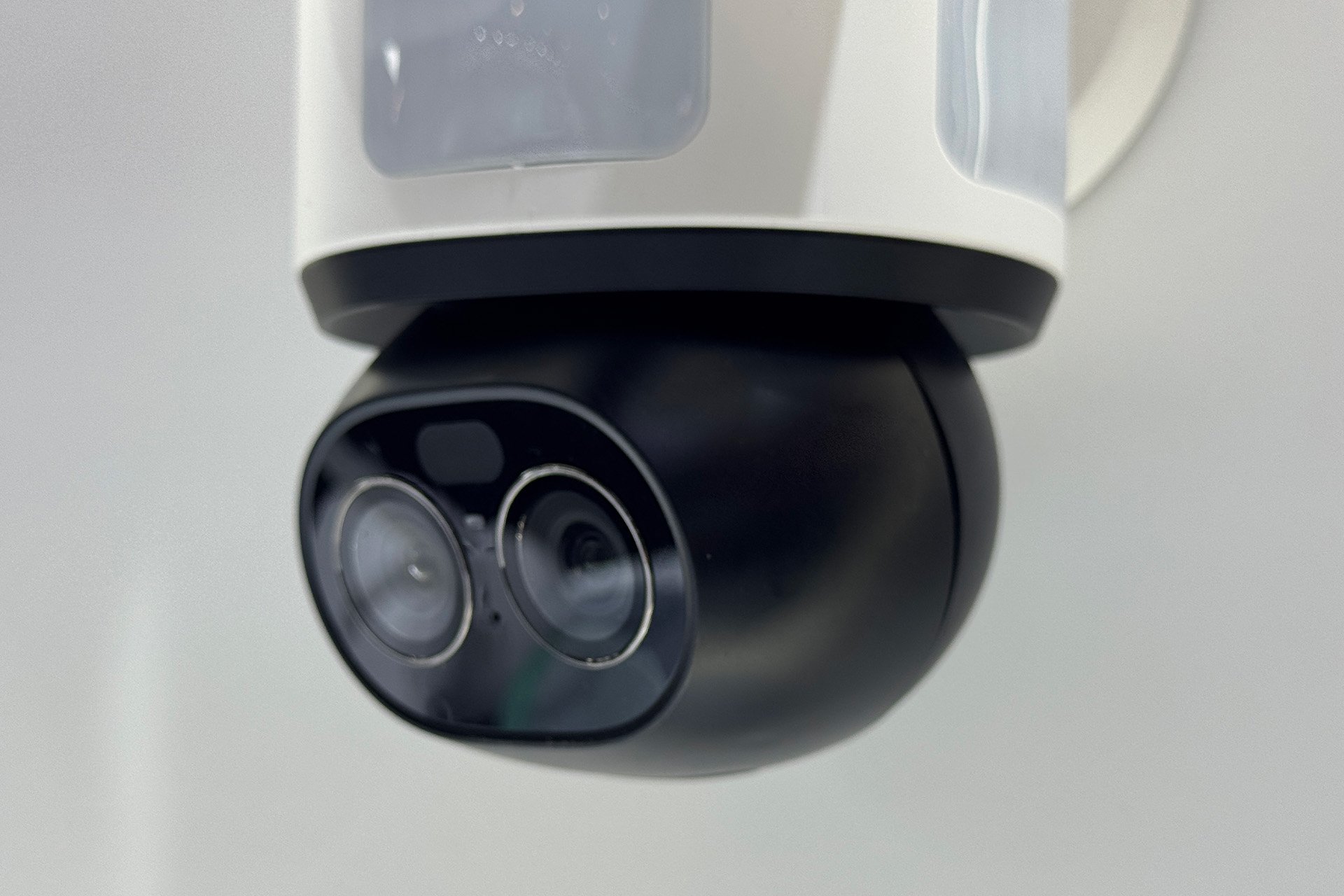
Most floodlight cameras lock you into a fixed view, blind to activity unfolding just beyond their frame. Reolink’s solution mimics human curiosity: three wrap-around motion sensors scan the periphery (front and sides), triggering a motorized, ball-shaped camera housing to rotate toward movement. Picture your driveway: fixed cameras might capture only the garage or the street—not both. But the TrackFlex Floodlight WiFi—when mounted on a corner—detects your car arriving at the curb, swivels to track its path, and follows it to the garage door. This wide dynamic coverage eliminates dead zones better than predecessors like the fixed-view Elite Floodlight WiFi.
The dual camera array enhances this intelligence:
- Wide-Angle Lens: Captures expansive scenes (e.g., a full backyard).
- 6x Zoom Lens: Focuses on fine details (e.g., license plates or facial features), preserved crisply even in low light by twin brightness-adjustable floodlights.
Light articulation further optimizes visibility, letting users tilt beams to illuminate staircases or gardens. Performance-wise, this evolution solves a pain point for homeowners with sprawling property lines where even pan-tilt devices often miss split-second triggers.
Personal Data Fortresses: Self-Reliant Storage Systems
Reolink TrackFlex Floodlight WiFi doubles down on local storage, a critical hedge against cloud breaches. Unlike platforms that ship footage to Amazon or Google servers, Reolink retains control on your turf. Options include:
| Storage Method | Capacity | Best For |
|---|---|---|
| MicroSD Card | Up to 512GB | Budget-conscious users |
| Reolink NVR/Home Hub | Scalable (TB+) | Whole-home security systems |
| Network-Attached Storage (FTP) | Customizable | Tech-savvy power users |
This on-premise data retention aligns with tightening regulations like GDPR, reducing reliance on vulnerable cloud vectors. For instance, footage stored on an offline NAS ensures exposure risk plummets compared to subscription models like Nest Aware. However, Reolink’s app complexity may intimidate novices—flexibility demands a learning curve, though post-setup, it’s environmentally resilient without internet dependency.
The Brains Behind the Brawn: ReoNeura Core AI Processing
Localized processing isn’t just about storage—it’s where Reolink TrackFlex leverages ReoNeura Core, a proprietary AI engine analyzing footage on-device. This enables natural language video searches: Ask, “Show me clips with a person in a red hoodie last Tuesday,” and the AI scours recordings using interpreted attributes (gender, clothing, accessories). During IFA demos, the system categorized passersby with clinical detail:
- Middle-aged male, green short-sleeve shirt, hat, bag
- Younger male (est. 30s), blue long-sleeve, jeans, short hair
While facial recognition wasn’t detected, the granularity of metadata feels unprecedented in consumer gear. The tradeoff? Accuracy wobbles surfaced—identifying an indoor expo as “outdoor” or misjudging ages—confirming AI isn’t infallible. Competitors like SwitchBot’s AI Hub use similar tech but often require cloud integration; ReoNeura minimizes latency and hacking risks by keeping analysis at home. For search efficiency, it’s genius. Existentially? It’s unnerving.
Security Theater or Sentinel Sanctum? The Privacy Duality
The IFA demo starkly framed the paradox: On one screen, mundane convention scenes; on the other, a digital dossier like police forensic apps. Hyper-detailed surveillance logging offers legitimate convenience—”Find the courier who left the package”—yet invokes discomfort by quantifying identities without consent. Privacy experts like the Electronic Frontier Foundation (https://www.eff.org/note) warn that persistent biometric cataloging crosses ethical lines, even locally stored. At over 270 degrees, the TrackFlex perceives more than most; paired with ReoNeura, it synthesizes what it sees into searchable profiles.
Floodlight cameras aren’t new—Ring and Arlo dominate markets with Alexa integrations—but Reolink counters their cloud reliance with surgical, self-hosted oversight. Still, psychological barriers persist: Does spotting your mailman as a “male, 40, striped shirt” enhance safety or normalize surveillance overkill?
When Convenience Collides With Conscience
Reolink’s breakthrough demonstrates how deterrents evolve. Follow-up tracking and AI metadata turn passive cameras into active sentinels. But my IFA demo proved that blinding efficacy has shadows: Even Reolink’s rep beamingly cataloging attendees’ attire felt dissonant. Perhaps the true innovation is awareness—that local AI absolves some data sins while ensuring you can’t escape its gaze.
What defines responsible vigilance? Reolink TrackFlex walks the razor’s edge. Share your stance: Does autonomously cataloging neighbors’ wardrobes for “security” go too far?


