
Connecting the Dots: How a Space-Based Mesh Could Reshape Pacific Theater Warfare
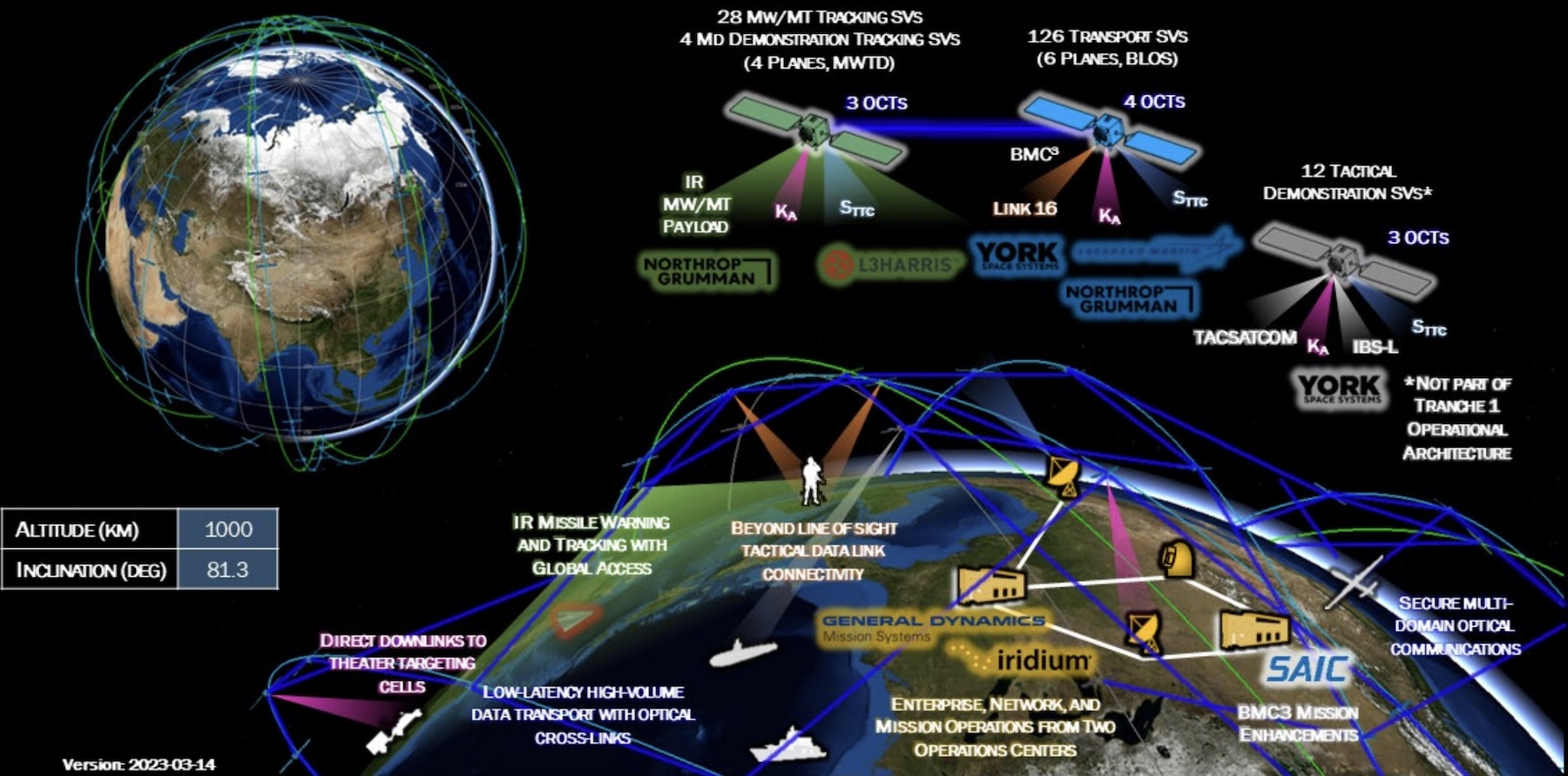
Imagine a Marine rifleman in Okinawa spotting hostile activity. Within seconds, using his standard-issue tactical radio, he relays a high-resolution image and precise coordinates to a warship hundreds of miles at sea, a fighter jet streaking overhead, and command centers thousands of miles away – all effortlessly, securely, and far beyond his immediate line of sight. Once science fiction, this level of integrated connectivity is rapidly becoming a cornerstone of US military strategy, powered by the Space Development Agency’s (SDA) revolutionary SDA transport layer. This network isn’t just about faster signals; it’s about fundamentally transforming situational awareness, command decisions, and strike capabilities across the vast expanses challenging US power projection, particularly against strategic competitors. Understanding the architecture, technology, and geopolitical drivers behind the transport layer reveals its critical role in modern deterrence and defense.
Piecing Together the SDA Transport Layer Architecture
The SDA isn’t building a traditional, monolithic satellite constellation. Instead, it’s deploying a proliferated network in distinct “tranches” – batches designed for rapid deployment and incremental capability upgrades. Tranche 1, currently launching across multiple missions in 2024, forms the foundational combat layer. Its structure is deliberate:
- Data Relay Dominance: 126 satellites specifically dedicated to high-speed communications via the transport layer.
- Missile Tracking: 28 satellites equipped with advanced infrared sensors focused solely on early missile detection and tracking.
- Mesh Network Backbone: Critical to both functions, these satellites interlink using optical laser communications terminals, creating a resilient web in low Earth orbit (LEO) rather than relying on vulnerable ground stations. This mesh topology allows data to hop seamlessly from satellite to satellite until it reaches its intended recipient. Learn more about mesh networks on Wikipedia.
This all hinges on Ten launches to fully deploy Tranche 1. Six launches focus on getting the transport layer relay satellites into orbit, while four launches boost the missile tracking payloads. Breaking deployment across numerous missions mitigates the risk of a single launch failure crippling the entire system.
Engineering Excellence: Ka-Band and Laser Links for Unprecedented Speed and Reach
The magic enabling the SDA transport layer‘s capabilities lies in its sophisticated communications payloads. These satellites carry a dual-pronged approach:
- Ka-band Radios: Provide high-bandwidth data links for downlinking sensor data (like missile tracks) and sending large data packages (like imagery or targeting updates) to fixed ground stations.
- Inter-Satellite Laser Links (Optical Crosslinks – OCLs): This is the game-changer. Lasers operating in the infrared spectrum allow satellites to communicate with each other directly in space, achieving vastly higher data rates and lower latency than traditional radio frequency (RF) links. Crucially, they create the mesh network.
As explained by SDA’s Ananthan Sandhoo, the power is enabling Beyond Line-of-Sight (BLOS) connectivity for tactical users: “What the transport layer does is it extends beyond the line of sight. Now, you’re able to talk not only to within a couple of miles with your Link 16 radios, [but] we can use space to, let’s say, go from Hawaii out to Guam using those tactical radios, using a space layer.” This means existing tactical Link 16 radio systems used by ground troops, ships, and aircraft can connect via the satellites above, transforming them into global tactical communicators without replacing every radio on the battlefield. Laser links’ inherent security (directionality reduces jamming/snooping) and bandwidth capabilities (measured in Gigabits per second vs. Megabits for typical RF) are fundamental advantages.
The Pacific Crucible: Why USINDOPACOM Leads the Charge
The SDA transport layer‘s initial operational testbed isn’t random. The SDA explicitly targets achieving regional communications, missile warning, and targeting coverage over the Western Pacific starting in 2027. US Indo-Pacific Command (USINDOPACOM) will be the first combatant command to integrate and use the constellation. This focus is strategically intentional and urgent:
- Geographic Scale: The Indo-Pacific region is vast, spanning thousands of miles of ocean. Maintaining real-time awareness and communication across such distances between dispersed forces (ships, planes, islands, continental US commands) is notoriously difficult with terrestrial networks or geostationary satellites (which have high latency).
- Adversary Focus: Pentagon leadership consistently identifies China as the nation’s “pacing challenge” and primary strategic competitor. USINDOPACOM would bear the brunt of any conflict scenario involving Chinese forces challenging regional stability or US interests.
- Capability Gap: Potential adversaries like China possess advanced anti-access/area-denial (A2/AD) capabilities specifically designed to disrupt US traditional communications and sensor networks. A resilient, proliferated, space-based mesh network offers a harder-to-target solution.
The SDA transport layer directly addresses the tyranny of distance and provides a crucial communications backbone resilient to disruption – a vital capability for deterring aggression or prevailing in conflict within this priority theater.
Building Resilience: The Multi-Vendor Advantage
The Pentagon learned harsh lessons about single-point vulnerabilities in supply chains and technology bases. The SDA actively avoids this pitfall in its constellation build:
- Diverse Contractor Base: Rather than relying on one prime contractor, the SDA sourced Tranche 1 satellites from multiple established defense and space players:
- York Space Systems: Known for agile production of smaller buses.
- Lockheed Martin: Aerospace giant with deep satellite integration expertise.
- Northrop Grumman: Major player in defense systems and space-based sensors.
- L3Harris: Strong expertise in communications payloads and optical systems.
| Complementary Tranches: Expanding the SDA Architecture |
|---|
| Tranche |
| Tranche 1 (T1) |
| Tranche 2 (T2) |
| Tranche 3 (T3) |
This multi-vendor strategy fosters competition, drives innovation, spreads risk, builds flexibility, and ensures no single company holds monopoly power over this critical national security architecture. “We will increase coverage as we get the rest of those launches on orbit,” emphasizes SDA’s acting deputy director, Michael Eppolito, highlighting the incremental deployment’s resilience.
Beyond Orbits: The Daunting Challenge of Warfighter Integration
Launching the satellites is only half the mission. Arguably the harder task is seamlessly integrating this space-bone capacity into tactical warfighting. As Sandhoo suggests: “Teaching tactical operators to use the new capabilities… could be just as challenging as building the network itself.”
- Fundamental Shift: This requires ground troops, naval personnel, pilots, and Marine units to fundamentally adapt how they think about communication, intelligence gathering (ISR), and targeting. Turning space from a strategic support layer into a tactical enabler demands a mindset shift.
- Warfighter Immersion: The Pentagon’s solution is focused “warfighter immersion” training scheduled to begin in 2025. This hands-on, realistic training is crucial for forces to intuitively “get used to using space from this construct,” mastering the practical aspects of accessing the network via their existing gear and understanding the real-time data flows it enables. Success hinges on making the SDA transport layer capabilities feel as natural and reliable to the frontline soldier or pilot as using their rifles or aircraft systems.
The Future Network: Tranche 2 and Beyond
Tranche 1 is just the initial step. The SDA has already placed contracts for Tranche 2 (T2), involving more than 270 satellites designed to expand the network’s global coverage, enhance resilience, and introduce sophisticated new capabilities like “custodied tracking” – maintaining constant target custody through the mesh network for hypersonic threats.
A Pause for Thought: However, looking further ahead, the Pentagon has paused development of part of Tranche 3 (T3). This strategic pause allows time to evaluate the rapidly changing space landscape, lessons from T1 and T2 deployment, and potentially incorporate newer architectures proposed by companies like SpaceX. This reflects a prudent approach – ensuring the future iterations leverage the best technologies and concepts, prioritizing resilience and cost-effectiveness in the face of evolving threats. The core SDA transport layer mesh concept remains pivotal, but the supporting technologies and providers might dynamically evolve.
This constellation, anchored by the high-speed, resilient SDA transport layer, is poised to revolutionize how US forces communicate, see the battlefield, and target threats – fundamentally altering the calculus of deterrence and combat, especially in the vast Pacific. It transforms scattered assets into a unified, reacting force. Ensuring this revolutionary tool is ingrained into the military’s DNA through effective training remains paramount. Can the next generation of US forces leverage this celestial network to maintain the strategic edge? The launches mark the start; the real test lies with the troops on the ground, at sea, and in the air mastering its immense potential. What do you see as the biggest challenges in making this futuristic network a battle-ready reality? Share your thoughts below.


