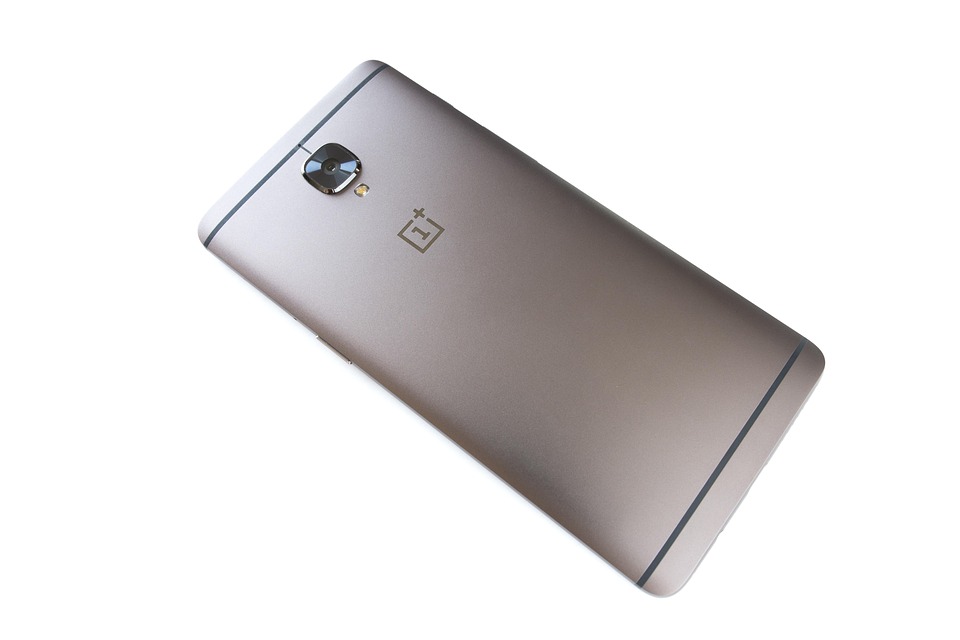

A New Lens on Innovation: Why OnePlus Betrayed Hasselblad
Did you know that 86% of smartphone buyers rank camera quality as their top purchasing criteria? That intense focus on mobile photography just got a major jolt. After five years of high-profile collaboration, OnePlus has confirmed its split from legendary camera brand Hasselblad. This partnership, launched with 2021’s acclaimed OnePlus 9 Pro, elevated OnePlus from camera mediocrity to serious contender—culminating in the 2025 OnePlus 13 being hailed as “one of the best camera phones” by industry experts. But now, OnePlus is going solo, introducing its own computational photography engine: the OnePlus DetailMax Engine. Co-founder Pete Lau states this marks a deliberate shift toward “entirely real and clear” images, ditching cosmetic enhancements for raw realism. Is this a strategic evolution or a risky gamble?
The Hasselblad Era: Triumphs, Trials, and Transformation
The 2021 OnePlus-Hasselblad alliance aimed to disrupt mobile photography. Before this partnership, OnePlus cameras were notoriously inconsistent—often criticized as “second-class citizens” in flagship comparisons. Hasselblad’s branding and tuning brought immediate prestige:
-
Distinctive Features: The collaboration birthed innovations like:
- XPAN Mode: Mimicking Hasselblad’s panoramic film format for cinematic wide shots.
- Master Mode: Offering manual tuning calibrated by Hasselblad experts.
- Simulated Lenses: Portrait-mode depth effects replicating actual focal lengths.
-
Performance Evolution:
Early models (OnePlus 9/10) showed promise but inconsistency, while the OnePlus 13 became a 2025 standout for color accuracy and low-light detail. Android Authority’s review noted it “sets a new standard for realism.” (Source: Computational Photography) -
User Sentiment:
In a revealing Android Authority poll (252 votes), users delivered a mixed verdict:
| Poll Option | Percentage |
|———————-|————|
| Successful Partnership | 42% |
| Okay, but could improve | 44% |
| Failure | 14% |
Despite gains, 44% felt Hasselblad’s impact was underdelivered—hinting at unresolved gaps.
The Clarity Imperative: Why OnePlus Went In-House
Lau’s global user interviews revealed a universal truth: smartphone photographers prioritize authenticity over artifice. “The first thing users do is pinch to zoom,” he emphasized—a make-or-break moment where overprocessed images crumble. This aligns with a broader industry backlash against computational gimmicks like AI-generated “moon shots.” Experts from Google Research note that modern algorithms now prioritize “true-to-life imaging” through multi-frame stacking and sensor fusion (Source: Google AI Blog).
Enter the OnePlus DetailMax Engine, built not to embellish but to reveal. Lau claims it leverages:
- Advanced pixel-level analysis to preserve textures (skin, fabrics, landscapes).
- Zero artificial beautification or smoothing.
- Optimization for the “zoom test”—where detail retention is scrutinized.
This pivot reflects a maturation: brands like Apple (Photonic Engine) and Google (Pixel Tensor algorithms) now compete on nuanced realism—not brand-name optics alone.
The Partnership Paradox: Hasselblad’s Legacy and Limitations
Hasselblad’s badge lent credibility but faced inherent constraints:
- Software Limitations: Tuning was often restricted to color science, while core processing remained with OnePlus.
- Market Saturation: Competing brands like Xiaomi (Leica) and Vivo (Zeiss) diluted Hasselblad’s exclusivity.
- OPPO Uncertainty: With sibling brand OPPO also using Hasselblad branding (since 2022), synergies were murky—and its future with OPPO now hangs in the balance.
For OnePlus, full ownership of imaging R&D means:
- Unified hardware/software control across its portfolio.
- Faster iteration without partner dependencies.
- Cost savings potentially lowering device prices.
The DetailMax Advantage: Diving Deeper
While specifications remain sparse, industry analysis suggests potential techniques:
- Sensor-Shift Stabilization: For sharper zooms beyond optical limits.
- AI Noise Sculpting: Isolating grain from fine details in low light.
–Multi-Spectral Analysis: Preserving true-to-source accuracy differences in textures or materials.
Lau is already teasing the engine’s impact on OnePlus 15 prototypes. If successful, OnePlus could leapfrog rivals fixated on megapixels over micro-detail.
The Bigger Picture: Shifting Smartphone Camera Trends
OnePlus’s solo voyage signals a sea change:
“Computational photography is moving beyond aesthetics to authenticity,” notes imaging expert Prof. Marc Levoy (ex-Google). “Algorithms now simulate optical physics, not just idealize scenes.”
- Competitor Context:
- Samsung partners with Olympus for optics but retains core processing control.
- Google uses pure computational mastery—no lens branding.
- Apple’s Photonic Engine balances neural networks and dedicated hardware.
The DetailMax Engine’s focus on zoom fidelity mirrors Google’s Super Res Zoom, underscoring a shared industry priority. Yet without Hasselblad’s prestige, OnePlus needs flawless execution.
Focusing the Future: Risks and Rewards
This split is bittersweet. Hasselblad catapulted OnePlus from pretender to contender, but limitations in customization fueled the break. Now, the OnePlus DetailMax Engine carries immense pressure:
- Risk: Failing to match Hasselblad-tier validation—or worse, regression to pre-partnership inconsistencies.
- Reward: Unlocking new creative potentials (e.g., reimagined Master Mode) while cutting costs.
The OnePlus 15 (due mid-2025) will be the litmus test—and judging by Lau’s promise that users “will love the results,” confidence is sky-high. If the DetailMax Engine nails that critical “pinch-to-zoom” moment, partnerships may soon seem like relics.
As Hasselblad’s signature fades from OnePlus flagships, the future belongs to unfiltered precision. The OnePlus DetailMax Engine rewrites the rules: no longer chasing romanticized illusions, but capturing reality in pixel-perfect detail. This isn’t just a technology transition—it’s a philosophy shift for a brand betting that authenticity is the ultimate premium feature. For OPPO-style glamour shoots? Not here. But for photographers exhausted by sensor-warping artifacts? OnePlus just made its stand. Will DetailMax redefine mobile photography? We’ll zoom in to find out—literally. What’s your take—did Hasselblad make or break OnePlus? Drop your verdict below!


