
Is the Lenovo Legion Go 2 About to Revolutionize Handheld Gaming?
Are you ready to ditch your bulky gaming rig for something truly portable without sacrificing performance? Leaks suggest the Lenovo Legion Go 2 could be the answer. Initially slated for a late 2025 release, a recent flurry of leaked information points towards a potential launch at IFA in Berlin this September. This article dives into the details of these leaks, exploring the specs, features, and potential impact of Lenovo’s latest foray into the handheld gaming market. Get ready to explore what might be the next big thing in on-the-go gaming.
Lenovo Legion Go 2: Unveiling the Leaked Details
The excitement surrounding the Lenovo Legion Go 2 is palpable, especially with the increased competition in the handheld gaming space. The Steam Deck, ASUS ROG Ally, and the original Legion Go have already established a foothold, but the Legion Go 2 seems poised to raise the bar. Let’s break down what the leaks reveal about this highly anticipated device:
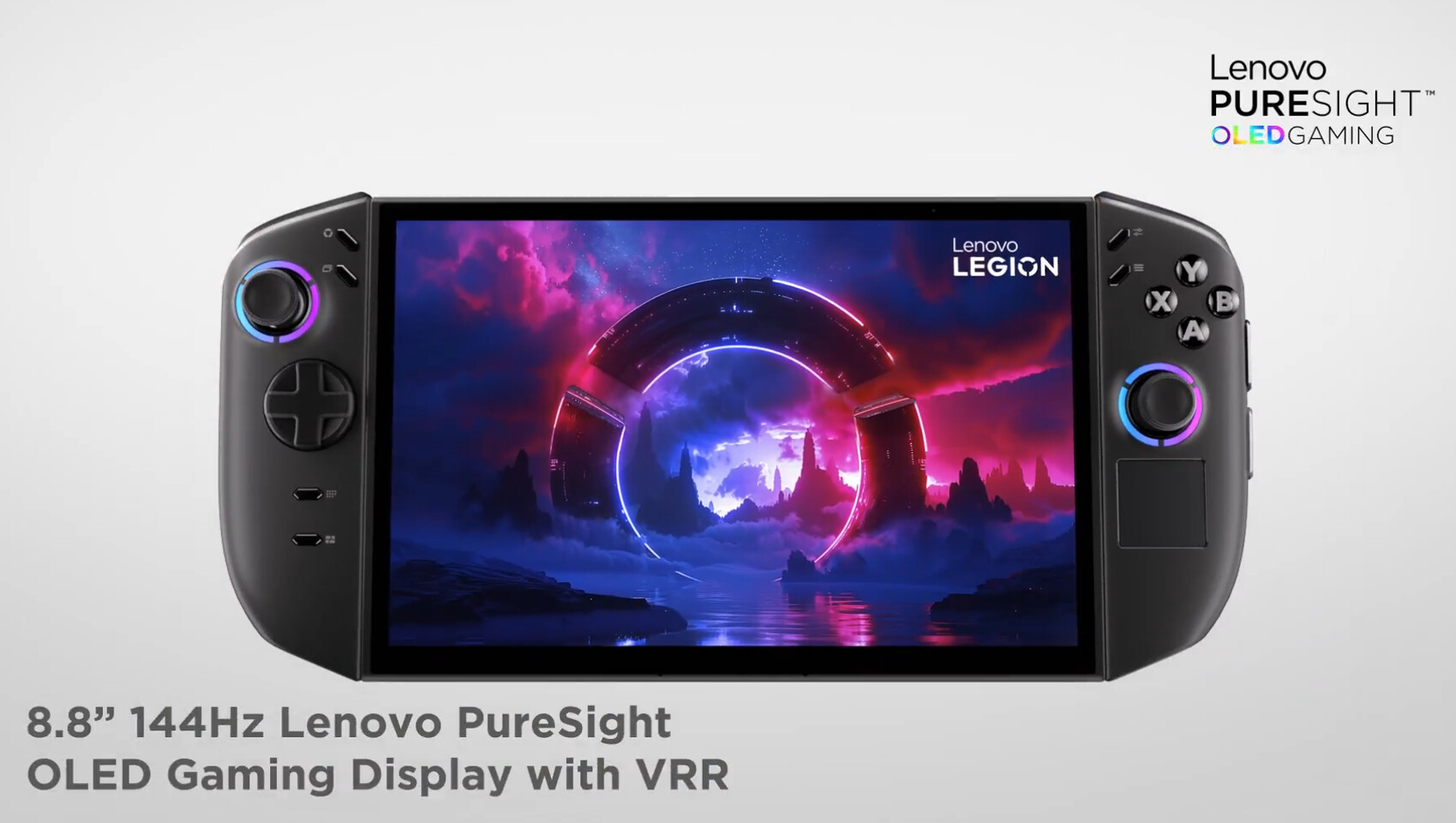
Stunning Visuals: 144Hz OLED Display with VRR
One of the biggest criticisms leveled against the original Legion Go was its lack of Variable Refresh Rate (VRR) and the less-than-stellar display. Lenovo seems to have heard the feedback loud and clear. The leaked information indicates that the Lenovo Legion Go 2 screen will feature a vibrant 144Hz OLED display with a 1200p resolution.
- OLED Advantages: OLED (Organic Light Emitting Diode) technology offers superior contrast ratios, deeper blacks, and more vibrant colors compared to traditional LCD panels. This will translate to a more immersive and visually appealing gaming experience. Learn more about OLED technology.
- 144Hz Refresh Rate: A higher refresh rate means smoother motion and reduced ghosting, particularly beneficial in fast-paced games. This is a significant upgrade over the original Legion Go and puts it in direct competition with high-end gaming monitors.
- 1200p Resolution: The 1200p resolution offers a sweet spot between sharpness and performance. It’s high enough to provide a crisp image without overly taxing the internal components.
- Variable Refresh Rate (VRR): VRR synchronizes the display’s refresh rate with the GPU’s output, eliminating screen tearing and stuttering, resulting in a smoother and more responsive gaming experience.
This upgraded display alone is enough to make the Legion Go 2 a serious contender in the handheld gaming market.
Durability and Cleanliness: The “Next-Gen Excimer” Coating
Gaming on the go means dealing with fingerprints, smudges, and the occasional accidental spill. Lenovo is addressing this with a new “Next-Gen Excimer” coating. According to the leaks, this coating is designed to be more durable and easier to clean. While the exact details of this coating remain unclear, it suggests a focus on practicality and user-friendliness. This is a welcome addition, as it shows Lenovo is thinking about the real-world usage scenarios of a portable gaming device.
Power and Performance: AMD Ryzen Z2 Extreme APU
The heart of any gaming device is its processor. The Lenovo Legion Go 2 is rumored to be powered by AMD’s Ryzen Z2 Extreme APU. This APU has already made waves in the ASUS ROG Ally X, showcasing its impressive performance capabilities.
- AMD Ryzen Z2 Extreme: This chip combines a powerful CPU and a capable integrated GPU (iGPU) in a single package.
- AMD Radeon 890M iGPU: The leaks specifically mention the Radeon 890M iGPU, suggesting a significant upgrade in graphical horsepower compared to the original Legion Go. This iGPU should be capable of handling demanding games at reasonable settings.
- Zen 5+5c CPU Architecture: The Zen 5+5c architecture indicates a modern CPU design with a combination of high-performance and power-efficient cores. This allows for optimal performance in both gaming and everyday tasks while maintaining decent battery life.
The Ryzen Z2 Extreme APU promises a significant performance boost, making the Legion Go 2 capable of running the latest games at playable frame rates. Early benchmarks of the ASUS ROG Ally X with the same chip show promise.
Design and Connectivity: Familiar Yet Refined
The leaked images suggest a design that is familiar to the original Legion Go, but with some subtle yet important refinements.
- Dual USB Type-C Ports: Having two USB Type-C ports is a huge advantage for charging, connecting peripherals, and even outputting video to an external display simultaneously.
- MicroSD Card Slot: The inclusion of a microSD card slot is essential for expanding storage and carrying a large game library on the go.
- Detachable Controllers: Like the original, the Legion Go 2 will feature detachable controllers, allowing for a more flexible gaming experience. They can be used attached to the device for handheld gaming or detached for console-style play with a connected display.
- Ergonomic Improvements: The leaks mention slightly redesigned ergonomics, which suggests that Lenovo is addressing some of the comfort concerns raised by users of the original Legion Go.
While the core design remains the same, the subtle improvements and inclusion of key features make the Legion Go 2 a more polished and versatile device. The decision to retain the same controller connector, while seemingly minor, also speaks to cost management by allowing accessories to be reused.
Leaving Behind the Charger Connector: A Missed Opportunity?
One surprising aspect of the leaks is that Lenovo seems to be sticking with the original charging connector accessory for the detachable controllers when used in “console mode.” While this might seem like a minor detail, it represents a missed opportunity to improve the user experience. A more robust and reliable charging solution for the controllers would have been a welcome upgrade. This is a point some users may consider to be a big miss in the new generation.
Lenovo Legion Go 2: Potential Impact and Competition
The potential launch of the Lenovo Legion Go 2 at IFA signifies a renewed commitment to the handheld gaming market. With its upgraded display, powerful APU, and refined design, it has the potential to disrupt the existing landscape and challenge the dominance of the Steam Deck and ASUS ROG Ally.
Here’s a comparison with key competitors:
| Feature | Lenovo Legion Go 2 (Rumored) | Steam Deck | ASUS ROG Ally |
|---|---|---|---|
| Display | 144Hz OLED, 1200p, VRR | 60Hz LCD, 1280×800 | 120Hz LCD, 1080p, VRR |
| Processor | AMD Ryzen Z2 Extreme | AMD Custom APU | AMD Ryzen Z1 Extreme |
| Operating System | Windows | SteamOS (Linux-based) | Windows |
| Detachable Consoles | Yes | No | No |
The Legion Go 2’s rumored specifications position it as a premium handheld gaming device. The OLED display and powerful APU could give it a significant edge in terms of visual fidelity and performance. The potential improvements to ergonomics and the “Next-Gen Excimer” coating are also noteworthy.
Conclusion: A Game Changer on the Horizon?
The leaked information surrounding the Lenovo Legion Go 2 paints a picture of a significantly improved and highly competitive handheld gaming device. The upgraded display, powerful APU, and refined design make it a serious contender in the market. If the leaks are accurate, the Legion Go 2 could be a game-changer for on-the-go gaming, offering a premium experience that rivals traditional gaming rigs. With a possible launch at IFA in early September, keep your eyes peeled for official announcements and further details.
What do you think about the rumored features of the Lenovo Legion Go 2? Does the 144Hz OLED screen and Ryzen Z2 Extreme APU make it a compelling upgrade? Share your thoughts in the comments below!
Sources & Further Reading:
Original article at www.techpowerup.com


