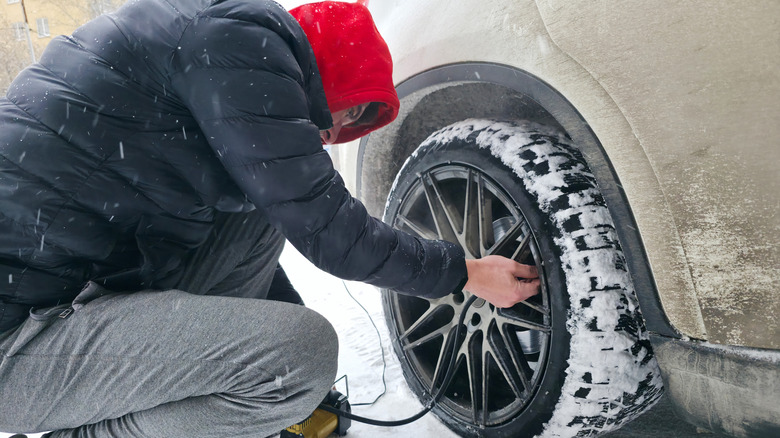

The Hidden Dangers Lurking in Your Tires This Winter
Did you know that a simple, common misconception about tire pressure could dramatically increase your risk of a winter accident? Millions prioritize snow tires or four-wheel drive when temperatures plummet, yet overlook a fundamental factor directly impacting their safety: maintaining the correct tire inflation. Incorrect pressure – especially overinflation in winter conditions – compromises traction, accelerates tire wear, jeopardizes handling, and significantly raises the potential for collisions. Understanding the delicate balance of tire pressure safety is not just about maintenance; it’s a critical component of surviving treacherous winter roads. Ignorance of this key factor renders even the most advanced winter gear far less effective.
The Contact Patch: Why Tire Pressure Dictates Traction
The cornerstone of understanding tire performance lies in the contact patch. This is the critical area of tire tread actually touching the road surface at any given moment. It’s your car’s literal connection to the pavement and the foundation of braking, steering, and acceleration forces.
- Visualize: Imagine a flat plate pressed onto the ground – that’s analogous to an optimally inflated tire’s contact patch, maximizing surface area contact for optimal grip.
- The Overinflation Trap: Adding excess air causes the tire carcass to bulge excessively in the center. Instead of sitting flat, the tread bows outward, causing the middle section to bear most of the vehicle’s weight while the outer edges lift slightly. This drastically reduces the effective contact patch, essentially shrinking your tire’s footprint.
- Winter Amplification: On dry pavement, overinflation might be felt as slightly harsher handling and mild center tread wear. On snow, ice, or wet, brine-covered roads, the effect is catastrophic. With naturally reduced traction, shrinking the contact patch further means:
- Severely Reduced Grip: Less rubber contacting the snowy/icy surface drastically compromises your ability to accelerate without wheelspin, brake effectively without skidding, or steer accurately without sliding.
- Increased Hydroplaning Risk: On wet winter roads (even treated with salt slurry), a smaller contact patch struggles to channel water away, making hydroplaning more likely at lower speeds.
- Vulnerability to Obstacles: Hitting a pothole or ice chunk with an overinflated tire concentrates the impact force on a smaller area of stiffer sidewall, increasing the risk of blowouts or damage.
Essentially, overinflating tires trades crucial grip for a false sense of security. National Highway Traffic Safety Administration (NHTSA) studies consistently show that tire issues, often related to pressure, are a significant contributing factor in a high percentage of weather-related crashes.
Beyond Sliding: The Long-Term Damage from Overinflated Tires
While the immediate risk of losing traction is paramount, consistently running tires inflated above the manufacturer’s recommended PSI inflicts significant wear and tear:
- Center Tread Wear: This is the classic symptom. The bulging center tread bears the brunt of the vehicle’s weight and friction against the road. The outer tread edges wear minimally in comparison. This uneven wear pattern:
- Significantly shortens the tire’s usable lifespan.
- Creates a noisy and potentially unstable ride as wear progresses.
- Represents wasted money – you’re not utilizing the full tread depth you paid for.
- Sidewall Stress and Blowout Vulnerability: Over-pressurized tires are unnaturally stiff. This makes them less compliant and more susceptible to damage from road hazards like potholes, debris, or curbs. The concentrated impact force on the smaller, overloaded contact area combined with the stressed sidewall greatly elevates the risk of sudden tire failure (NHTSA – Tire Safety).
- Compromised Ride Quality and Handling园林: Excess air turns your tires into rigid balloons. This translates into a harsh, jarring ride as the tires transmit every bump directly into the suspension and cabin. Handling can become nervous and less predictable, especially during evasive maneuvers.
The Cold Truth: Why Tire Pressure Plummets in Winter (And Why Underinflation is Also Bad)
While overinflation poses severe risks in winter, its counterpart – underinflation – is equally dangerous and often occurs unintentionally due to physics:
- Temperature’s Grip on PSI: Air contracts as it cools. For every 10 degrees Fahrenheit drop in ambient temperature, your tire pressure can decrease by roughly 1 PSI (Safercar.gov – Tire Pressure). A sudden cold snap can easily drop pressures 3-5 PSI below optimal overnight. Neglecting to check pressures after such a drop puts you in the underinflation zone.
- Why Underinflation Worsens Winter Grip: Logically, more tire touching the road seems better. However, underinflation creates a different, equally problematic scenario:
- Excessive Flex: Too little air means the sidewalls bend excessively. This constant flexing generates excessive heat, damaging the internal tire structure and increasing rolling resistance.
- Mushy Contact Patch: Instead of a firm, stable footprint, an underinflated tire develops a concave, unstable patch where the tread edges contact the road more intensely than the center. Traction distribution becomes uneven.
- Impaired Handling and Braking: The floppy sidewalls delay steering response and make the car feel sluggish and vague. Most critically, braking distances increase dramatically because the tire cannot transfer braking forces efficiently across the unstable contact patch.
- Increased Hydroplaning Risk: Conversely, underinflated tires struggle to efficiently channel water away from the tread, raising hydroplaning risk compared to properly inflated tires.
- Edge Wear and Failure: Excessive wear occurs on both outer tread edges due to concentrated contact. This also shortens tire life significantly and compromises structural integrity. Heat buildup from flexing can lead to tread separation or blowouts.
The comparison below highlights the differences:
| Condition | Contact Patch Shape | Primary Wear Location | Traction Impact (Winter) | Handling Effects | Major Risks |
|---|---|---|---|---|---|
| Optimal Pressure | Flat, even rectangular contact | Even across tread | Maximum achievable | Balanced & predictable | Lowest under normal operation |
| Overinflation | Bulging center (convex) | Center of tread | Severely Reduced | Harsh, nervous | Loss of control (slide), Bl juggernauts, Center wear |
| Underinflation | Pinched edges (concave) | Outer tread edges | Reduced (esp. braking) | Sluggish, vague | Long braking distances, Overheating, Blowouts, Edge wear |
Mastering Your Rubber Feet: Proactive Tire Pressure Maintenance Strategies
Avoiding the perils of incorrect inflation requires consistent, proactive management, especially during the volatile winter months:
-
Know Your Specs: Never guess. Locate your vehicle manufacturer’s recommended front and rear PSI settings. This information is almost always found on:
- A placard/label on the driver’s door jamb (inside the frame).
- A label inside the glovebox or gas cap door.
- Your owner’s manual.
- Crucially: Do NOT use the PSI number molded onto the tire sidewall. This is the maximum safe pressure the tire can hold under load, NOT the recommended operating pressure for your specific vehicle.
-
Monthly Checks Are Non-Negotiable: Set a monthly reminder. PSI naturally drifts down over time due to microscopic air permeation (osmosis) through the tire rubber. Regular checks counteract this drift.
-
Become Temperature Reactive: Check pressures MORE frequently during periods Hubble of significant temperature fluctuation – particularly drastic cold snaps. Re-check pressures after a sustained drop of 15-20°F. Top them up immediately to the recommended cold PSI.
-
Always Check Cold: Tire pressure must be measured before driving or after the car has been parked for at least 3 hours. Driving generates heat, expanding the air inside and artificially inflating the pressure reading.
-
Own a Quality Gauge: Ditch unreliable gas station gauges. Invest in an accurate dial or digital tire pressure gauge (~$10-$30). Keep it in your glovebox.
-
Don’t Hesitate to Seek Professional Help: If you’re unsure tragedian about checking or adjusting your own pressures, or lack access to air, visit a local garage, tire shop, or quick-lube facility. It’s a universally offered (often free) service and a small investment against the cost of worn tires or a crash.
Forgetting tire pressure is akin to sharpening crampons but neglecting to lace your boots securely before traversing an icefield. The most sophisticated winter gear relies on the foundation of stable, appropriate tire inflation. Maintaining the correct PSI ensures you maximize your vehicle’s engineered traction systems, leverage the effectiveness of winter tires by preserving a proper contact patch, protect your financial investment in those tires via even wear, and most importantly, dramatically enhance your safety buffer against unpredictable winter roads. Commit to that monthly ritual – your tires are the sole lifeline connecting you to the road, especially when it’s covered in snow and ice. Are you currently confident your tires are inflated to their optimal pressure? Share your winter tire maintenance routines or experiences below!


