
The Hidden Map Inside Every Ford: Where Your Engine Actually Comes From
Ever wondered exactly where the beating heart of your Ford vehicle was born? While “Ford” might conjure images of Detroit’s Motor City legacy, the reality of where engines are manufactured is a complex, global story spanning continents. This intricate production network is crucial: it allows Ford to meet massive worldwide demand, leverage regional expertise, and maintain its position as a cornerstone of the automotive industry. Understanding where Ford engines are made unveils a fascinating industrial map essential to the brand’s global presence and supply chain resilience.
North America: The Heartland of Power & Heritage
The core of Ford’s global engine manufacturing undoubtedly lies in North America, specifically in the United States, Canada, and Mexico. These facilities produce some of Ford’s most iconic and high-volume powerplants, deeply rooted in the company’s history and catering significantly to its massive North American market.
-
United States: The Powerhouse Cluster: Several key plants form a powerful domestic engine backbone:
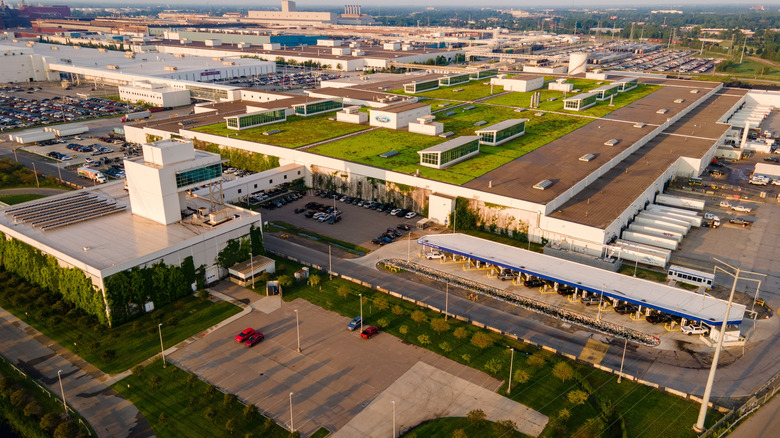
- Cleveland Engine Plant, Ohio: A vital hub for Ford’s EcoBoost technology, producing the popular 2.0L and 2.3L inline-four engines alongside the workhorse 3.5L EcoBoost V6 found under the hood of countless F-150s and Explorers.
- Dearborn Engine Plant, Michigan: Located near Ford’s historic headquarters, this plant focuses on the 2.0L inline-four Gasoline Direct Injection (GDI) engine.
- Lima Engine Plant, Ohio: Known for its versatility, producing both naturally aspirated V6 engines and advanced EcoBoost units.
- Additional facilities across the US contribute to ensuring a robust supply of “Made in USA” powerplants for American-built Fords.
-
Canada: Historic V8 Territory: Windsor, Ontario, boasts two legendary facilities crucial to Ford’s performance and heavy-duty lineage:
- Windsor Engine Plant: Operational since 1923, this historic site now produces the mighty 7.3L V8 known affectionately as “Godzilla.” This engine is the muscle behind Super Duty trucks and a favorite among crate engine enthusiasts.
- Essex Engine Plant: Situated just miles from Windsor, Essex is the exclusive home of the revered 5.0L “Coyote” V8. This engine defines the sound and soul of the Mustang GT and powers performance variants of the F-150.
-
Mexico: Diverse Power Solutions: Mexico’s Chihuahua Engine Plant significantly expands Ford’s North American capacity with impressive diversity. It manufactures a broad spectrum of engines, including gasoline units, Ford’s hybrid powertrains, and the critical 6.7L Power Stroke V8 turbo-diesel for heavy-duty applications. This facility exemplifies Ford’s strategy for regionalized, efficient production catering to diverse vehicle segments.
While North America remains Ford’s primary engine development and manufacturing hub, particularly for larger displacement and iconic V8 engines, the story extends far beyond.
Europe’s Strategic Hubs: Engines for Efficiency & Vans
Ford leverages strategic locations across Europe to produce engines focused heavily on efficiency, diesel technology popular in the region, and powering the global Transit van empire.
- Spain – Valencia Engine Plant: A key player in Ford’s electrification journey, Valencia manufactures hybrid powertrain components and assembles hybrid vehicles alongside producing the widely used 2.3L EcoBoost four-cylinder engine.
- United Kingdom – Dagenham Engine Plant: Steeped in history (Dagenham was once a major Ford vehicle assembly plant), this facility is now dedicated to modern diesel power. It produces the 1.5L and 2.0L Duratorq TDCi diesel engines, and crucially, the 3.0L Power Stroke V6 diesel – a powerhouse found in the globally important Transit van and Ranger pickup.
- Romania – Craiova Plant (Ford Otosan): This facility, operated in partnership with Ford Otosan (Ford’s joint venture in Turkey), produces Ford’s revolutionary 1.0L EcoBoost three-cylinder engine. Award-winning for its efficiency and refinement, this tiny powerhouse is found in models globally, including the Fiesta, Focus, Puma, and various commercial vehicles.
- Turkey – Ford Otosan Engine & Transmission Plant, İnönü: Another Ford Otosan facility, this plant focuses on heavy-duty applications. It manufactures powerful Duratorq diesel engines, especially those developed specifically for Ford’s larger commercial vehicles and Transit vans sold internationally.
European plants are vital for serving the specific demands of European markets (diesel, efficient petrol, hybrid) and supplying core powertrains for Ford’s global commercial vehicle leadership – the Transit being the world’s best-selling cargo van.
Asia & Africa: Fueling Growth Markets & Global Models
Ford’s engine footprint extends dynamically into high-growth regions like Asia and Africa, tailoring offerings to local demands while also feeding into the global network, particularly for critical global models like the Ranger.
- India – Sanand Engine Plant: This facility plays a crucial role in producing engines for Ford’s Indian market vehicles and a few key exports. Its primary focus is the modern “Pant”her” 2.0L gasoline inline-four. Previously, it also produced smaller displacement diesel and gasoline engines vital for local consumer preferences.
- “Greater China” (Mainland China & Taiwan): Significant engine production capacity supports Ford’s ambitious goals in the world’s largest auto market:
- JMC Xiaolan Plant (Jiangling Motors Co. joint venture): Produces engines for Ford-commercial JMC vehicles and other models.
- Changan Ford Chongqing Plant (Changan Ford joint venture): Manufactures a range of gasoline engines for the domestic market, including EcoBoost and Sigma series tail engines designed for Ford and Changan Ford branded vehicles.
- Ford Lio Ho, Taiwan: Produces gasoline engines primarily for the Taiwanese market and potentially limited regional export.
- South Africa – Struandale Engine Plant, Gqeberha: This facility is strategically critical, particularly for diesel power. It manufactures the robust 2.0L Single Turbo and Bi-Turbo diesel engines, and the potent 3.0L V6 Power Stroke diesel engine. These engines are fundamental powertrains for the international Ranger pickup and the Transit van – engines produced here find their way into vehicles sold globally. The Struandale plant underscores Ford’s strategy of manufacturing heavy-duty diesel engines near key assembly points for globally distributed truck and van lines.
- *(LSI/Keyword: Ford Ranger engine origins)
While the era of readily available V8s in mainstream models may be waning, Ford’s global engine portfolio reflects a strategic response to diverse market regulations, fuel prices, consumer preferences, and the need for both performance and exceptional efficiency across car, truck, and van segments worldwide.
| Ford Engine Families & Strategic Manufacturing Locations (2025) |
|---|
| Engine Type & Key Models |
| :——————————– |
| Iconic V8s (Mustang GT, F-150 Raptor, Super Duty) |
| EcoBoost Mainstays (F-150, Explorer, Escape, Focus) |
| Commercial Diesel Power (Transit, Ranger) |
| Local Market Focus (India/Greater China) |
Why This Global Network Matters
The dispersion of Ford manufacturing locations is not random. It’s a calculated strategy with significant benefits:
- Resilience & Risk Mitigation: Spreading production across continents reduces reliance on any single region. Disruptions (geopolitical issues, natural disasters, supply chain bottlenecks) in one area are less likely to completely halt global engine supply. This model proved crucial during recent challenges like the pandemic and semiconductor shortages.
- Cost Efficiency & Market Responsiveness: Producing engines close to major assembly plants and end markets cuts logistics costs and lead times. It allows for quicker adaptation to regional emissions regulations (Euro standards differ from US or Chinese rules) and consumer preferences (e.g., demand for smaller diesels in Europe, specific gasoline options in Asia).
- Leveraging Regional Expertise: Plants like Dagenham (UK) for diesel technology or Craiova (Romania) for efficient small-displacement petrol engines allow Ford to center specific technological expertise in regions known for it, enhancing innovation and quality.
- Access to Growth Markets: Establishing production in India, China, and South Africa is essential for cost-effectively competing in these massive and growing markets. Locally produced engines avoid significant import tariffs and align with government regulations often incentivizing local production. The South African plant’s role supplying Ranger engines globally is a prime example of leveraging location for regional and worldwide distribution.
- Scalability & Specialization: Different plants can specialize in particular engine types or families (V8s in North America, small diesels in Europe, large commercial diesels in South Africa/Turkey), leading to greater efficiency and expertise. Production can be scaled up or down at regional levels based on fluctuating demand.
Ford engine production plants are not just factories; they are specialized nodes in a vast, interconnected global system designed for efficiency, adaptability, and resilience. From the legendary V8s rolling off the lines in Windsor to the fuel-sipping EcoBoosts built in multiple countries worldwide, every Ford engine carries with it the imprint of a complex, strategically designed manufacturing landscape. The next time you turn the key in your Ford, consider the remarkable journey its engine likely took, testament to an industrial network spanning the globe.
Does knowing where in the world your car’s engine was built change how you view its identity? Share your thoughts below!


