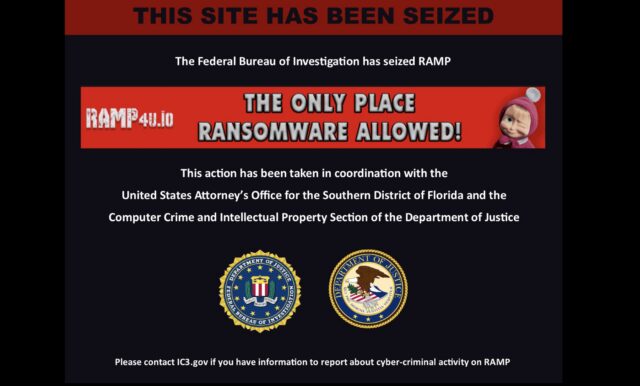

The Fall of RAMP: Inside the FBI’s Landmark Takedown of the “Ransomware Only” Empire
Ever wonder what happens to cybercriminal communities that boldly proclaim themselves as global ransomware capitals? The answer arrived starkly in mid-2024, when visitors to the infamous RAMP cybercrime forum were greeted not by malware listings but by the unmistakable seals of the FBI and U.S. Department of Justice. The seizure of both RAMP’s dark web operations and its surprising clear web mirror site marked a high-stakes victory in the relentless global battle against ransomware. This action wasn’t just about shutting down another criminal marketplace; it represented a surgical strike against one of the last major nerve centers fueling an escalating threat destabilizing businesses, healthcare, and critical infrastructure worldwide.
The FBI’s banner delivered a blunt message: “The Federal Bureau of Investigation has seized RAMP.” Coordinated with the U.S. Attorney’s Office for the Southern District of Florida and the DOJ’s Computer Crime and Intellectual Property Section (CCIPS), the takedown deliberately echoed prior global operations against forums like DarkMarket and Hydra. Yet, targeting this specific RAMP ransomware forum signaled a focused assault on the ransomware ecosystem itself. For years, RAMP cultivated a notorious reputation, operating under an audacious tagline proudly displayed before its seizure: “the only place ransomware allowed.” This wasn’t mere bravado; RAMP actively carved out a niche, positioning itself as the indispensable hub for the ransomware trade after authorities dismantled competitors. Following Europol’s arrest of the XSS forum leader in late 2023, RAMP ascended to fill the void, becoming a primary marketplace for the tools, services, and illicit commerce underpinning relentless ransomware attacks.
Deconstructing the RAMP Cybercrime Marketplace
Understanding why RAMP was such a significant target叮嘱 requires peeling back its operational layers. Founded back in 2012 and strategically rebranded in 2021 (according to security analysts Rapid7), RAMP frames operated with remarkable sophistication and longevity compared to many fleeting dark web ventures.
- Operational Scope & User Base: Unlike forums catering exclusively to specific regions, RAMP fostered a multilingual environment supporting Russian, Chinese helicopters, and English speakers. Its membership exceeded 14,000 registered users – a significant congregation of cybercriminal talent and ambition. Access was highly controlled:
- Applicants underwent reputedly “strict vetting” procedures.
- Alternatively, individuals could bypass vetting by paying a substantial $500 fee for anonymous participation largely shielding their identities.
- Core Services Fueling the Ransomware Ecosystem: RAMP transcended being a simple classifieds section. It functioned as a comprehensive ecosystem providing the essential elements for ransomware operations:
- Malware Marketplace: A primary function was facilitating the sale and purchase of ransomware executables, custom malware variants, exploit kits, and compromised credentials (“logs”).
- Ransomware-as-a-Service (RaaS) Platforms: Affiliate programs advertising access to sophisticated ransomware strains where developers partnered with attackers (“affiliates”) to split profits were heavily promoted.
- Cybercrime Tutorials & Knowledge Sharing: Dedicated sections offered guides on deploying attacks, evading detection, laundering cryptocurrency payments (crucial for ransom demands), and exploiting vulnerabilities.
- Collaborative Spaces: Discussion forums allowed bad actors to share tips, troubleshoot attacks, recruit for operations, and establish trust relationships.
- Economics of Illicit Operations: Perhaps most revealing was the forum’s profitability. RAMP’s chief administrator disclosed in early 2024 that the platform generated an estimated $250,000 annually. While placing RAMP below giants like Hydra’s billion-dollar scale (per Europol), this revenue underscored a sustainable, thriving criminal enterprise directly funding its infrastructure and likely lining administrator pockets.
The Strategic Importance of Targeting RAMP
The shutdown of the RAMP malicious marketplace carried weight far beyond eliminating a single platform. It struck at multiple systemic vulnerabilities exploited by cybercriminals globally.
- Disrupting the Attacker Supply Chain: RAMP operated as a critical link connecting malware developers, access brokers (selling compromised network credentials), RaaS operators, affiliates conducting attacks, and money launderers. Removing it abruptly severed established connections, forcing criminals to scramble for alternatives, an inherently riskier and less efficient process. The FBI explicitly referenced disrupting the “ransomware ecosystem” (FBI Cybercrime Overview), highlighting its goal: breaking down the collaborative infrastructure enabling attacks.
- Eliminating a Centralized Threat Intelligence Hub: RAMP’s forums were goldmines of threat intelligence for the attackers. Discussions revealed tactics (TTPs), vulnerabilities being actively exploited, malware configuration specifics, and advice on countering defense measures. Losing access degrades collective attacker knowledge and potentially slows attack innovation.
- Deterrence Through Enforcement: High-profile seizures send a powerful message: anonymity on the dark web is not guaranteed. The RAMP ransomware bust, alongside arrests on forums like RaidForums and Genesis Market, creates a chilling effect, forcing criminals to reassess operational security and reducing platform loyalty.
- Tackling the Payment Enabler: While shutting down forums doesn’t solve ransomware’s economic root cause – paying ransoms – it hinders the vital laundering phase often facilitated within these ecosystems. Discussions on transferring and cleaning cryptocurrency payments were core to RAMP’s community functions.
The Complex Web of Cybercrime Enforcement and Enduring Challenges
The takedown underscores the escalating international cybercrime arms race, but also its inherent difficulties:
- Jurisdiction & Attribution: Hosted servers, administrators, and users residing primarily in jurisdictions outside U.S. legal reach (like Russia) present major and persistent


