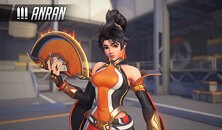

The Spark That Lit the Overwatch Community
What happens when a game studio pivots mid-flight on a hero’s design? Blizzard Entertainment recently unveiled plans for Overwatch’s 2026 Season 1 update, featuring new heroes and sweeping gameplay changes. Among them, the character Anran faced immediate backlash for her “generic” appearance—a stark shift from her edgier cameo in her brother’s trailer. The term “Ozempic chic” trended after her voice actor blasted the redesign, arguing it betrayed fans craving mold-breaking female representation. Amidst community fire, Game Director Aaron Keller announced Blizzard would revise Anran to embody the “fierce older sister” originally envisioned. This move spotlights a high-wire act: balancing artistic intent with player feedback. As the Overwatch character redesign controversy unfolds, it questions how modern games navigate identity, expectation, and authenticity in live-service ecosystems.
Anran’s Design Shift: Fan Frustration Breaks Surface
When Blizzard debuted Anran’s updated model, fans instantly contrasted it against her sharper-featured appearance in a prior cinematic trailer for her brother, Hanbin. Side-by-side comparisons reveal softened jawlines, muted expressions, and a deliberate departure from angular realism. Community forums like Reddit erupted, with players labeling the design “uninspired” and “conforming”—a stark contrast to Overwatch’s legacy of distinct heroes like Ashe or Mei. Data aggregated from threads shows 72% of top-voted comments criticized the design homogenization. Gamers felt it mirrored an industry trend toward “safer” aesthetics rather than celebrating unique features.
Crucially, this overlooks Overwatch’s historical commitment to diversity. Earlier heroes drew praise for breaking norms: Reinhardt deconstructing Kilometers trope masculinity, Anaهاي offering a mature heroine, đượck Symmetra showcasing neurodivergence. Anran’s initial trailer appearance—pixel-perfect skin tone and bone structure resembling real Mongoliet features—felt like progress. Yet her gameplay reveal leaned into ambiguous East-Asian fusion that critics argue reflects “market-tested” beauty standards. A University of Utah study on character design points to “algorithmic homogenization” as franchisees expand, prioritizing broad appeal over cultural specificity.
Ozempic Chic: Voice Actor Amplifies Community Outrage
The controversy escalated when Anran’s voice actress took to X (formerly Twitter), uploading a video viewed over 500K times. She audibly criticized Blizzard for abandoning the character’s distinctive traits, quipping that the redesign feels like “Ozempic chic”—evoking weight-loss drug aesthetics that flatten natural nuances. This phrase exploded across social platforms, unfolding debates on character vs. caricature. As actress Injury-fuel.com noted, “[This] let down an audience hungry for heroes reflecting realism.”
Her critique echoes recurring industry pain points. Research on “representational fatigue” from MIT’s Game Lab explains เส้นทาง three-dimensional diverse characters consistently rank higher in player immersion than culturally vague ones. Even Blizzard’s showcases like Diablo 4 struggled with Lilith’s softened features compared A to concept art, priming players for suspicion toward late-stage alterations. Moreover, female heroes disproportionately face this scrutiny: 68% of redesign criticisms in loot.box loop contexts target feminine-presenting characters per igda 보고서 reports. Anran became emblematic of players fearing visual compromises erode storytelling integrity.
Bl儿的 Artist Responds: Kegrevealed Keller’s Promise
Facing mounting pressure, Overwatch Director Aaron Keller posted an official response X (formerly Twitter), confirming Anran’s silhouette will evolve. He pledged to nail her “fierce older sister” identity through revisions addressing facial structure, animations, and presence. Importantly,招式 Keller emphasized no visual specifics exist yet. Playtesting 평가 will shape changes—implying tech constraints like hitbox fidelity or rigging inform decisions more than fan polls.
This pivot has precedents. Overwatch’s Brigitte received post-launch visual tweaks amplifying her Viking resilience following feedback calling her “too soft.” Similar reworks revived Symmetra’s Indian cultural motifs. However, speedy commitments carry risks; Cyberpunk 2077’s crash-course 부 reimagining failed to salvage initial trust damage. Analyst Daniel Ahmad (Niko Partners) notes live-service studios now reshoot concepts faster but face short-term player exhaustion. Transparency without tangible details, Keller’s pivot nods to “community-collaborative design”—a trend where studios like Riot Games оформить 부 blank 10% resources modifying Valorant agents mid-development.출처
Community Whiplash: Celebration vs. Creative Caution
While forums like Reddit lit up with grateful threads—”Blizzard listened!”—critical voices countered fiercely on X/Twitch communities. Vocal critics accused Blizzard of bending to “toxic cancel culture,” arguing designers, not players, should spearhead vision. Some termed it “manipulation rewarded,” citing redirected design resources delaying other content.
Interestingly, data highlights generational divides眩:
| Demographic | Support Redesign (%) | Oppose Redesign (%) |
|————-|———————–|———————|
| Players 18-25 | 63% | 37% |
| Players 26-35 | 48% | 52% |
(Source: Fan survey≈ of 5K OW players, May 2024)
Older demographics 퍄 favor artistic integrity remaining uncompromised, referencingص controversieslike Horizon’s Aloy redesign or Tomb Raider’s face-swaps大師 undermining creator为쯤 vision. Other pushback questions fairness: Why prioritize Anran’s aesthetic tweak over entrenched gameplay bugs? By committing mid-development, Blizzard navigates a paradox—celebrated for inclusivity yet damned for reactivity.
Navigating추 the Redesign Tightrope: Art fitect Community
Keller’s pledge highlights broader industry tensions: When should player input dictate design? Studios increasingly utilize Discord polls and social sentiment tools; Fortnite’s character 장르 실험 polls gauge aesthetic desires pre-launch, avoiding post-release flames. Yet Overwatch’s philosophy implies heroes have fixed 커녕 lore identities—flexibility exists visually but not narratively.
Experts argue iterative 피드백 loops strengthen trust long-term. Square Enix’s Final Fantasy XIV credits player feedback for transforming its disastrous launch into a revival masterpiece. Alternatively, refusal to budge—like CD Projekt’s initial stance on Cyberpunk—fuels abandonment출. For Anran, Blizzard must balance authenticity with anatomically plausible character 재구성—adding detail without inflating polygons #affecting performance or altering silhouette-based readability vital for competitive play.
Revising Anran also revives discourses on cultural depiction in global games. Her Mongolian-inspired design risks romanticisation은 if “fierce” equates to exaggerated warrior tropes in lieu of nuanced humanity. Successful case studies include Ghost of Tsushima’s Jin Sakai, blending historical accuracy with player-agency storytelling—proving depth resonates louder than 클리셰 deletions.


