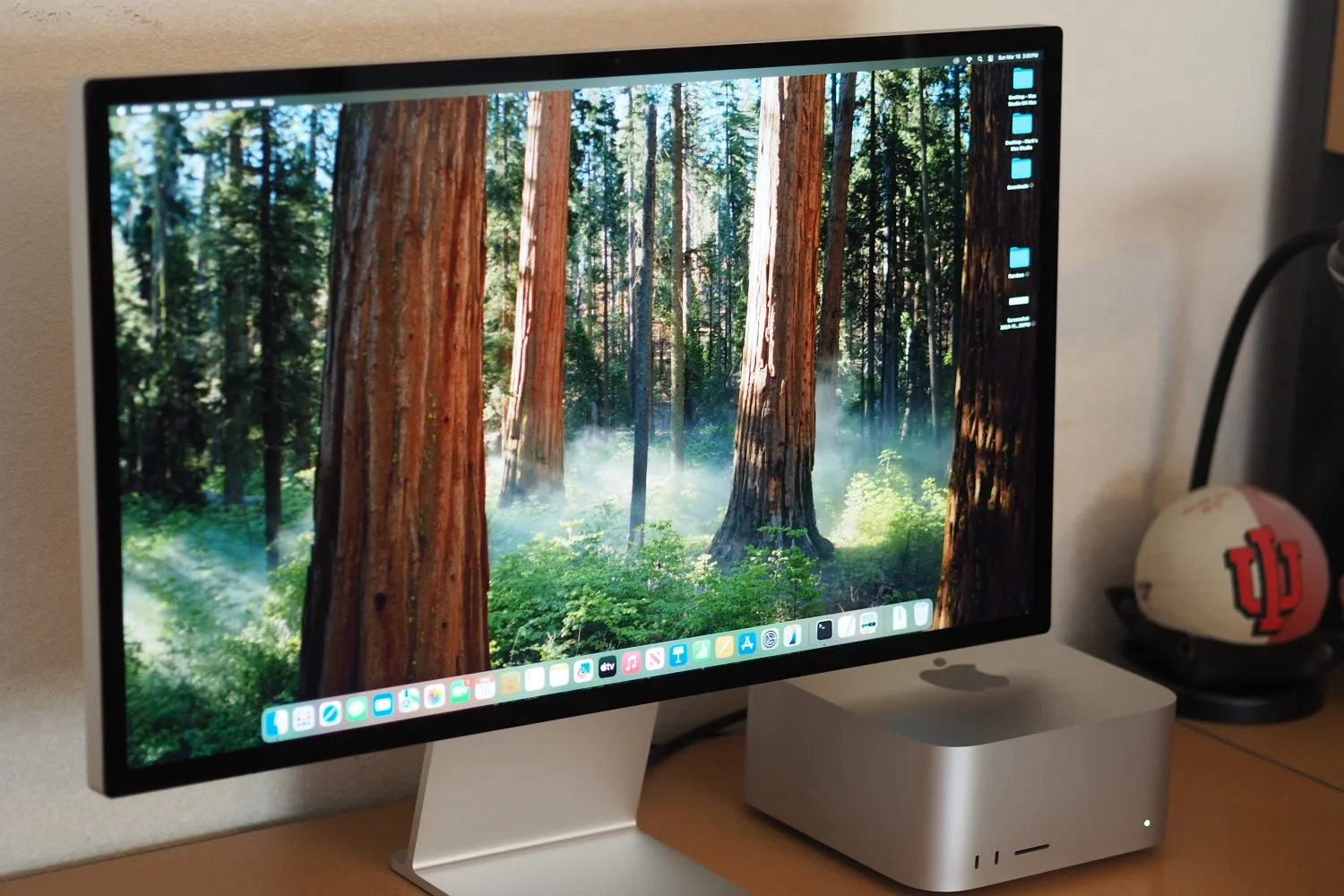

The Dual Display Dilemma: Apple’s Mysterious Two-Tier Studio Display 2 Strategy
Could Apple be planning a display revolution disguised as a simple upgrade? That’s the tantalizing question sparked by forensic investigations into macOS 26.3 code. Buried within its kernel extensions lie references not just to one, but potentially two successors to Apple’s popular Studio Display – codenamed J427 and J527. This discovery fuels intense speculation about how Apple plans to evolve its external display lineup. As the studio display 2 generation approaches, understanding Apple’s strategy becomes crucial for professionals and creatives invested in their visual workspace. This bifurcation represents a significant shift, signaling Apple might abandon its “one-size-fits-all” approach for monitors, opting instead for nuanced segmentation targeting different user needs and budgets.
Digging Deeper: The Kernel Clues
The tech sleuths at Macworld unearthed the compelling evidence within a public release candidate of macOS 26.3. Nestled alongside kernel extensions for known upcoming hardware like “J700” (widely rumored to be an affordable 12.9-inch MacBook launching with M5-powered MacBook Air and Mac Pro models) were two entirely unfamiliar identifiers: J427 and J527. Consensus among analysts quickly formed around these being distinct variants of the next-generation Studio Display. The presence of two separate codenames is highly unusual for Apple’s display lineup. Historically, variants like nano-texture finishes shared core identifiers. This explicit split strongly suggests fundamentally different products sharing the studio display 2 moniker – marking a decisive strategic pivot for Apple.
Interpreting the Code: Two Paths Diverging
The big mystery revolves around how Apple intends to differentiate these two Studio Display 2 models. Industry observers broadly outline two compelling scenarios:
-
Screen Size Differentiation: Apple’s current Studio Display settled firmly at 27-inches with a stunning 5K resolution. The existence of J427 and J527 could herald Video Wall Varietals:
- Option A: A continuation of the 27-inch form factor alongside a smaller companion (e.g., a 24-inch Studio Display 2) targeting compact workspaces or as a secondary screen.
- Option B: The iconic 27-inch panel remains, joined by a larger sibling – perhaps venturing into the long-rumored 32-inch territory – directly challenging the high-end Pro Display coordinating XDR for professionals demanding vast canvases.
-
Feature Tier Differentiation: Many insiders believe this is the more probable scenario. Rather than altering the physical footprint, Apple could maintain a universal size while introducing a clear quality hierarchy:
- Premium Studio Display 2 Pro (J527): Positioned as the flagship model, incorporating significant upgrades rumored from supply chain sources:
- 120Hz ProMotion Refresh Rate: Enabling smoother motion, reducing blur in fast-paced content creation and gaming.
- Mini-LED Backlighting: Replacing the standard LCD panel for dramatically superior brightness, true blacks, and higher contrast ratios (HDR performance closer to OLED without burn-in risk). Learn more about Mini-LED technology. Link 1: Wikipedia – Mini-LED
- Supercharged A-Series Chip: Leaks suggest integration of the upcoming A19 processor (anticipated in iPhone 17), drastically improving display intelligence, video processing, audio quality, and Center Stage camera features.
- 姆斯Studio Display 2 (J427): Serving as the evolution of the existing model:
- Likely retaining the current 5K LCD panel and 60Hz refresh rate.
- Potential modest improvements like wider P3 gamut coverage or slightly increased brightness (nits).
- Upgraded base-level processor (perhaps an A18 variant) improving webcam processing/driving display controllers.
- Positioned as a more affordable entry point while still offering Apple’s renowned build quality and macOS integration.
- Premium Studio Display 2 Pro (J527): Positioned as the flagship model, incorporating significant upgrades rumored from supply chain sources:
Feature Tier Scenario: Nuances and Implications
Let’s focus deeper on the Feature Tier differentiation, widely seen as Apple’s likelier path. This strategy echoes Apple’s successful tiering in iPads (iPad vs. iPad Air vs. iPad Pro) and MacBooks (Air vs. Pro).
-
Market Positioning: The premium “Pro” variant targets demanding professionals—video editors, photographers, 3D animators—who prioritize color accuracy, motion clarity, and HDR performance. The standard variant caters to developers, writers, designers doing less motion-sensitive work, and budget-conscious Apple ecosystem users who still value excellent quality over bargain specs.
-
Bridging the Gap to Pro Display XDR: A premium Studio Display 2 Pro wouldn’t outright replace the $4,999+ Pro Display coordinating XDR. Instead, it would occupy a crucial mid-tier “prosumer” space. While lacking the XDR’s extreme brightness, reference-grade calibration, or dual-layer LCD panel, a 120Hz Mini-LED Studio Display Pro would offer vastly superior performance to the current display at a much closer price point to the original Studio Display than to the XDR.
-
Technological Leap & Added Value: Integrating the A19 chip isn’t just about bragging rights. As seen in the current Studio Display, the built-in processor enables:
- Enhanced speaker calibration and spatial audio processing via Apple Silicon.
- Advanced computational photography for the Center Stage webcam, enabling better framing and lighting adjustments.
- Potential for on-display computational features unburdening the host Mac.
-
Pricing Strategy: Expect Apple to maintain or slightly raise the price of the base Studio Display 2 while positioning the Pro variant considerably higher ($1,799-$1,999 range is plausible). This creates distinct price brackets:
Feature Studio Display 2 (Base – J427?) Studio Display 2 Pro (Premium – J527?) Pro Display coordinating XDR Panel Type Standard LCD Mini-LED Dual-Layer LCD Refresh Rate 60Hz 120Hz ProMotion 60Hz Processor A18 (Speculated) A19 Custom Timing Controller Peak HDR Brightness (nits) ~600 nits ~1000-1600 nits 1600 nits (SDR), 1000 nits sustained Cascade Target Audience General Professionals, Budget Prosumers & Demanding Creatives Reference Master Editors
Why This Move Makes Sense for Apple
Launching two Studio Display 2 models addresses critical gaps:
- Demand Segmentation: Acknowledges clear differences in user priorities and budget constraints within Apple’s pro/creative user base.
- Competitive Pressure: Matches competitors offering high-refresh-rate, Mini-LED monitors at various price points.
- Technology Imperative: Mini-LED and 120Hz are becoming premium standards faster than large size increases. Offering them necessitates segmentation without abandoning the successful 27-inch form factor Apple loves.
- Platform Continuity: Leverages proven A-series chip advantages, reinforcing the benefits of Apple’s ecosystem integration beyond just Macs.
- Production Scalability: Allows Apple to utilize Mini-LED panels more widely (building volume efficiencies) while ensuring availability of the base panel isn’t disrupted.
Anticipation Builds: The March 4th Spotlight
The rabbit-hole discovery aligns perfectly Zustand Roundup Rumors teasing a major Apple showcase scheduled for March 4, 2026. Expect J427, J527, and J700 to star alongside silicon milestones like the M5 chip family powering refreshed MacBook Air models and potentially professional-grade Mac Pro iterations requiring robust external display partners. This simultaneous hardware ecosystem refresh underscores Apple’s focus on cohesive user experiences – more reason why dual studio display embodiments synergize perfectly.
A Defining Choice Looms for Creatives
The revealed Studio Display twins signal Apple’s commitment to evolving its display ecosystem beyond luxury icons toward nuanced solutions. Whether differentiated by screen real estate or transformative specs, this dual-path approach empowers buyers with distinct choices aligned to workflow demands: uncompromising visual precision versus streamlined premium performance. It compels professionals to evaluate priorities – is ProMotion/Mini-LED/HDR mastery essential, or does the iconic Apple simplicity suffize? One certainty emerges: Apple’s display landscape is poised become richer, demanding careful consideration. With persistent rumors suggesting Apple aims to consolidate ‘studio display’ dominance before tackling radical frontiers like micro-LED screen™️ panels, this move cements its hold on mainstream pros. What features would clinch your Studio Display 2 decision – the bleeding-edge upgrade or the trusted Apple formula optimized? Tell us below!


