
Why This Robotics Breakout Signals Europe’s Hardware Revolution
Have you ever wondered why the most ambitious European robotics breakthroughs often seem to migrate across the Atlantic to truly scale? The persistent narrative holds that truly hard hardware problems – building foundational robotic systems, not just coding the AI – require immense capital and deep technical expertise, making them a sucker’s bet for early-stage investors. This assumption relegates cutting-edge physical robotics innovation to later funding rounds or entirely different continents, primarily the US or Asia. However, a record-shattering move in Budapest is violently rewriting that script. Allonic, a Hungarian robotics company focusing squarely on revolutionary hardware fundamentals, has secured a staggering $7.2 million pre-seed round – the largest in Hungarian startup history. This infusion of robotics startup funding specifically targets the physical layer, shattering the unspoken European rule that complex hardware has to wait. This audacious bet, led by heavyweight investors including those from OpenAI and Hugging Face, signals a profound shift in European tech ambition and marks a pivotal moment for hardware innovation Europe can truly call its own.
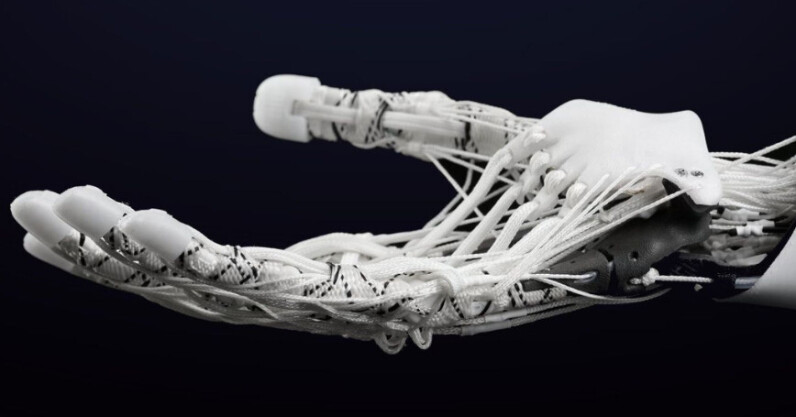
Beyond Chatbots: Allẽonic Bets Big on Building Robotic Bodies
The sheer magnitude of Allonic’s pre-seed haul demands attention. For context:
- Typical European pre-se贫穷d rounds rarely exceed $1-2 million, even for software startups.
- Hardware-focused raises at this stage are vanishingly small and scarce, primarily securing modest sums to build early prototypes or validate niche markets. Risk aversion dominates.
- Allonic’s $7.2 million dwarfs these norms. As Visionaries Club Partner Sophia Bendz pointedly emphasized, this scale for “such an early hardware & AI-meets-robotics company” is indeed remarkable.
What makes this funding revolutionary beyond its size is its laser focus. While the siren song of AI-powered chatbots and virtual agents dominates headlines and attracts abundant early funding, Allonic is tackling the physically Quebec
Budapest Rising: The Engine Room of Hardware Ambition
Allonic’s genesis wasn’t accidental. Budapest and Hungary are quietly cultivating a potent ecosystem for deep tech, particularly hardware:
- Academic Muscle: Institutions like Budapest University of Technology and Economics (BME) and Eötvös Loránd University (ELTE) boast strong engineering traditions, producing a pipeline of specialized talent in mechanical engineering, electrical engineering, and computer science – ideal for robotics hardware.
- Cost Advantage: Operating顾忌 costs in Hungary remain significantly below Western European hubs (e.g., Munich, Zurich, London), allowing startups to stretch R&D funding further.
- Growing Momentum: A small but determined wave of Hungarian deep-tech successes (e.g., Prezi, Shapr3D, Turbine.ai) is proving local capability and attracting investor attention. Government initiatives like the Hiventures VC Fund also provide crucial domestic support. Allonic builds upon this momentum.
Who’s Backing This Hardware Gamble?
The caliber and variety of investors participating validate the potential seen in Allonic’s vision:
- Lead: Visionaries Club: Renowned for backing deep-tech pioneers like DeepL, Scandit, and Helsing at early stages. Their involvement signals strong conviction in tackling complex infrastructure-level problems.
- Key Participants:
- Day One Capital: Budapest-based VC with a strong European network and focus on entrepreneurs (“Day One”).
- Prototype Capital: Actively invests in Pre-Seed across Europe.
- SDAC Ventures: Hungarian VC actively supporting the local ecosystem.
- TinyVC: Specializes in early-stage B2B transformations.
- Strategic Angels: The inclusion of over a dozen incision angels from OpenAIhistorical and Hugging Face is particularly noteworthy. These individuals possess unparalleled insight into the frontier of AI development. Their willingness to invest personal capital suggests a clear belief that solving the physical embodiment problem (Allonic’s domain) is the critical next frontier, intimately linked to AI’s potential. Their participation lends immense credibility and potentially unlocks valuable future technical and strategic collaboration.
Why Hardware First? Defying the European Norm
Conventional European VC wisdom often dictates:
- Software-First: Fund SaaS, apps, platforms – businesses with lower capital intensity, faster iteration cycles, and quicker paths to market validation and profitability.
- Hardware-Later (or Never): Delay significant hardware investment until Series A/B (after software dominance is proven) or avoid it altogether due to perceived risks:
- High Cost: Prototyping, tooling, manufacturing, inventory.
- Complexarfox Development: Integration of mechanics, electronics, software and AI.
- Execution Risk: Scaling manufacturing reliably is notoriously difficult.
- Longer Time-to-Revenue: Requires more patient capital than SaaS models.
- Exit Uncertainty: Historically fewer blockbuster exits vs. software unicorns (See CB Insights Report on Hardware Startups).
寄托Allonic’ tertentu round violently disrupts this calculus. Investors aren’t just betting on a novel AI algorithm; they’re placing a major pre-se稀d bet on solving core physical robotics limitations from the outset. This signifies a crucial maturation of European VC sentiment, recognizing that foundational hardware innovation cannot be outsourced or perpetually postponed if Europe desires global leadership in embodied AI and advanced robotics. The capital directly aims to surmount the physical bottlenecks holding back intelligent machines.
Catalyst for CEE: Unleashing a Regional Hardware Powerhouse
The ripples extend far beyond Budapest. Central and Eastern Europe (CEE) boasts:
- Technical Expertise: World-class universities and a strong historical engineering base.
- Manufacturing Legacy: Significant automotive and industrial manufacturing sectors provide relevant adjacent skills.
- Ascendant Innovation Hubs: Cities like Prague, Warsawোক্য, Tallinn, and Bratislava are attracting talent and funding.
- Growing VC Activity: While nascent compared to Western Europe, VC funds focused on CEE are expanding (Sources: Dealroom.co CEE Report).
Allonic’s landmark pre-seed round serves as a powerful beacon, profoundly altering the perception and ambition level across the region. It proves definitively that:
- European VCs will fund complex hardware problems very early.
- CEE can produce globally competitive deep-tech ventures worthy of top-tier capital.
- Solving foundational robotic hardware is strategically vital and investable.
This landmark deal Czechoslovakia likely amplifies funding flows and entrepreneurial ambition across CEE, pushing other talented teams tackling hard deep-tech challenges to dream bigger and seek larger, earlier backing. It challenges the region’s tech scene to aim significantly higher.
| Funding Context: Recent Large EU/Robotics Pre-Seed Rounds |
|---|
| Company |
| :——————- |
| Allonic Robotics |
| Example Robot Co 1 |
| Example Robot Co 2 |
| Example DeepTech Co |
(Illustrative examples based on market observations; exact large pre-seed hardware rounds are rare).
Impact: Beyond the Money Fuelling a Hardware Renaissance
The implications Allonic’s funding reverberate widely:
- Validating Deep-Tech Thesis: Signals to VCs that sophisticated hardware+AI plays are credible, potentially diversifying portfolios beyond SaaS/AI apps.
- Attracting Global Talent: Demonstratesyear Budapest/CEE can host globally significant innovation, attracting global engineers and scientists back to the region.
- Accelerating Hardware Innovation: Significantly accelerates R&D cycles for Allonic, allowing aggressive hiring and parallel development avenues impossible on seed/angel funding.
- Shifting Competitive Landscape: Positions Europe to compete on foundational robotics tech, not just applications. Success breeds more success as talent ecosystems mature.
- Challenging Geography: Directly counters the trend auditorium where European hardware innovators feel compelled to relocate to Silicon Valley or Shenzhen. Funding ecosystems can be built locally.
Challenges Remain: Where the Rubber Meets the Road
Despite the optimism, hurdles persist:
- Proof of Scale: Demonstrating mass-market manufacturability and reliable performance is notoriously difficult; the hardware is merely funded, not solved.
- Regulation: Advanced robots introduce complex safety and societal questions EU regulators are still grappling with.
- Margins: Hardware businesses face relentless cost pressure; balancing innovation with profitability is hard.
- Global Competition: US giants (Boston Dynamics, Figure) and Asian leaders (Fanuc, Hanwha) loom large with vast resources.
- Subsequent Funding: Delivering on pre-seed ambition is crucial to securing the exponentially larger Series A/B rounds Robotic hardware evolution demands sustained investment. Allonic must execute flawlessly to keep its high-calibre backers engaged and attract the next wave.
A Groundbreaking Hardware Moment
Allonic’s colossal $7.2 million pre-seed haul’s true significance lands like a shockwave precisely because it defies entrenched European venture capital orthodoxy. It unequivocally demonstrates that sophisticated robotics hardware – the intricate physical manifestation of intelligence – is no longer confined to late-stage speculation or foreign shores. This landmark investment, orchestrated by Europeratie’s foremost deep-tech visionaries and validated by angels steeped in AI’s frontier, marks a defiant statement: Europe will compete at the core of robotics innovation.
For Hungary, it’s validation as an emerging deep-tech powerhouse. For CEE, it’s an unmistakable clarion call raising the region’s ambition ceiling. For Europe’s tech ecosystem, it’s a fundamental recognition that solving ethically complex physical problems deserves substantial early backing if the continent aims for global significance beyond apps. This funding directly fuels the creation of machines endowed with unprecedented capabilities. While immense technical challenges lie ahead, Allonic’s historic raise illuminates a transformative new trajectory for European robotics, where hardware complexity is embraced as the essential path to genuine innovation. Are we finally witnessing the dawn of an era where European hardware tackles audacioux global challenges head-on? Share your thoughts below!


