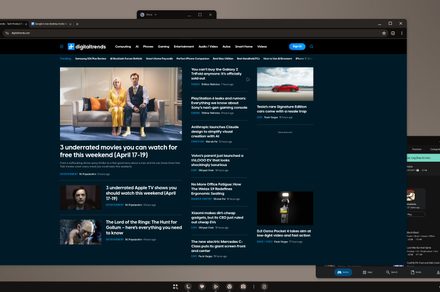

For years, I waited for Android to get serious about desktop mode. In 2019, I sold a OnePlus 7 Pro after wasting time trying to make its half-baked desktop functionality actually useful. The concept made perfect sense: phones are incredibly powerful — why not carry a real computer in my pocket?
What wore me down wasn’t the idea itself. It was the wait. Devices like the Steam Deck proved you could dock a compact machine into a usable desktop setup, while Google seemed to lose interest in pushing Android that way.
Samsung, meanwhile, kept refining DeX in plain sight. I spent years on r/SamsungDex watching people post desktop builds powered by a phone, resenting that the version I wanted most looked locked behind an ecosystem I had no interest in joining.
Stock Android Finally Catches Up
When Android 16 finally brought a connected desktop session to supported Pixel phones, it felt like an admission. Desktop mode had lingered as a quirky experiment — half promise, half hobby.
Now it’s being treated like a legitimate part of Android.
What Android 16 Desktop Mode Actually Does
Plug a Pixel 8 or newer into an external display and it throws up a desktop-like workspace with a taskbar, resizable windows, app snapping, and keyboard shortcuts — instead of just mirroring your phone screen.
It’s the clearest signal yet that Google wants Android to function like a desktop OS when the hardware clearly supports it.
And it works — in the sense that you can get real work done. But it also comes with an uncomfortable truth: Samsung has been doing this for years, and with far more polish.
Samsung DeX: A Separate Desktop Layer
Samsung DeX isn’t just Android stretched across a monitor. It feels like a separate desktop layer, with deeper optimization and conveniences that matter once the novelty wears off.
Samsung also handles things Google still doesn’t — like treating the phone itself as a touchpad.
There’s the rub: the concept is finally real, but Samsung still looks like the company that understood it first.
Where Google’s Version Falls Short
Google’s desktop session has the visual cues, but it still feels tethered to the phone in ways DeX solved long ago.
It behaves like Android trying on desktop clothes, not a desktop environment that has truly settled into them.
- Phone dependence: change DPI for desktop readability and it changes on your handset too
- Wallpaper: change it on desktop and it changes on your phone — making your desktop feel less like a workspace and more like a projection
- Camera preview: aspect ratio is off, breaking the illusion
- Video games run fine (proving horsepower isn’t the issue), but other aspects still feel unfinished
DeX, by contrast, has enough bells and whistles to feel like a daily driver. Its extra features aren’t ornamental — they exist to sand down the friction of turning a phone into a desktop. With DeX, the phone feels like the hardware running the desktop.
With Google’s version, the phone still feels like the primary match. The desktop is there, but it never completely stops feeling tied to the handset.
Why This Matters Beyond Pixel
What makes Google’s shift significant isn’t that it beats DeX. It doesn’t.
It signals that desktop mode isn’t just an OEM curiosity. Once Google bakes it into stock Android on Pixel, the entire category becomes harder to dismiss.
That changes the equation for app developers, accessory makers, and Android brands that largely treated phone-powered desktop computing as a niche side trick.
Samsung proved the concept could work. Google may make it harder for the rest of Android to shrug it off.
There’s a delicious irony here: Google is validating a vision Samsung spent years testing in public — only to arrive with a version that feels less complete.
DeX still looks like the more polished system because Samsung spent overtime sanding down the rough edges that make desktop mode live or die.
Seriously, I can’t be too cynical about Android 16 desktop mode finally showing up. After years of demos, workarounds, and wishful thinking — even that counts. Sometimes progress isn’t polished. Sometimes it’s just a platform finally admitting the nerds were right.


